



Activewear Production Set Up for Printed Team Programmes
Sportswear orders differ from fashion orders in one important way: the design is usually already decided by someone else - a club, a school, a sponsor - and the factory's job is to reproduce it faithfully, at the right sizes, for every name on a list. That makes sportswear a discipline of matching: colours matched across shirt and shorts, print matched across sizes, and every player's set matched to the squad sheet. The sections below cover how the family is produced, from fabric choice to the way kits are packed.
1. The Sportswear Styles We Make
The family covers match kit, training kit and the gym floor:
- Sports jerseys - football, basketball and multi-sport shirts, printed or plain, with matching shorts where the kit calls for them.
- Tracksuits and jogging suits - full-zip and pullover sets for travel, warm-up and training.
- Gym clothing - training tees, shorts and vests in light performance knits.
- Team wear - coordinated ranges for clubs, schools and corporate teams.
- General sportswear - track pants, training tops and active shorts for retail programmes.
Retail activewear runs on the same lines with different branding logic: no names and numbers, but the same fabrics, the same colour discipline and the buyer's own labels, as described in the private label arrangement.
2. Performance Fabrics for Training and Match Wear
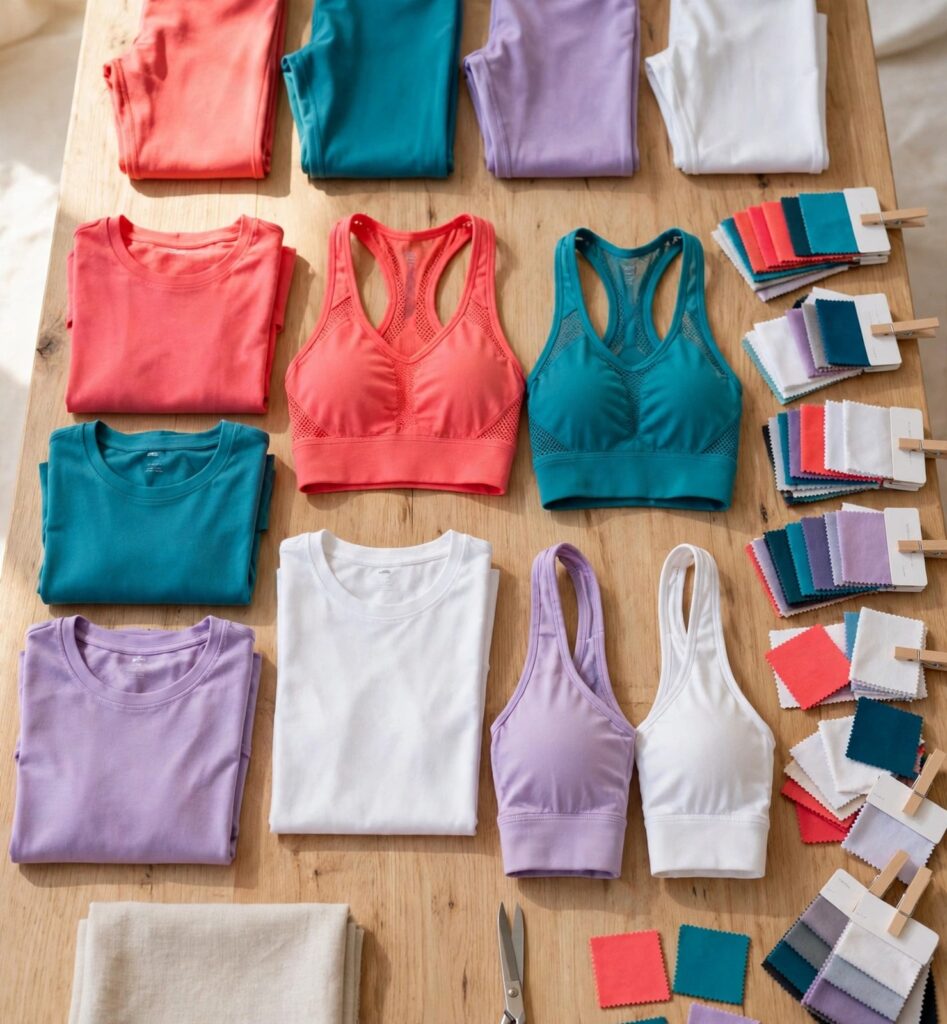
Sportswear fabric has to work while it is worn: move with the body, carry sweat away from the skin and dry quickly, then come back from the wash the same colour and shape. Polyester knits - interlock, mesh and textured weaves - carry most team and training styles for exactly those reasons, at weights set by the sport and the season. Panels are often mixed: a solid interlock body with mesh under the arms or across the back where heat builds.
Stretch matters more here than in any other family. Four-way stretch fabrics and elastane blends are used on fitted styles, and the pattern is graded with the stretch in mind, because a jersey graded like a cotton tee will fit like a size smaller. Fabric weight and stretch are confirmed on the sample garment, worn and washed, before the style goes anywhere near bulk.
Wash behaviour is part of the same test. A training garment may be washed three times a week; the sample is washed repeatedly so colour loss, shrinkage and seam puckering show themselves before the order is committed. It is a slow way to start a programme and a fast way to finish one, because the problems that empty a returns basket are nearly all visible in a sample that has been washed ten times.
3. Sublimation Printing: Colour That Is Part of the Fabric
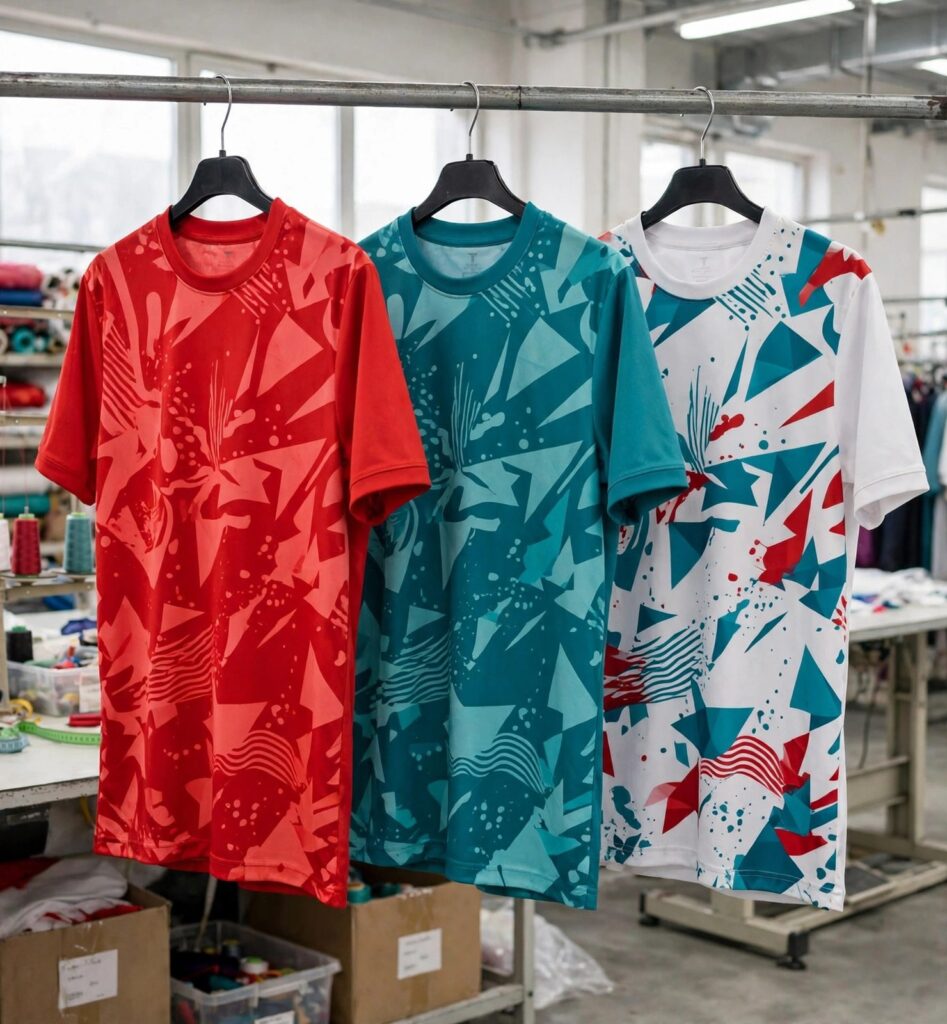
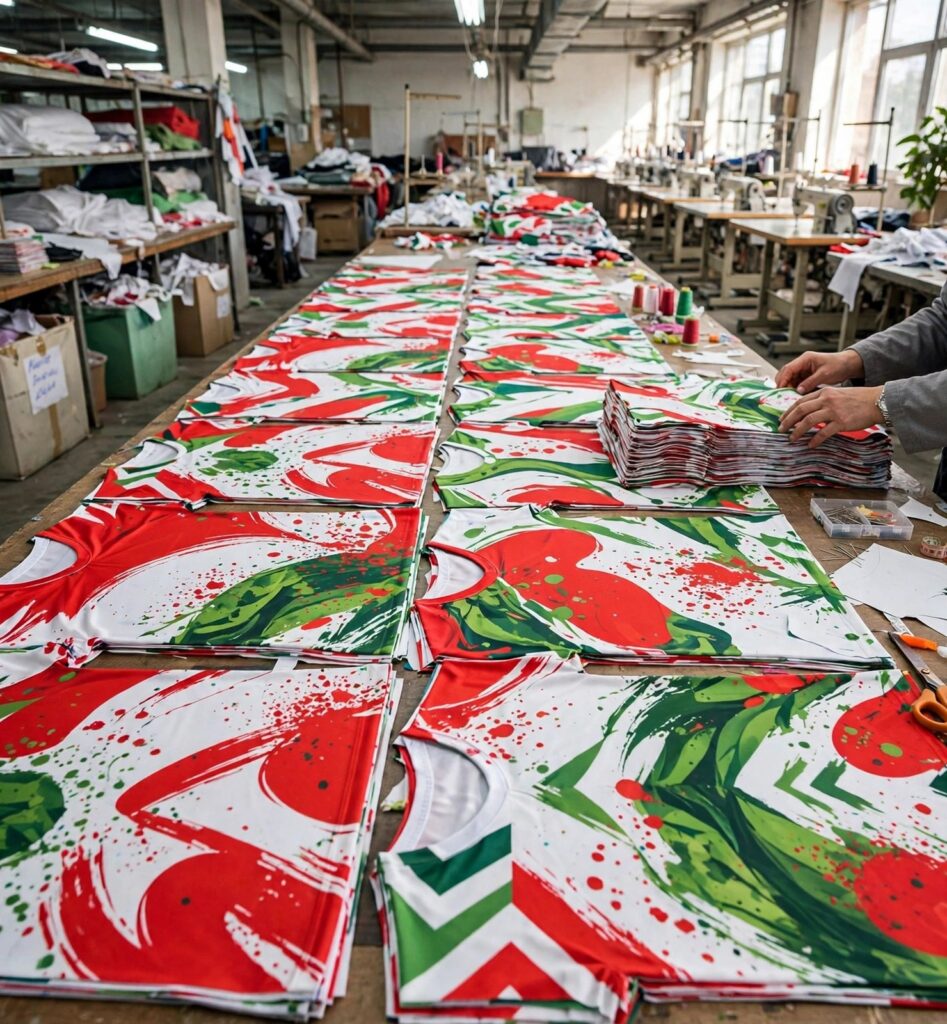
Most modern team kits are sublimation printed, and for good reason: the design - stripes, fades, sponsor marks, crest - is printed into the polyester itself, so it cannot crack or peel, and the same design can run across every size without repositioning artwork piece by piece. Our sublimation and all-over print section sits in the same building as the sewing lines, so panels are printed, checked against the approved design, and sewn without leaving the factory.
Colour approval is done on printed fabric, not on a screen. Screens lie about colour in ways every kit manager has discovered the hard way; the printed strike-off, viewed in daylight against the club's reference, is the standard the bulk is matched to. Where a design runs across a seam - a stripe continuing from shirt into sleeve - the panel layout is planned at the pattern stage so the print lines up after sewing, not approximately near it.
Print position is checked on the sewn garment across the size range, because a crest that sits correctly on a medium can ride high on an extra-small when panels are graded. Checking the smallest and largest sizes, not just the middle one, is a habit that costs minutes and has saved more kit orders than any machine in the building.
4. Names, Numbers and Squad Lists
The most personal part of a kit order is also the easiest to get wrong: the list. Names are spelled the way the club spells them, numbers are allocated per player, and sizes vary man by man. These details are applied from a checked list supplied by the buyer, proofed back before production, and then packed so that each player's shirt can be found without opening the whole delivery.
Our advice to every kit manager is unglamorous and worth following: freeze the squad list before the order is placed, and treat late additions as a small separate order. A list that keeps changing inside production is how a duplicate number or a misspelled name survives checking, and the cost of the discipline is trivial next to reprinting a team's shirts in the week of the first match.
5. Fitting a Squad and Packing a Kit
Team orders carry wider size spreads than retail orders - a senior squad, a youth academy and a supporters' range may all sit in one programme. Size sets are sampled so grading is checked across the spread, and goalkeeper or alternate-colour kits are run as part of the same order so the colours relate to the main kit by design rather than by accident.
Packing follows the buyer's structure: full kits folded as sets, team by team or class by class where a school or academy supplies the split. Quantities are agreed per colour and style with our team, and a multi-team club programme builds its total quickly once shirts, shorts and training wear are counted together. Payment runs on the house terms - 40 percent by wire transfer with the order, 60 percent before shipment, or an irrevocable, transferable letter of credit at sight.
6. Retail Activewear Ranges
Not every sportswear buyer is a club. Retail brands run activewear as a seasonal range - gym and training styles in the brand's colours and labels, sold through stores rather than handed out in a dressing room. These programmes use the same fabrics and lines, with retail packing, barcoding and hangtags from our packaging and tags setup. The fit conversation differs - retail activewear is graded to the brand's own size profile rather than a squad list - but the colour and fabric discipline is the same, and a brand's training range ends up held to the standard its customers compare against the big sports labels.
Season timing is the commercial detail that decides whether an activewear range works. Sports retail sells in windows - new year fitness, spring training, back to school - and a range that lands after its window is stock, not sales. Programmes here are scheduled backwards from the buyer's selling date, with the delivery plan set out on our production timeline page, so sampling, printing and sewing each carry a date the whole file is managed against.
Markets We Ship Sportswear and Activewear To
Team sport runs on seasons, and each market's calendar and favourite sports shape its orders differently.
Team Kit Programmes for USA Clubs and Schools
USA buyers order across school, college and club sport: soccer, basketball and training programmes with full name and number sets, in wide size runs. Sponsor-heavy designs make sublimation the default route, and programmes are timed to land before the school sporting year opens.
Club Kits for UK Grassroots Teams
UK grassroots football drives steady kit demand: full squad sets with alternate kits, plus training wear in club colours. Clubs reorder around the season calendar, and the approved design file is held so next season's kit matches this season's colours exactly.
Club and School Sportswear for German Buyers
German sports clubs and school outfitters order coordinated team wear with careful size documentation. Kits are packed per team from the buyer's lists, and fabric composition is specified and held across reorders so a replacement shirt feels like the original.
Sportswear for Canadian Leagues and Retailers
Canadian buyers split between league kit programmes and retail activewear, with heavier training layers for the cold months. Indoor-season sports keep jersey demand running through winter, which suits a steadier production spread across the year.
Activewear Ranges for French Sports Retailers
French buyers lean towards retail activewear with more design content: styled training ranges and fashion-led gym wear alongside club kits. Colour stories are planned across the range, and samples go through more design rounds before bulk.
Team and Gym Wear for UAE Buyers
UAE buyers order for academies, corporate leagues and gym retail, in light fabrics suited to a hot climate, with indoor sport running all year. Branding is prominent in this market, and kits are usually sponsor-led designs printed in full colour.