


Cut and Sew Manufacturing Services for Buyers Who Design Their Own Clothing
This part of the page covers the working detail: what cut and sew covers, what we need from you to start, how an order moves through cutting, sewing and finishing, and how the finished garments are checked against your specification.
1. What Cut and Sew Manufacturing Covers
Cut and sew is the complete making of a garment from flat fabric. The fabric is spread and cut to your patterns, the panels are sewn together operation by operation, and the finished garment is trimmed, pressed and packed. In our factory those stages run as one flow:
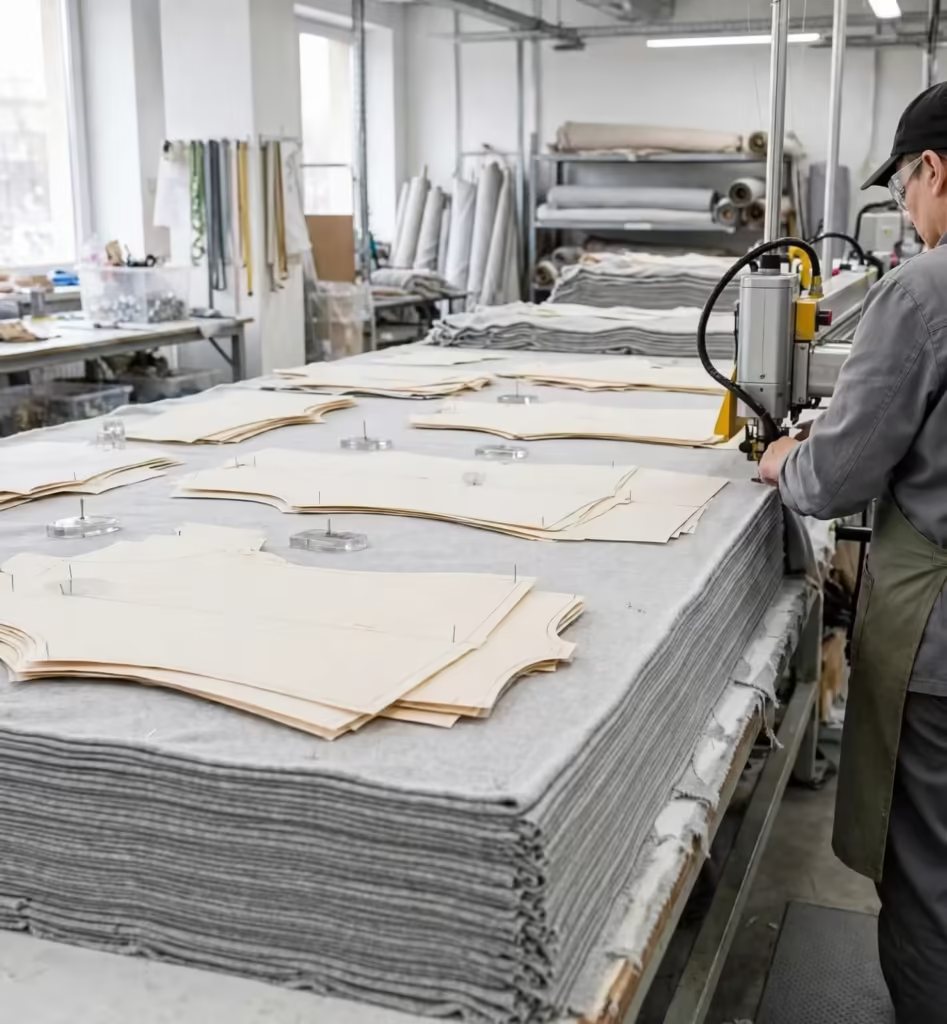
- Cutting - fabric spread in layers on the cutting tables and cut to your pattern set, panel by panel.
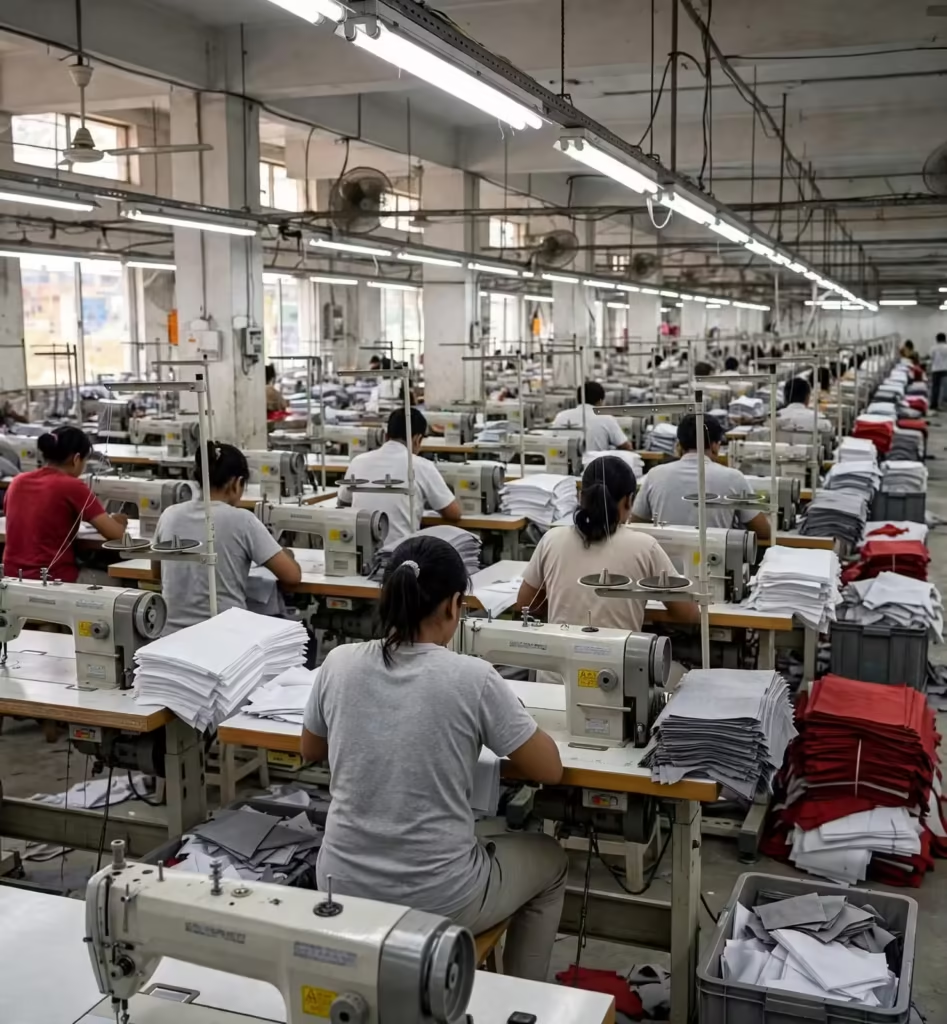
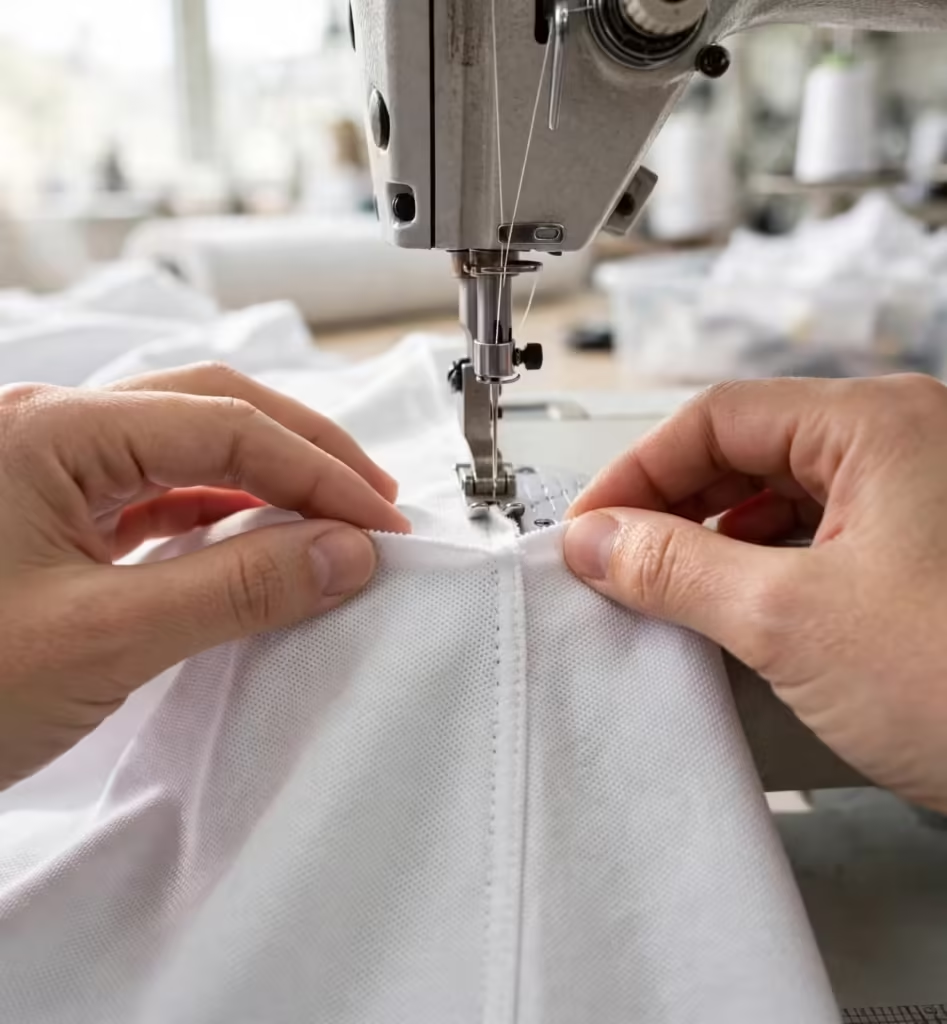
- Sewing - panels joined on the line in the operation order your construction requires, from main seams to finishing stitches.
- Trimming and finishing - loose threads removed, garments pressed and folded ready for checking.
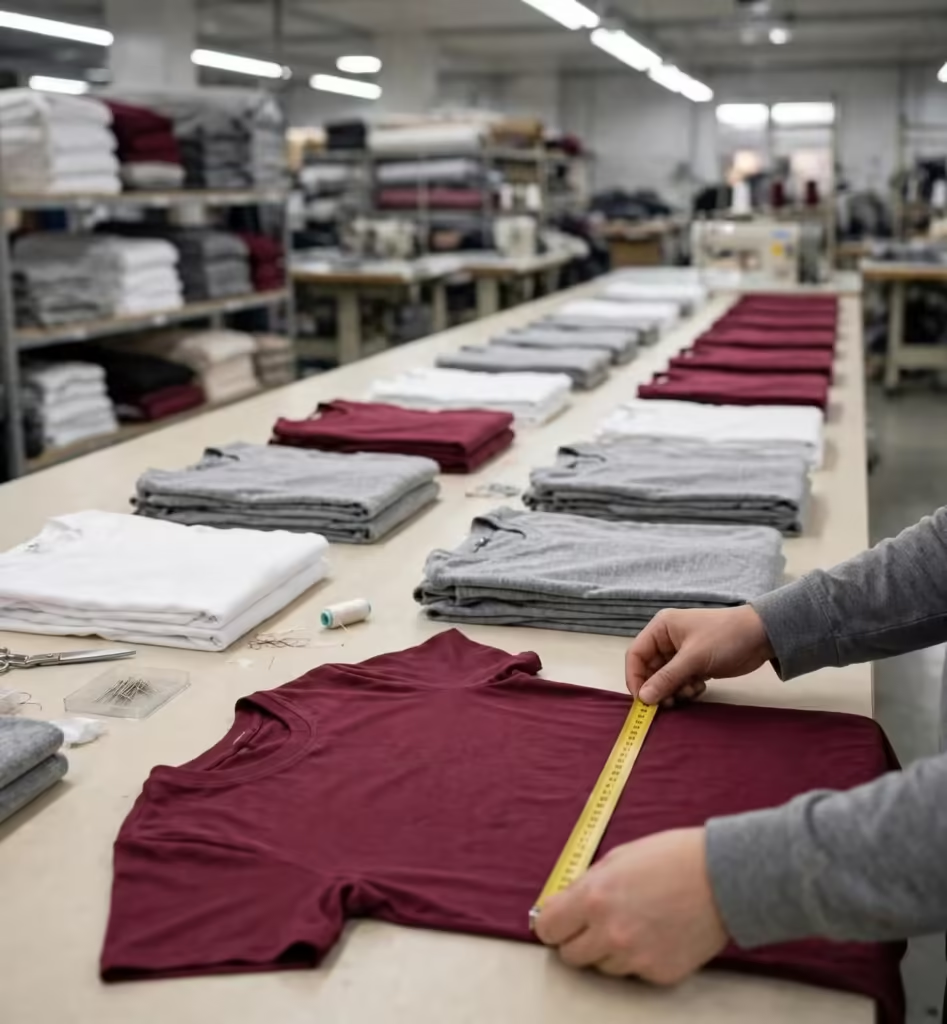
- Checking and packing - every piece measured and inspected against the tech pack before it is packed.
Because all four stages sit in one building in Dhaka, a problem found at checking can be traced back to the exact stage that caused it while the order is still on the floor.
Knit and woven work runs on its own lines, because the machines, the handling and the faults are different. Jersey and fleece are cut and sewn with the stretch of the fabric managed at every operation; woven styles are worked to crisper construction standards. Your style is placed on the line that matches its fabric, and the approved sample for that style governs both.
2. What We Work From: Patterns, Tech Packs and Samples
Contract sewing is only as accurate as the documents behind it. A cut and sew order starts from what you supply:
- Pattern set - the graded patterns for the full size range, or a base pattern we grade here to your measurement table.
- Tech pack - construction details, stitch types, seam allowances, measurements and tolerances for every size.
- Reference sample - a physical garment or an approved sample from your side, where one exists.
- Fabric decision - your fabric, supplied or sourced to your specification, agreed before cutting starts.
Where a document is incomplete - a missing tolerance, an unclear construction note - we ask before the first cut, not after the first thousand pieces. If you have the design but not the full documentation, our product development service builds the missing pieces with you first.
Grading deserves a plain word, because it is where size ranges quietly go wrong. A pattern graded by simply adding the same amount everywhere produces a large size that fits like a scaled photograph, not like a garment. Our pattern side grades from your measurement table size by size, and the pre-production samples are measured across the range - not just in the base size - so a fault in the largest or smallest size is found at sampling, when it costs a pattern correction, instead of at delivery.
3. How Your Order Runs Through the Factory
Once the documents and a pre-production sample are approved, bulk production follows a fixed path:
- Fabric is checked on arrival against the approved standard.
- Patterns are graded to your size set.
- Panels are cut to the graded markers.
- Bundles move to the sewing lines in order.
- Garments are sewn operation by operation.
- Pieces are finished - threads trimmed, measurements verified, pieces pressed - before packing to your instruction.
The path is the same whether the order is a first trial or a seasonal repeat, which is what makes the timeline in a later section predictable.
Finishing follows sewing in the same flow: trimming, pressing, final measurement checks and packing to your ratio. The order file - tech pack, approved sample record and any agreed changes in writing - travels with the order, so what was agreed at sampling is what the floor is held to.
Before cutting, fabric is inspected and allowed to rest, and shrinkage behaviour is checked where the fabric is new to us, because a pattern cut true can still finish wrong if the cloth moves after cutting. Cut work is planned so panels for one garment come from the same fabric layer run, keeping shade consistent within a garment as well as across the order.
4. Garments We Cut and Sew to Order
The cut and sew route covers most garment types a buyer designs. Knitwear is the largest share:
- T-shirts.
- Polo shirts.
- Sweatshirts.
- Hoodies and joggers, sewn from jersey, pique and fleece.
Woven work includes shirts, work pants and jeans on the woven lines, and knitted sweaters run through the sweater section under the same order discipline.
Styles that carry print or embroidery are decorated between sewing and finishing: artwork through our screen printing section, logos through our embroidery section, so the garment is never sent out of the building mid-order.
5. How Sewing Quality Is Checked on the Line
Quality in cut and sew work is held at three points:
- Inline checks along the sewing line catch construction faults while they can still be corrected cheaply.
- Measurement checks at finishing compare finished garments against your size chart and its tolerances.
- Final inspection before packing reviews workmanship, cleanliness and presentation piece by piece across the order.
Measurements are taken from actual production pieces, not from the sample, and recorded on the order file. If a measurement drifts outside your tolerance, the affected pieces are held back and reworked or remade; they are not packed and hoped away.
The records are yours to check against. Measurement sheets, inspection notes and the agreed-change history sit on the order file, and buyers who run their own pre-shipment inspection - or send an inspector - are checking against exactly the documents the floor worked from. There is one version of what was agreed, and everybody reads the same one.
6. Quantities and Order Structure for Cut and Sew Work
Cut and sew orders start at 3,000 pieces per order, from 800 pieces per colour and style. Styles and colours combine towards the order total, which suits buyers sewing a designed range rather than a single garment. The per-style floor exists because every style change on a line costs setup time: pattern change, machine settings, thread and trim change. Below 800 pieces of a style, that setup is spread over too few garments for the arrangement to work fairly for either side.
For a first order, buyers often sew two or three core styles to prove the fit and construction, then widen the range once the documentation and the factory are proven against each other. Your patterns and tech packs stay on your file, so the second order starts from the approved record, not from a fresh explanation.
Buyers also use the structure to balance an order: a high-volume core style carries the programme while smaller, more detailed styles ride inside the same order at their per-style floor. Each style still gets its own setup, its own approved sample and its own checks - combining quantities never means combining standards.
One file, one standard, whichever style is on the line: that is the whole arrangement in a sentence.
Cut and Sew Manufacturing for Buyers in the USA, Germany and France
Contract sewing buyers in our main markets tend to bring different kinds of work to the same factory floor. The three below are the patterns we see most often when a cut and sew order is being set up.
Contract Sewing for USA Clothing Brands
USA brands usually bring complete, well-documented styles: full tech packs, graded patterns and a reference sample, with the expectation that the factory reproduces them exactly at volume. That is the natural shape of OEM cut and sew work, and our part of it is discipline - holding the approved sample's measurements and construction across thousands of pieces, and flagging any forced change before it happens, not after.
Cut and Sew Production for German Buyers
German buyers tend to test a factory carefully on documentation first: tolerances, stitch specifications and measurement tables are agreed in writing before sampling. Production then runs against those numbers, with measurement records kept size by size. It is a demanding way to work and a fair one - both sides know exactly what a correct garment is before the first order ships.
Made-to-Order Sewing for French Fashion Labels
French fashion labels often bring shorter, more varied style runs - several designs in one order, each with its own construction character. The combined order structure fits that pattern: styles combine towards the 3,000-piece order total while each style keeps its own pattern set, its own approved sample and its own checks on the line.