



Quality Control and Inspection for Garment Orders Made in Bangladesh
A garment order is only as good as what arrives in the carton. Quality control is the chain of checks that connects the sample you approved to the goods you receive - at fabric stage, on the sewing line, at the finishing table and before the cartons are sealed. This page explains how quality control and inspection work at Siatex Bangladesh, what is checked at each stage, and how you can inspect an order yourself or through your own inspectors whenever you want to.
1. Quality Starts Before Sewing: Fabric and Trim Checks
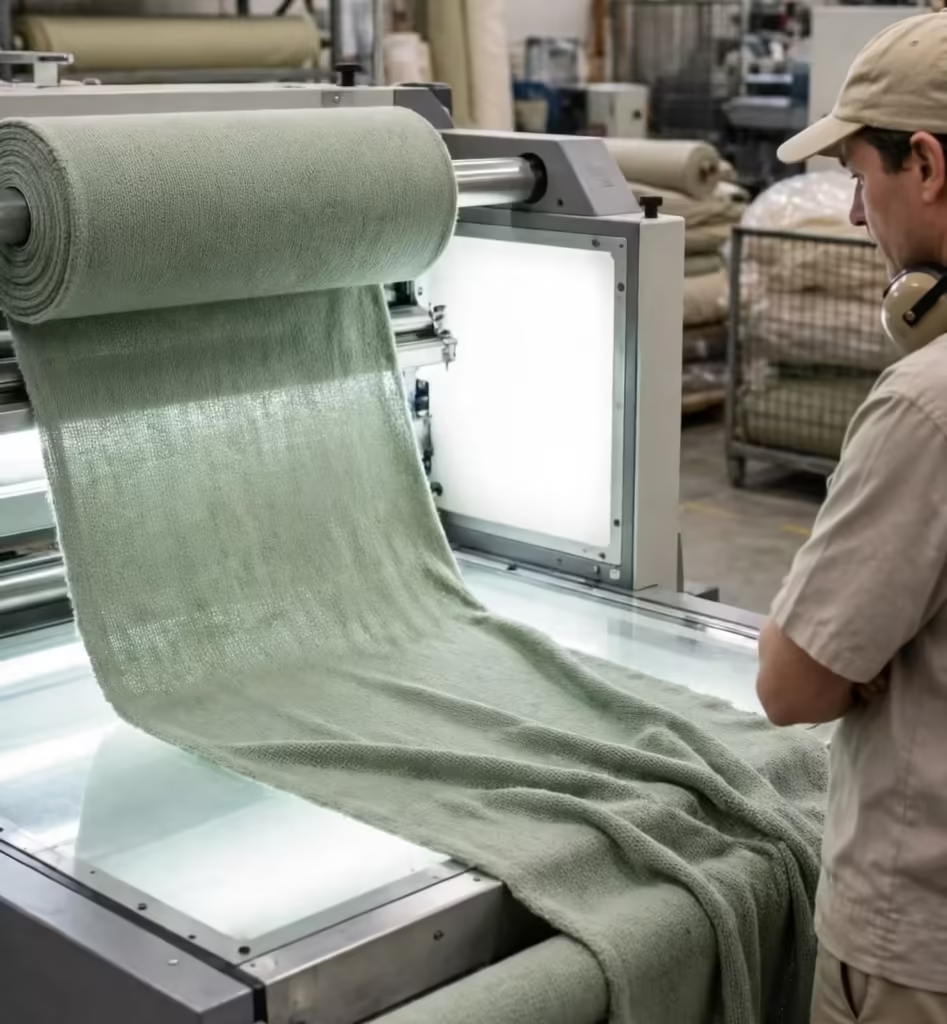
The first quality gate is not on the sewing floor; it is in the fabric store. Every fabric lot is inspected for:
- Faults.
- Shade consistency.
- Weight.
- Shrinkage behaviour.
That check happens before the lot is released to cutting, and trims - buttons, zips, drawcords, elastic - are checked against the approved sample when they arrive. A defect caught here costs a conversation; the same defect caught after sewing costs a production run. Our fabric sourcing page describes how lots are approved and held to a shade band across a whole programme.
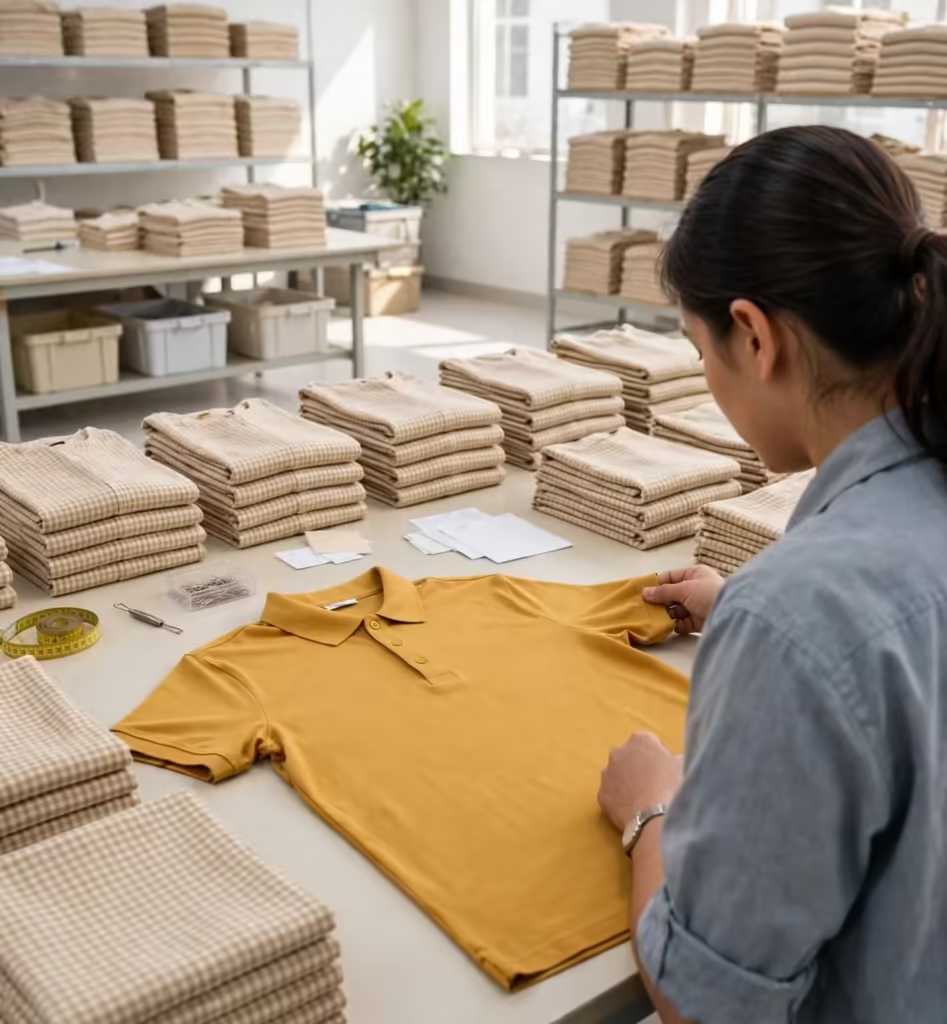
Cutting is checked too: the marker, the lay and the first cut panels are measured against the pattern before the lay is completed. This sounds basic, and it is - but most measurement problems in finished garments are born at the cutting table, not on the line, which is why the check sits there.
2. Inline Inspection While Your Order Is Sewing
While production runs, inline inspectors work the line: garments are pulled at the machine, checked operation by operation, and faults are fed back to the operator and the line supervisor while there is still time to correct the run. The things inline inspection concentrates on are the faults that multiply if they are left alone:
- Stitch quality - skipped stitches, loose tension, untrimmed threads and seam puckering.
- Construction accuracy - pockets, plackets, collars and cuffs built as the approved sample shows.
- Measurement drift - key points measured through the run, so a drifting size is caught in dozens, not thousands.
- Shade mixing - panels and garments checked so one dye lot is never mixed against another inside a style.
Inline findings are recorded per line and per day, and your merchandiser reads the same record you would - if a style has a recurring fault, you hear about it with the corrective action, not after shipment.
3. Final Inspection at the Finishing Table
Finished garments pass a full final inspection before packing: every piece is looked over, inside and out, at the finishing table. Checkers work to the approved pre-production sample and your specification:
- Appearance.
- Stitching.
- Measurements on a sampling basis across sizes.
- Labels and trims in the right places.
- Cleanliness: no stains, no loose threads, no needle damage.
Pieces that fail are repaired where repair is proper, and rejected where it is not; a repaired garment is re-inspected before it joins the passed stock.
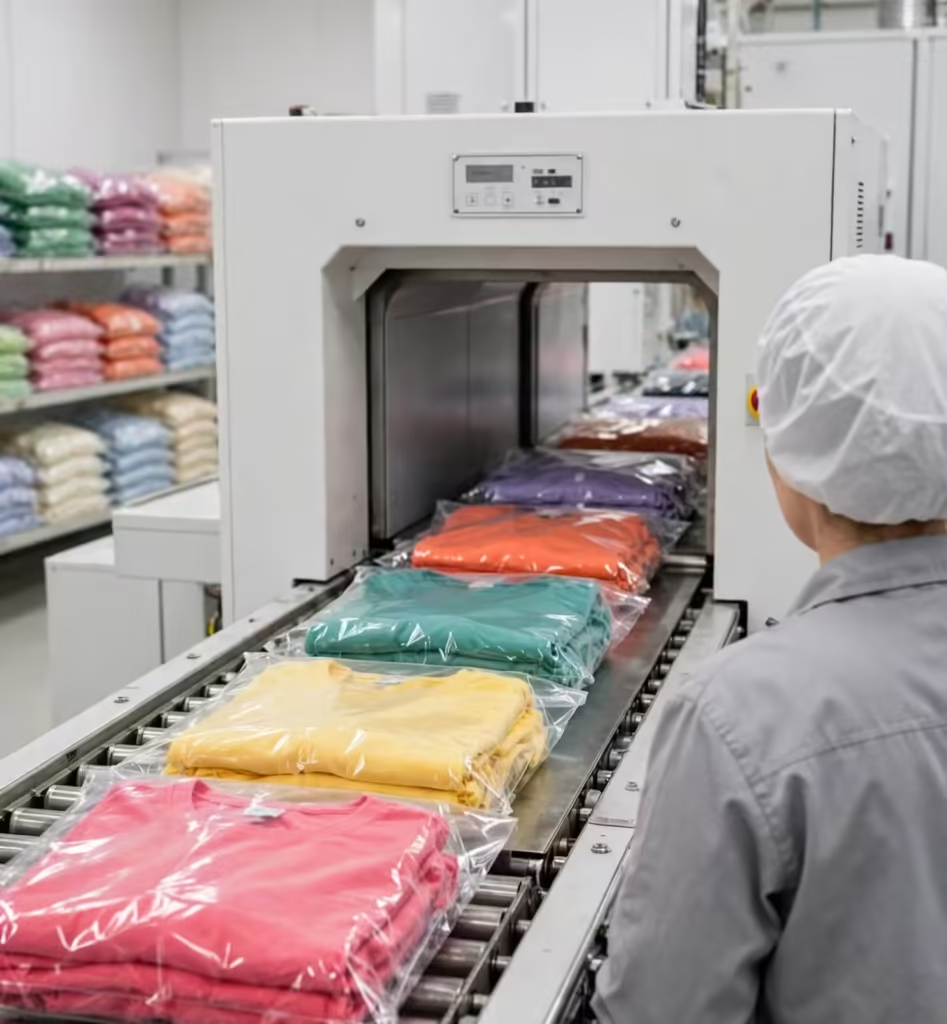
Metal detection is part of this stage for the programmes that need it: garments pass through the needle detector so a broken needle fragment can never travel inside a packed garment. It is a standard step buyers of children's wear in particular ask about, and it is documented on the order file like every other check. This final gate connects directly to our packaging and tags stage - only passed garments are folded, tagged and bagged.
Measurements are verified at this stage too, on a sampling basis across the size range rather than on the base size alone. A style can pass beautifully in medium and drift at the extremes; the finishing table is the last place that drift can be caught before it becomes a size-related return in your market. Measurement results are recorded per size, so if one size needs the pattern revisited before a repeat order, the evidence is already on file and the correction is made from numbers, not from memory.
4. How AQL Sampling Decides a Shipment
On top of piece-by-piece finishing checks, orders are audited on a sampling basis before shipment, using the AQL (Acceptable Quality Limit) method that garment buyers worldwide work with. A random sample is drawn from the packed order, inspected against the specification, and the number of defects found is compared with the acceptance number for the AQL level agreed with you. It is the same statistical language your own QC team speaks, so a result here means the same thing in your office as it does on our floor.
The point of the audit is not ceremony; it is a shipment decision made on evidence. If the sample fails, the lot is re-checked - up to a full re-inspection where the fault pattern calls for it - and re-audited before it can ship. You receive the inspection outcome for your order as part of the shipment file, so the quality record travels with the goods rather than staying behind in the factory.
Defects in the audit are classified the way buyers' own teams classify them:
- Critical faults that make a garment unsaleable or unsafe.
- Major faults a customer would notice and return the garment for.
- Minor faults that sit inside agreed tolerance.
The acceptance numbers treat those classes differently - a single critical fault fails a sample regardless of how clean the rest is - and that shared understanding of severity is what makes an AQL result a decision both sides trust rather than a number either side argues with.
5. Your Own Inspection Is Welcome - Ours or Yours
Many buyers prefer to inspect with their own people, and we make that easy:
- You can visit the factory yourself.
- You can send your local office or agent.
- You can nominate a third-party inspection company.
The order is made available, the approved sample and specification are put beside it, and our team supports the inspection without steering it. Findings are discussed openly at the table; where your inspector raises a point, it is dealt with before the cartons close, not argued about after they land.
This openness is deliberate. A factory that checks its own work carefully has nothing to protect from a second pair of eyes, and buyers who inspect once tend to build the visit into a routine that makes every later order smoother. If you are planning a first order, our factory tour page shows how visits are arranged, and inspection can be combined with seeing production for yourself.
6. Inspection Records and Order Traceability
Every check described on this page leaves a record on the order file:
- Fabric lot results.
- Inline reports.
- Measurement sheets.
- Final inspection and audit outcomes.
That file is what lets a question about any carton be answered months later - which fabric lot, which line, which inspection result stands behind it. For repeat programmes, the records also carry forward: a fault that appeared last season becomes a named checkpoint on this season's inline route.
Quality, in the end, is a system rather than an event. The final inspection matters, but it matters most because everything before it - fabric approval, cutting checks, inline work, the approved sample held as the standard - has already removed most of what a final inspection would otherwise find. That is the system your order runs inside, whether it is a first trial of custom garment orders or a standing private label programme.
Quality Expectations of Importers in Germany, the UK and the USA
Every market inspects, but each emphasises something different. These are the emphases we see most from the buyers we produce for.
Documented Quality for German Buyers
German buyers typically want the quality story documented, not just performed: inspection records, measurement sheets and audit outcomes kept on file and available against each shipment. Our order file system is built for exactly that, and German programmes usually agree the audit level and reporting format at order stage, so there are no surprises about what evidence a shipment carries when it is ready.
Retail-Ready Checking for UK Programmes
UK retail programmes concentrate on presentation at the point of sale: finishing standard, folding, labelling accuracy and how the garment looks coming out of the bag. Final inspection for UK orders weights those points accordingly, and barcode and ticket checks are built into the packing stage so a store-ready garment is genuinely store-ready when the carton opens.
Volume Consistency for USA Orders
USA orders run at volumes where consistency is the quality question: the ten-thousandth garment must match the first. Inline measurement control and shade discipline carry the weight here, together with carton-level audit sampling scaled to the order size, so a large shipment is judged on a properly drawn sample rather than on a look at the top layer.