


Visiting a Clothing Factory in Dhaka: What Buyers See and Check
Most buying relationships begin over email and samples, and a good many run for years that way. But at some point - before a first large programme, or when a range grows - many buyers want to stand where their garments are made. This page is for that moment: what a visit to our factory in Niketon, Gulshan, Dhaka involves, what to look at, and how to arrange it through our contact page.
1. First, the Building and the Working Day
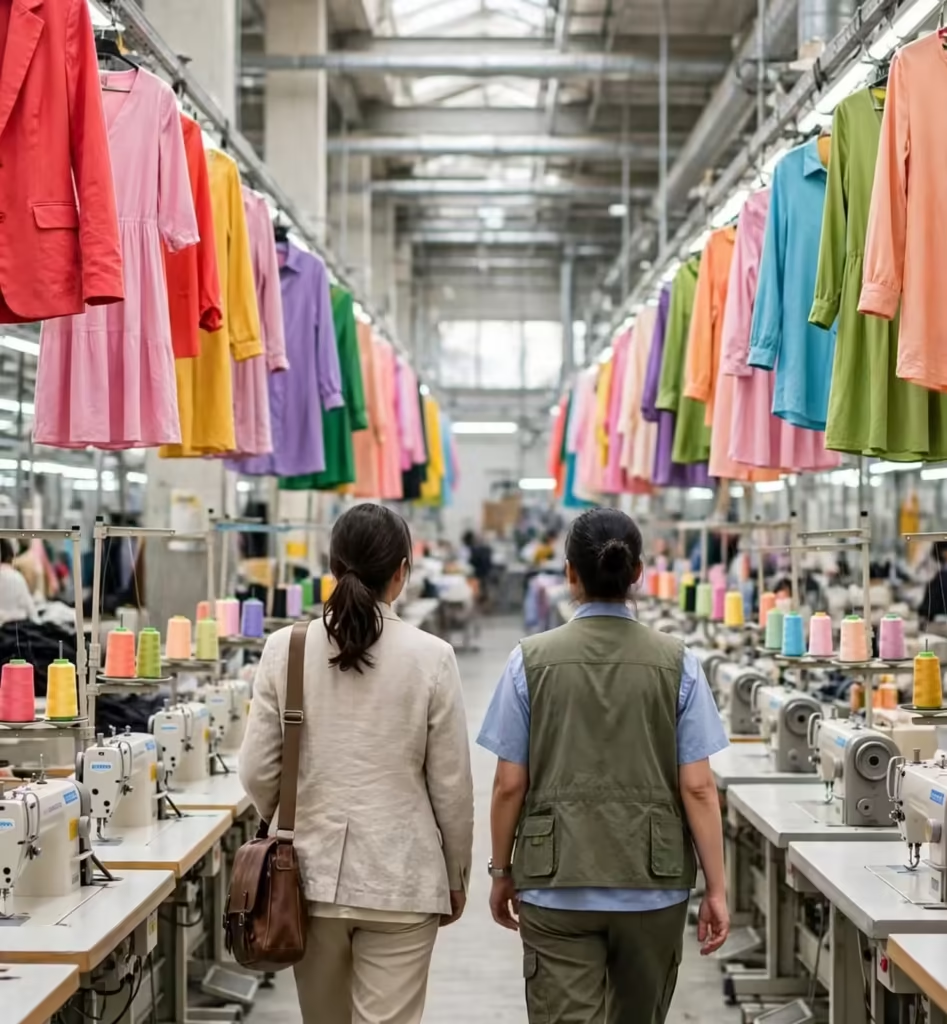
A visit starts with the ordinary: a working factory on a working day. You will see the floors as they are - fabric being received and inspected, cutting tables laid, lines sewing, finishing and packing running. We do not stage a special production for visitors, because a staged floor tells you nothing. What you are judging is a system, and a system can only be seen while it is working.
Bring the questions buyers actually need answered by their own eyes:
- Is the work organised or improvised?
- Are garments handled carefully between stages?
- Do the people on the floor work at a steady, sustainable pace?
Those impressions, gathered in an hour on the floor, are worth more than any brochure claim - ours included.
The factory and office sit in Niketon, Gulshan, in Dhaka - a straightforward journey within the city, and easy to combine with the other factory visits most buyers plan on a Bangladesh trip. We host visits on working days, when the whole building is in motion; a visit arranged on a quiet day would show you a building, not a factory, and we will say so if your dates land on one.
2. The Sample Room: Where Your Styles Begin
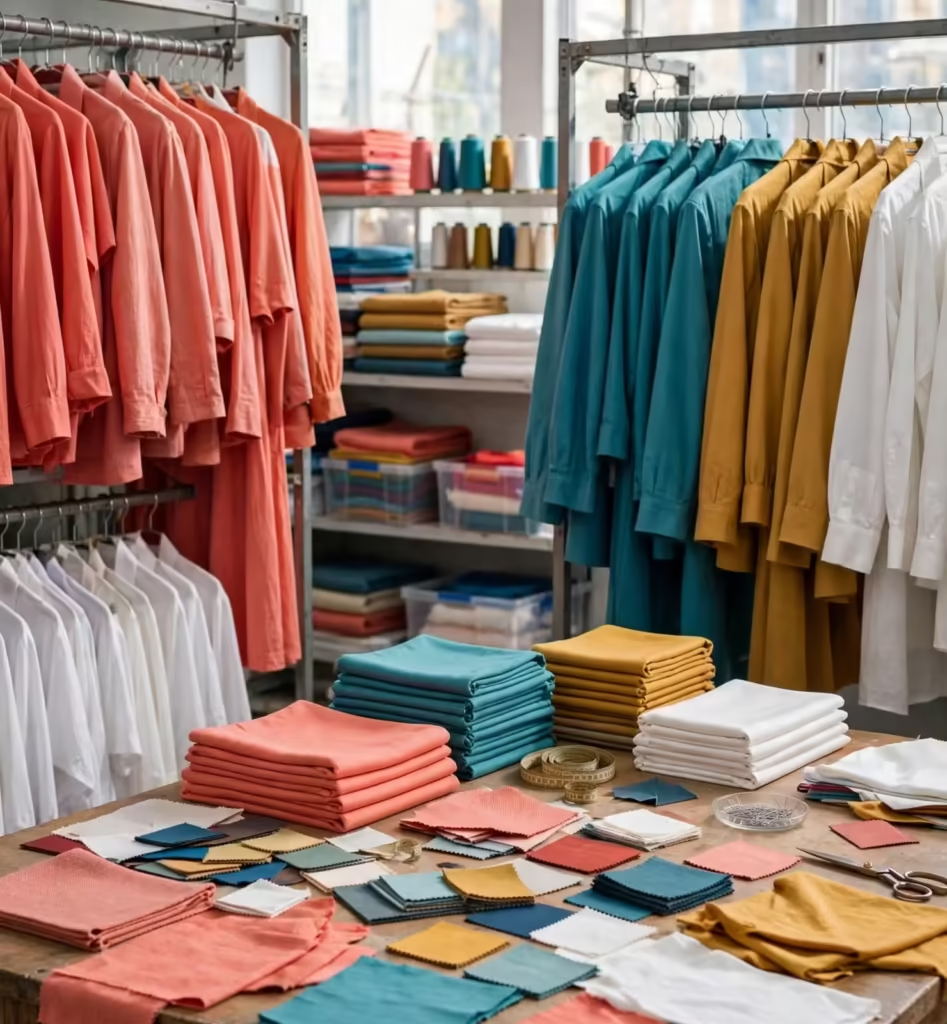
Most visits linger in the sample room, and rightly. This is where your tech pack becomes a garment:
- The pattern makers.
- The sample machinists.
- The rails of development samples and sealed counter-samples.
If your styles are in development, you can review them here in person - fit them, handle the fabrics, and settle in an afternoon the questions that take three courier rounds by post.
The sample room also shows you depth. A factory that develops well has patterns, size sets, and strike-offs organised and retrievable; the sampling route your own orders will follow is described on the sampling process page, and on a visit you can watch that route with your own styles on the rail.
3. Cutting and Sewing: the Heart of the Floor
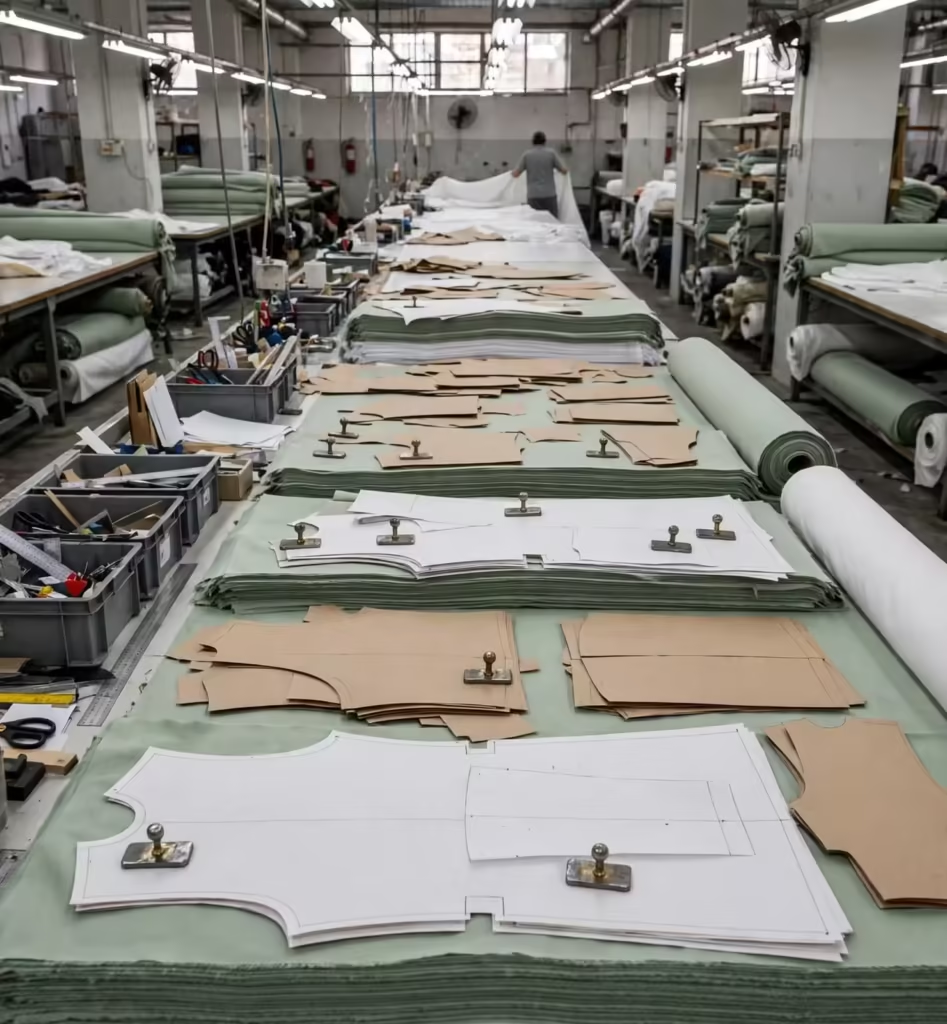
From the sample room the visit moves to production. On the cutting floor you will see fabric inspection, laying, and cutting - the stage where cloth becomes garments and where care shows immediately. On the sewing floors, lines run style by style: knitwear on the knit lines that are the core of this factory, woven garments on theirs.
Walk the line from start to end. Bundles move in order; each operation hands to the next; part-finished garments are checked as they travel, not just at the end. If your own order is in production during your visit, your merchandiser will walk you to it - many buyers time a visit for exactly that, to see their garments mid-run rather than as a finished report.
Notice, too, how the two sides of the factory sit together. The knitwear programmes that are our core - t-shirts, polo shirts, sweatshirts, joggers - run beside the woven work, sharing cutting, finishing, and packing discipline. A buyer running both knit and woven styles in one programme can see the whole of it in a single walk, handled by one team that answers for all of it.
4. Finishing, Packing, and the Document Desk
The end of the floor is where a factory's honesty is easiest to read. Finishing - trimming, final checking, pressing - and packing to buyer instruction happen here: your polybags, your labels, your carton marks. Watch how a rejected garment is handled, and where it goes. A floor that hides its rejects is telling you something; ours are pulled, recorded, and dealt with in the open.
The visit closes at the offices where your paperwork lives: the merchandising desks, the export documentation, the sample archive. The same team that answers your emails will be the people you have just met on the floor - for most buyers, putting faces and a real building behind an email relationship is the visit's lasting value.
It is worth spending a few minutes at the document desk even if paperwork bores you. Prepared here, against the orders you have just watched being sewn:
- Invoices.
- Packing lists.
- Shipment documents.
And the discipline is the same on paper as on the floor: figures that agree with cartons, cartons that agree with orders. Buyers supplying retail programmes, whose own customers audit paperwork as hard as product, usually leave this desk reassured.
5. What to Check as a Buyer: a Short List
Every buyer looks for something different, but experienced visitors tend to check the same short list:
- Fabric handling - is cloth stored, inspected, and moved with care?
- Line organisation - does work flow in order, or pile up between stages?
- Checking habits - are garments inspected during production, or only at the end?
- Sample discipline - are approved samples kept, labelled, and retrievable?
- Packing accuracy - do cartons match the buyer's instruction on marks, labels, and contents?
- The working atmosphere - a steady, orderly floor is a quality signal in itself
Ask us anything on that list directly. A factory confident in its answers will walk you to the evidence rather than describe it.
6. How to Arrange Your Visit
Arranging a visit is simple: write to us through the contact page with your dates in Dhaka and what you most want to see, and we will plan the walk around it. Visits fit best on working days, when every floor is running; if your order will be in production, tell us, and we will try to align the visit with its run so you see your own garments on the line.
If travel is not possible yet, the relationship does not have to wait:
- Samples.
- Video calls from the floor.
- Stage-by-stage reporting.
These carry many programmes for years - the full route is on the how it works page. And when you do come, you will find the floor matches what the emails described. That, in the end, is the point of the visit.
One practical note: tell us if there is something specific you need to verify - a process, a machine type, a way of packing - and we will make sure the right floor and the right people are part of the walk. A visit planned around your questions answers them; a general tour can drift past the very thing you flew in to see.
Buyers Who Visit Us, and What They Come For
Visitors arrive from every market we serve, but the purpose of the trip often follows the market's buying pattern.
Visits from Canada - Timing the Trip to the Season
Canadian buyers, running strongly seasonal programmes, often time a visit to sit between seasons: reviewing the range just shipped and developing the next one in the sample room on the same trip. It is an efficient pattern - one journey closes a season's questions and opens the next season's sampling while there is still calendar to spare.
Visits from France - Fabric and Hand Feel First
French buyers tend to head for the fabric store and the sample room before anywhere else. Hand feel, drape, and colour are judged in person and at length, and the visit often settles a season's fabric choices in a single morning of handling cloth. For fabric-led ranges, that morning replaces weeks of swatches travelling back and forth by courier.
Visits from the UK - Presentation and Packing Detail
UK own-label buyers usually spend their floor time at the end of the line: finishing, labelling, folding, and packing - the stages their retail customers will judge. Walking the packing tables with their own instruction in hand, checking marks and presentation against it, is the core of the trip, and changes agreed there go straight into the standing instruction for the programme.
Whenever you come, and from whichever market, the welcome is the same: a working floor, an open sample room, and a team ready to be checked. Start with a message through the contact page.