




Fabric Sourcing in Bangladesh for Clothing Brands and Private Label Programmes
Every garment order stands or falls on its fabric. The right cloth, in the right construction, dyed to the right shade and delivered to the cutting table on time, is what makes the rest of production straightforward. This page explains how fabric sourcing works at Siatex Bangladesh: where knit and woven fabrics come from, how shades are approved, what is checked before a single layer is cut, and how sourcing is sequenced against your delivery date.
1. Knit Fabric Sourcing for T-Shirts, Polo Shirts and Knitwear
Knitwear is the core of our production, so knit fabric sourcing is where most programmes begin. The constructions we run week in, week out:
- Single jersey.
- Pique.
- Rib.
- Interlock.
- Fleece.
- French terry.
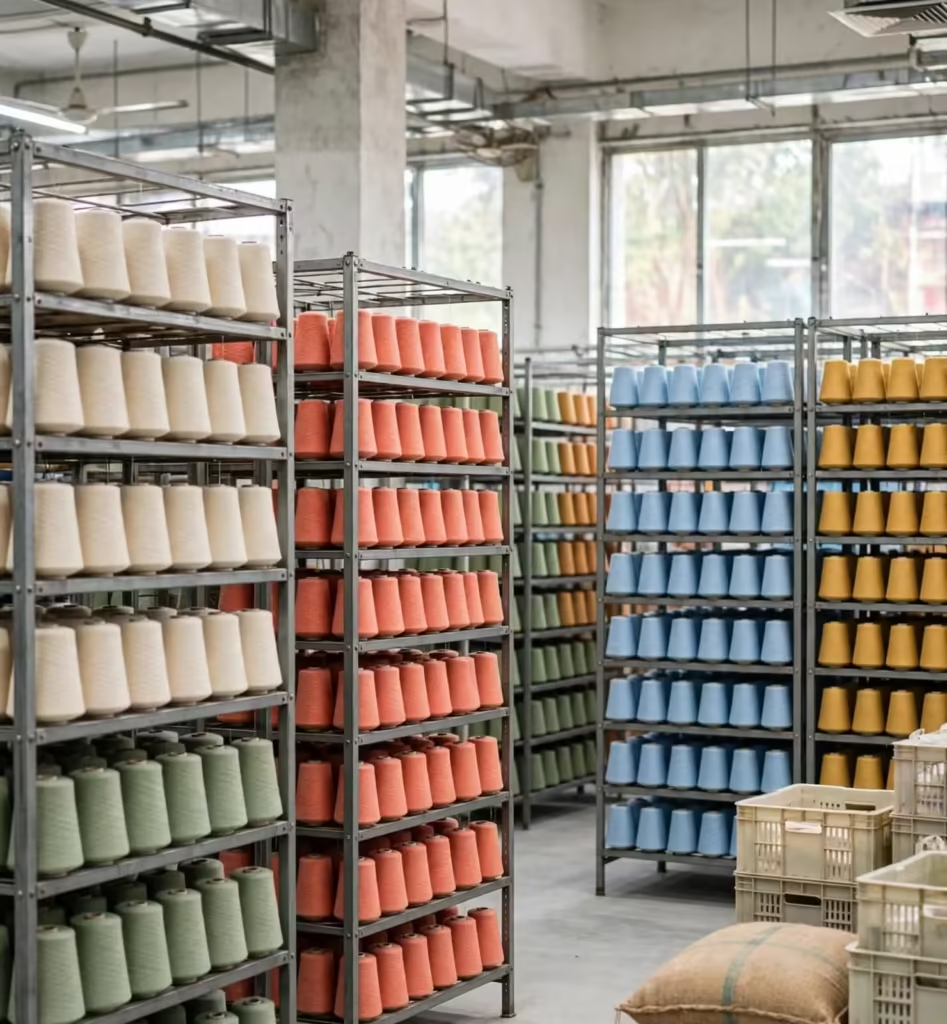
They are sourced in cotton, cotton blends, polyester performance blends and recycled and organic options where a programme calls for them. Because these bases are in continuous production, lead times are shorter and shade continuity across a season is easier to hold than with cloth bought for one order only. Where a buyer's own fabric nomination is part of the programme, we work with the nominated mill instead and manage the same approvals against it.
For private label clothing programmes running several styles on one fabric base, we consolidate the order across styles so the whole programme shares one consistent cloth. That consistency matters at retail: the same black, the same hand feel and the same shrinkage behaviour across a t-shirt, a polo and a sweatshirt carrying one label. Where a style needs something unusual - a slub yarn, a marl effect, a special rib - the development work happens at sampling stage, as part of our product development process, so there are no surprises left for bulk.
2. Woven Fabric Sourcing for Shirts, Pants and Workwear
Woven styles run on a different supply line from knits, and we source them with the same discipline:
- Poplin.
- Twill.
- Canvas.
- Denim.
- Oxford cloth.
These cover most woven programmes: shirts, chinos, work pants and uniforms. Denim runs in the washes programmes actually order - mid-indigo, stonewash and light washes - and workwear fabrics are chosen for abrasion and wash life rather than for hand feel alone. Woven lead times run longer than knit lead times, because weaving and dyeing are scheduled differently, and the timeline for a woven style is set honestly around that difference from the first quotation.
Buyers bringing their own nominated fabric can do that too: nominated cloth is received into our store, inspected on arrival like any other lot, and any problem is reported to you before cutting rather than discovered at the sewing line. Whether the fabric is ours or yours, it enters the same checking system, and your merchandiser can tell you at any point which lots are in store, which are in dyeing and which are cleared for cutting.
3. Dyeing, Shade Matching and Lab Dip Approvals
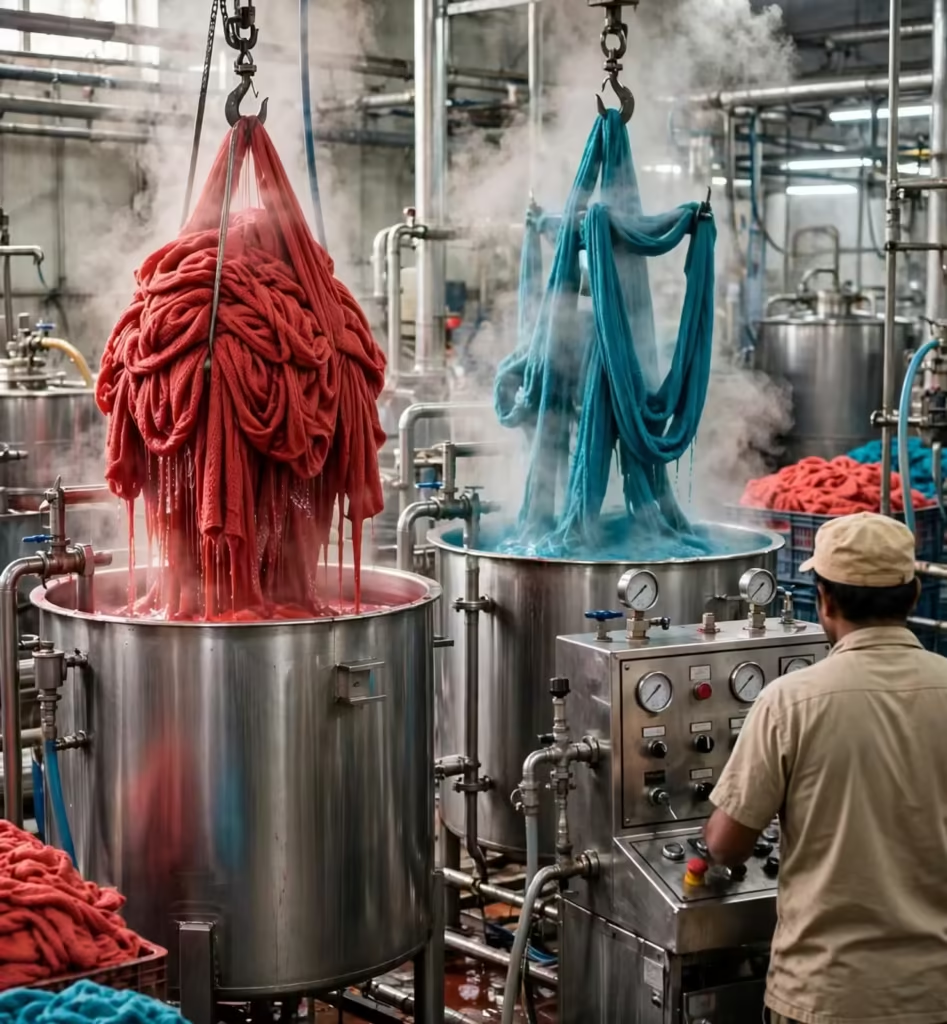
Colour is where fabric sourcing becomes exact. Your programme starts from a standard - a Pantone reference, a swatch cut from an existing garment, or a shade from a previous season - and the dye house works to it through a fixed sequence:
- Lab dips - small dyed samples of your actual fabric, submitted for your approval before any bulk is dyed.
- Shade comments - your corrections are worked into a second dip where the first is not close enough; bulk never starts on an unapproved shade.
- Shade band - an agreed tolerance range, so every lot in the programme sits inside the shades you have accepted.
- Bulk dyeing to the band - each lot is checked against the approved dip and the band before it leaves the dye house.
For custom garment orders running many colours on one style, the same sequence runs colour by colour, and the approved dips become the reference the whole order is sewn against. Repeat orders come back to the same dye house and the same recipe wherever possible, which is how a colour stays itself from one season to the next.
4. How Fabric Quality Is Checked Before Cutting
Fabric is inspected before it is allowed anywhere near a cutting table. Every lot passes across the inspection table or machine, and what the checkers are looking for is practical:
- Visible faults - holes, slubs, oil marks, uneven dyeing and shading from side to centre.
- Weight and width - GSM and usable width measured against what the order was costed on.
- Shrinkage behaviour - a test wash on the lot, so the pattern allowances match the cloth as it will behave.
- Hand feel and finish - compared with the approved sample, including any brushing, peaching or wash finish.
A lot that fails is not quietly worked around. It goes back to the mill or the dye house, you are told what happened and what it does to the timeline, and a replacement is sourced. Finding a fabric fault at inspection costs days; finding it after cutting costs the order - which is why the inspection sits where it does in our quality control system.
5. GSM, Composition and Fabric Construction Choices
Most fabric conversations with buyers come down to three decisions:
- What the cloth is made of.
- How heavy it should be.
- How it is constructed.
Composition choices follow the same logic:
- Cotton gives the hand feel most buyers want for basics.
- Adding polyester changes wash behaviour and price.
- Elastane changes fit and recovery.
None of these is the right answer on its own - the right answer is the one that matches your product, your price point and your market, and the sampling stage exists so that choice is made on real cloth. Programmes built on our blank t-shirts and other core styles start from fabric bases we already run every week, which shortens the decision for standard products.
Composition choices follow the same logic. Cotton gives the hand feel most buyers want for basics; adding polyester changes wash behaviour and price; elastane changes fit and recovery. None of these is the right answer on its own - the right answer is the one that matches your product, your price point and your market, and the sampling stage exists so that choice is made on real cloth. Programmes built on our blank t-shirts and other core styles start from fabric bases we already run every week, which shortens the decision for standard products.
6. How Fabric Sourcing Fits Your Production Timeline
Fabric is the longest lead item in most orders, so sourcing starts the moment an order is confirmed, in parallel with pattern and sample work - not after it. Knitting or weaving, dyeing and finishing each carry their own lead time, and your merchandiser builds the order plan backwards from your delivery date so the fabric lands in store with the cutting date protected. Where a programme is time-critical, we will tell you honestly which fabric choices keep the date safe and which put it at risk, before you commit to either.
The practical effect for you is simple: one plan, held by one merchandiser, in which fabric status is visible alongside cutting, sewing and finishing. If a dye lot runs late, you hear about it when we do, together with what we are doing about it:
- A second mill.
- A split lot.
- A resequenced cutting order.
Fabric sourcing done this way stops being a separate worry and becomes what it should be: the first, well-managed stage of making your clothes.
Fabric Sourcing for Clothing Importers in the USA, Germany and Canada
The fabric questions importers ask most depend on where they sell. The three markets below are the ones our sourcing desk hears from most often, and each leans on a different part of the system described above.
Fabric Programmes for USA Clothing Brands
USA programmes tend to run at volume, with wide colour ranges across basics and fleece. The sourcing priority is consistency at scale: one fabric base approved once, then knitted and dyed lot after lot inside the same shade band, so a re-order months later matches the first delivery on the rail. Our USA buyers typically lock fabric specifications at programme level and let repeat orders run against them, which keeps both shade and hand feel stable across a whole season of t-shirts, polos and sweatshirts.
Fabric Sourcing for German Own-Label Retailers
German own-label buyers usually arrive with precise fabric specifications - composition, weight tolerances and finishing requirements written into the order - and expect the sourcing to be documented against them. Lab dip records, lot inspection results and shrinkage tests are kept on the order file and shared on request, so the fabric story behind a garment can be shown, not just claimed. Where a specification calls for certified fibre options, the sourcing conversation starts at development stage so the right mill base is chosen from the beginning.
Fabric Choices for Canadian Clothing Importers
Canadian importers often plan around a colder retail season, which shifts fabric choices towards heavier fleece, brushed interiors and higher-weight jersey for layering pieces. Sourcing for these programmes weights warmth and wash durability alongside shade accuracy, and dye lots are scheduled early because winter programmes compete for the same dye house capacity. The result is a fabric plan built around the selling season, not just the shipping date.