



What Our Clothing Catalogue Covers, and How to Get It
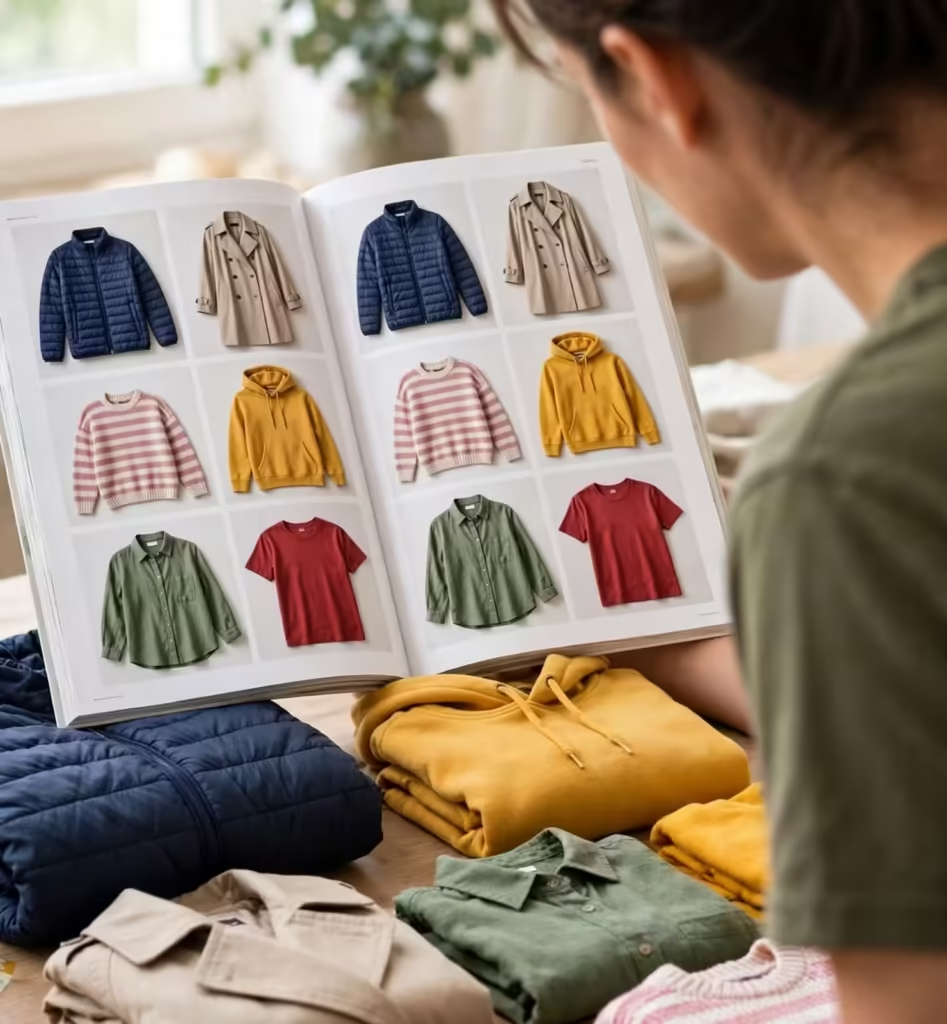
Buyers use a catalogue two ways: to check whether a factory's range matches their programme at all, and to shortlist specific styles for sampling. Ours is built for both. This page describes what is in it, range by range, and how to request it so the version you receive is the one relevant to your market.
1. The Knitwear Core: Tees, Polos, Fleece, and Joggers
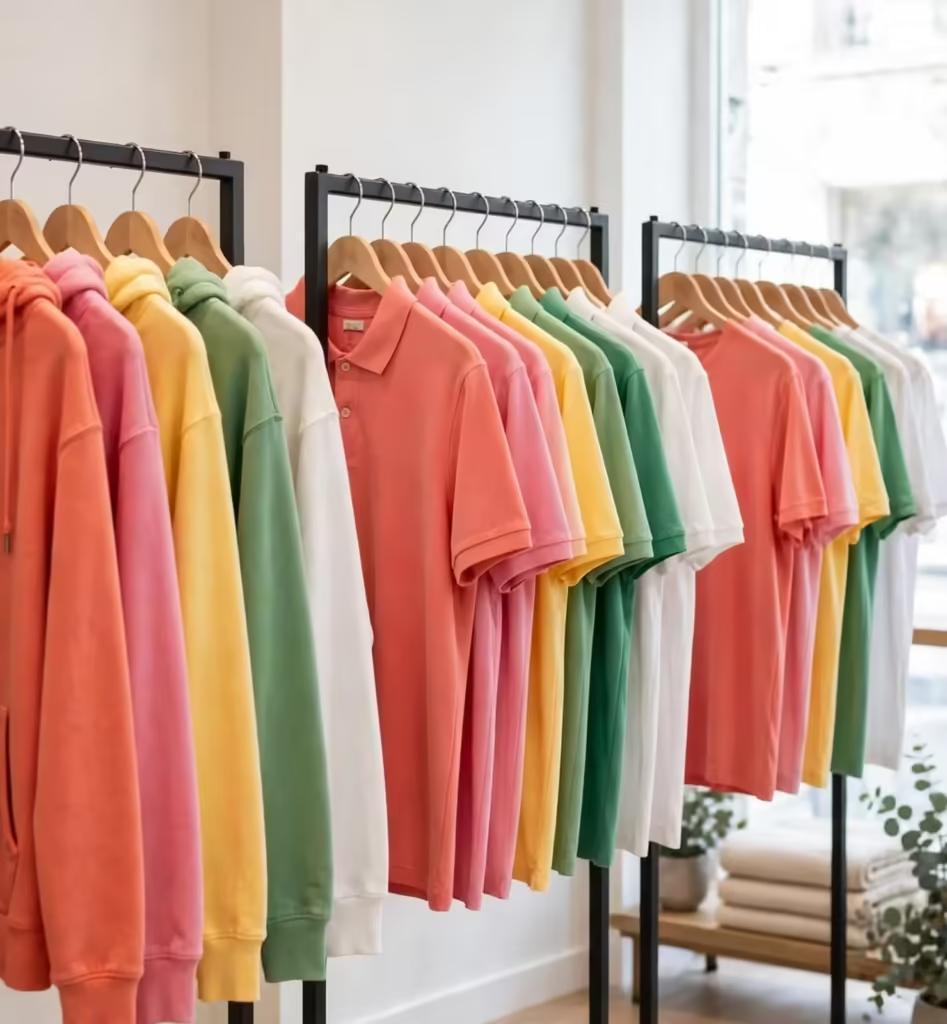
Knitwear is the heart of this factory, and it is the largest part of the catalogue. You will find:
- T-shirts from plain blanks to printed and garment-dyed styles.
- Polo shirts in pique and jersey.
- Sweatshirts and hoodies in fleece weights for different seasons.
- Joggers and knit bottoms that complete a casual range.
Each style is shown with its fabric, its construction, and the decoration it takes well - the detail a merchandiser needs, not a fashion photograph.
For private label buyers this section does double duty: these are the styles most often taken into own-label programmes, so the catalogue notes where your labels, prints, and embroidery sit on each garment. A style that cannot carry your branding cleanly is not a style worth sampling, and the catalogue helps you rule it out early.
The knitwear entries also carry the fabric weights each style is normally made in - light jersey for summer tees, heavier fleece for winter sweatshirts - because weight is the decision buyers most often get wrong from a photograph alone. If your market's season calls for a weight between the standards, say so in your request; the merchandiser's reply will note which styles take a heavier or lighter cloth without changing their character.
2. Woven Garments, Denim, and Workwear
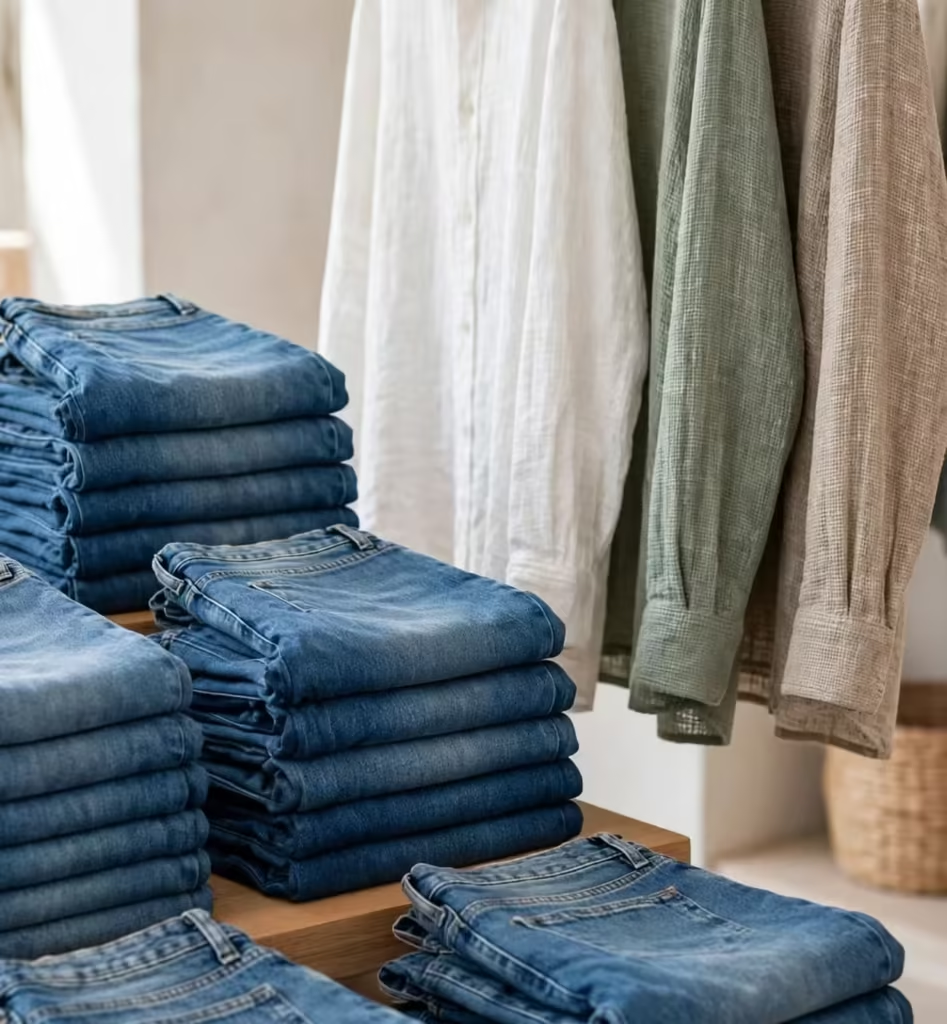
The woven side covers shirts, trousers, and denim - including jeans in the fits and washes programmes actually reorder - plus workwear built for durability:
- Work jackets.
- Work pants.
- Hi vis styles for trade and uniform buyers.
Woven styles are described by fabric composition and construction the same way as the knitwear, so a buyer running both sides of a range can shortlist from one document.
Workwear buyers in particular use this section hard. The garments are specified the way they will be judged in use - fabric weight, reinforcement, pocketing - because a work jacket is bought on its specification sheet long before it is bought on its photograph.
3. Ladies, Kids, and Activewear Ranges
Beyond the core, the catalogue covers ladies' styles, kids' clothing, and activewear - the ranges that let a buyer extend a programme without opening a second factory relationship. Ladies' knitwear follows the same make-to-order route as the men's core, with its own fits and fabrics; kids' styles are built to the same construction standard, scaled; activewear covers the performance-leaning knits that sports and leisure programmes ask for.
Each of these sections is marked clearly, so a buyer who needs only one of them can go straight to it. Tell us which ranges you buy when you write, and the reply will open at the right page.
These sections matter more than their size suggests. A buyer whose core is men's knitwear but who is asked twice a year for a ladies' or kids' line no longer has to find, vet, and sample with a second factory for a small part of the programme - the same merchandiser, the same checking culture, and the same paperwork run across the whole order. Consolidation is worth real money in sampling rounds and freight alone, and it is the reason these ranges sit in one catalogue rather than three.
4. What Each Catalogue Entry Shows You
Every style in the catalogue carries the information needed to judge it before sampling:
- The garment and its construction - seams, collar or neckline, cuffs, hems
- The fabric - type, composition where it defines the cloth, and weight
- The decoration the style takes - print, embroidery, applique, or plain
- The label and branding positions for private label programmes
- The sizes the style is graded in
What the catalogue deliberately does not carry is prices: a garment's price depends on your quantity, fabric choice, and packing, and a printed price would be a fiction. Prices are quoted per style from your specification, as the get a quote page explains.
A word on currency, in both senses. The catalogue is a living document: styles join it as programmes prove them, and leave it when fabrics or constructions fall out of production reality. The version you receive is the current one, and if a style you shortlist has been superseded, the merchandiser's reply will name its successor rather than let you sample a garment that cannot be repeated. Repeatability matters more than novelty in this trade, and the catalogue is edited with that bias.
5. How to Request the Catalogue
Write to us through the contact page with three things:
- Your market.
- The ranges you buy.
- Whether you run your own label.
That is all it takes - the catalogue comes back with the relevant sections in front, and a merchandiser's note on the styles closest to your programme. If you already know the styles you want, skip the catalogue step and go straight to the inquiry route.
One honest note: the catalogue shows what we make, in the ranges we make it. If your programme needs a garment outside those ranges, we will say so in the reply rather than send you a document that wastes your time - and where we can point you to the right kind of maker, we will.
Expect the reply to do more than attach a file. A good catalogue response opens a conversation: the merchandiser will ask about your season, your price level, and your label plans if you did not state them, because the shortlist that matters is the one inside your programme's numbers. Answer those questions and the sampling that follows starts from styles that were already realistic for you, not from the whole book.
6. From Catalogue to Sample to Order
The catalogue is a starting point, not a shop. The route from it runs:
- Shortlist styles.
- Ask questions on the ones that matter.
- Then sample the finalists in your fabrics and your branding before any bulk commitment.
That is the sequence set out on the how it works page. Most buyers shortlist more styles than they finally sample, and sample more than they finally order; that narrowing is the catalogue doing its job.
Keep the catalogue beside your range plan when it arrives. The styles buyers reorder season after season are rarely the most unusual ones in it - they are the ones whose fabric, construction, and price held together across a whole programme, and those are the entries written in the most detail. If you mark your shortlist and send it back, the merchandiser will reply style by style: what it takes to make each one yours, what to check in sampling, and where a near-alternative in the book might serve your price level better.
How Buyers in Different Markets Use the Catalogue
The same document gets used differently depending on the programme, the season, and the buying style behind it.
Catalogue Use in Australia - Building a Range from One Document
Australian buyers building private label ranges often work the catalogue end to end: knitwear core for the volume styles, ladies and activewear sections for range extension, all from one maker so the programme's fabrics and labelling stay consistent. For a buyer on the far side of a long shipping route, consolidating a range with one factory simplifies everything downstream - sampling, consolidation, and paperwork alike.
Catalogue Use in the UAE - Workwear and Uniform Programmes
Buyers in the UAE tend to enter through the woven and workwear sections: uniforms and work garments specified tightly, bought on construction detail. The catalogue's specification-first entries suit that buying style, and workwear inquiries usually move from catalogue to a detailed quotation faster than any other range, because the specification is already half written by the time the inquiry arrives.
Catalogue Use in the USA - Print-Ready Blanks and Basics
USA buyers most often shortlist from the knitwear core - t-shirts and fleece for print programmes, polos for uniform and promotional ranges - and use the decoration notes in each entry to judge what a style will do with their artwork. A blank that prints well and washes well is the whole business in that market, and the catalogue entries say plainly which styles have proved it.
Whichever market you buy for, the request takes one message: your market, your ranges, your label plans. Send it through the contact page and the catalogue that comes back will open at the right place.