



Knitwear Production Knowledge Built Style by Style
Knitwear looks simple from the outside - a tee is a tee - until shade, shrinkage or collar shape drifts inside one order and the returns start. Our knitwear work is organised around preventing exactly that: fabric agreed and tested before cutting, patterns held on file, and every style checked against its approved sample while it is still on the line. The sections below cover the styles, the fabrics and the order patterns that make up this side of the factory.
1. The Knitwear Styles We Make Most
The core of the family is the everyday knit range most clothing brands are built on:
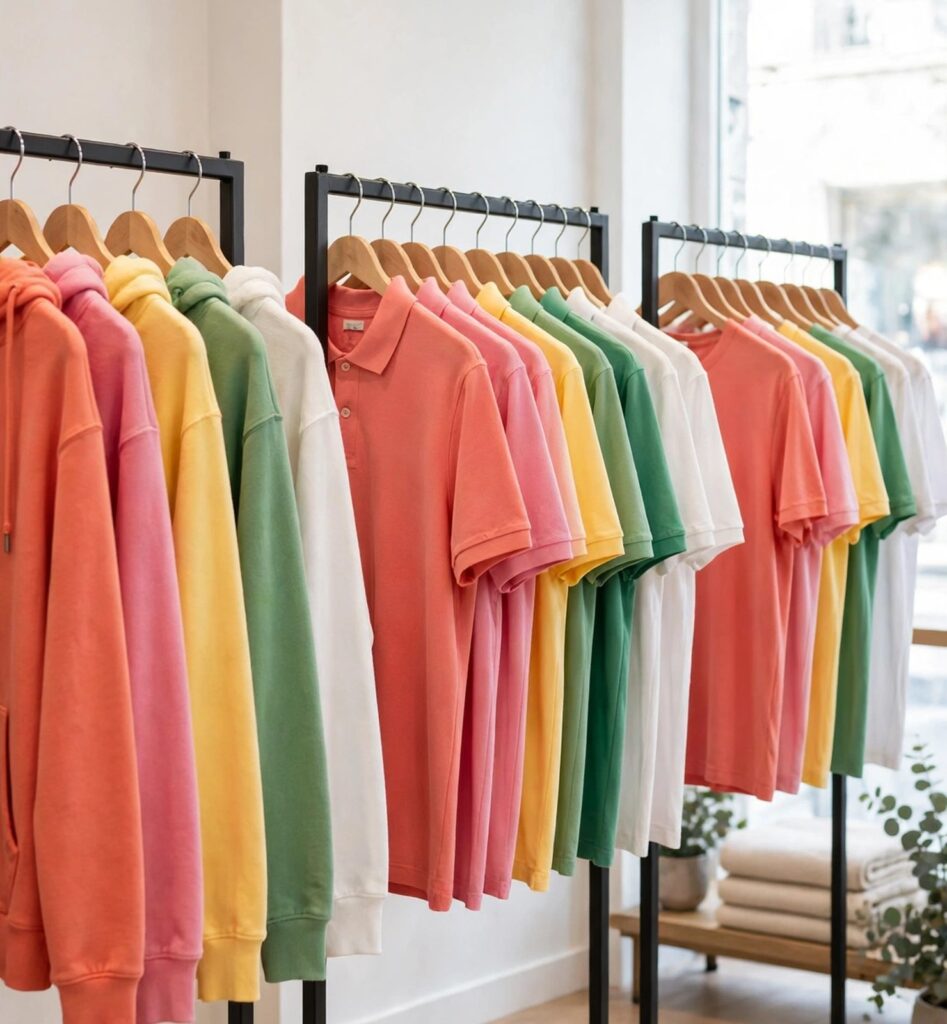
- T-shirts - crew neck, V-neck and fashion cuts in single jersey, from plain blanks to printed styles.
- Polo shirts - pique knits with knitted collars and cuffs, plain or with embroidered chest logos.
- Hoodies and sweatshirts - brushed and loopback fleece, pullover and zip styles.
- Tank tops and vests - rib and jersey, for summer ranges and layering programmes.
- Knitted sweaters, pullovers and cardigans - flat-knit styles for the colder end of the range.
Most buyers run several of these together under one label, which is why the range is planned as a programme rather than as separate orders: the same fabric file, the same size grading and the same packing standard run across all of them, so a customer's tee and hoodie from the same brand feel like relatives, not strangers.
2. Fabrics and Weights: How a Knit Gets Specced Here
A knitwear order succeeds or fails at the fabric stage, months before anyone sews a seam. When a style is set up, the fabric is fixed on the order file with its full working description:
- Fabric type - single jersey, pique, interlock, rib, loopback or brushed fleece.
- Composition - 100 percent cotton, cotton-polyester blends, or cotton with elastane where the style needs recovery.
- Weight in GSM - light jerseys for summer tees through to heavy fleece for winter hoodies, matched to the market the garment sells into.
- Colour standard - the approved lab dip or shade reference that bulk dyeing is matched against.
Before bulk fabric is cut, it is checked for weight, shrinkage and shade against that record. Knit fabric that shrinks beyond the agreed tolerance is not cut and hoped for the best - the pattern allowance is set from the tested shrinkage, so the garment your customer tries on measures what the size chart says. Buyers who want to understand the sourcing side in more depth can read our fabric sourcing page.
Composition deserves a plain word, because it is where cheap knitwear is usually made. A tee priced on a lighter GSM or a higher polyester share than the one quoted will feel different in the hand and wash differently at home, and the customer blames the brand, not the fabric mill. We would rather argue about the specification at sampling stage, with the cost of each option in the open, than save money quietly inside the cloth.
3. Decoration on Knitwear: Print, Embroidery and Plain
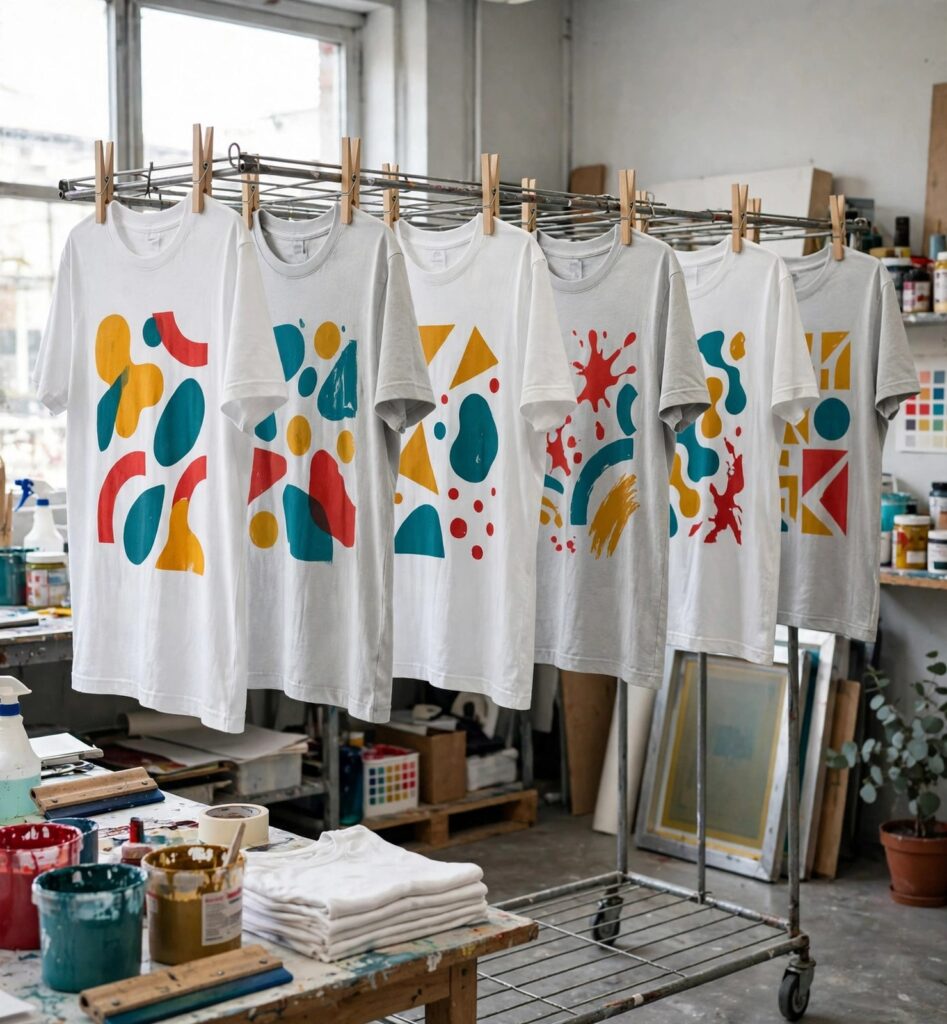
Plain garments are only half the knitwear trade. Chest prints, back prints and embroidered logos are handled in the same building as the sewing, so the decoration is approved on the actual garment, in the actual fabric, before bulk starts. Water-based and plastisol prints run through our screen printing section, logos through the embroidery section, and all-over designs through sublimation where the fabric suits it.
That matters more than it sounds. A print that looks right on a white sample can sit differently on a dark ground or a textured pique, and a logo digitised for jersey can pucker on fleece. Because the garment and the decoration are made under one roof, those problems surface at the strike-off stage, when they cost a sample - not at final inspection, when they would cost a shipment.
Buyers building a printed range usually send artwork before the garment sample is even finished, and the two are then approved together: garment fit first, print size and position against the approved size set, so a chest print lands in proportion on the smallest and largest sizes, not just on the medium the artwork was drawn for.
4. Fit, Sizing and Staying Identical Across Repeats
Knitwear brands live on repeat customers, and repeat customers notice when this season's medium is last season's large. Fit is therefore treated as a record, not a memory: the approved pattern, the measurement chart and the finished-garment measurements from the accepted bulk are kept together, and repeats are measured back against them at the finishing table.
Size sets are sampled before a new style goes to bulk, so grading errors are caught on a handful of garments. If you change a fit - lengthening a body, easing a chest - the change is made to the pattern, sampled again and written onto the file, so the new fit becomes the standard rather than a one-off variation that the next order quietly loses.
The same record-keeping covers collars, cuffs and trims - the small parts of a knit garment that quietly change when a trim supplier changes. Rib quality, collar tape, button specification and thread shade are all on the style file, and a substitution is raised with the buyer rather than made on the line.
5. How Knitwear Programmes Are Quantified
Knitwear programme quantities are agreed per colour and style with our team, because the workable minimum depends on the fabric and the operations each garment needs. In practice most buyers build the total across several styles and colours - a tee in four colours, a polo in three, a hoodie in two - which is how a full knitwear range is launched without any single style carrying an unrealistic quantity. Our MOQ and pricing page explains how the combining works, and the private label page covers how your labels, hangtags and packaging are set up across the range.
Payment follows the house terms on every family: 40 percent by wire transfer with the order, 60 percent before shipment, or an irrevocable, transferable letter of credit payable at sight. The terms for a programme are confirmed in writing before production starts, so the money side never becomes a surprise inside the delivery schedule.
6. Colour and Shade Control Across a Knitwear Range
A range falls apart visually when the navy in the tee is not the navy in the polo. Different knit structures take dye differently, so shade is approved per fabric, against the same colour standard, and checked again when the bulk fabric arrives - before cutting, while a mismatch can still be corrected. Where a programme deliberately mixes fabrics in one colour story, the approvals are made side by side on one table, not fabric by fabric in separate weeks.
That discipline is also what protects reorders. A colour repeated after six months is matched to the retained shade standard and the previous bulk, not to a photograph or a memory, which is why long-running knitwear programmes can add a new style in an existing colour and have it sit naturally beside stock the customer bought last year.
Markets We Ship Knitwear Programmes To
Knitwear is the family every market buys, but each market weights the styles differently. These are the patterns we work to most often.
Private Label Knitwear for USA Brands
USA brands run the heaviest knitwear programmes: blank and printed tees, fleece and polos in wide size runs, ordered as standing ranges with seasonal colour changes. The work suits the combined-order structure well, because a full size and colour matrix reaches the order total quickly.
Knitwear Ranges for UK Clothing Labels
UK labels typically build a tighter, more fashion-led knit range - fewer styles, more colour and print content per style. Sampling carries the weight on these programmes, with print strike-offs and fit samples agreed before the range is committed.
Measured Knitwear Orders for German Retailers
German retail buyers spec knitwear tightly: GSM, composition and measurements in writing, tolerances stated, and bulk checked against them. That way of working suits us - the fabric record and measurement chart on each style file are exactly the documents those checks are made from.
Seasonal Knitwear for Canadian Importers
Canadian importers split knitwear sharply by season: light jerseys and tees for summer, heavy fleece and hoodies for a real winter. Programmes are planned early so the fleece weights are booked and dyed before the season's cutting window fills.
Fashion Knitwear for French Buyers
French buyers take the design-led end of the family: fashion-cut tees, fine-gauge knits and ladies styles where fabric hand-feel decides the order. Smaller, more detailed runs are common, combined across styles to reach the programme total.
Knitwear Basics for UAE Retailers
UAE retailers order knitwear as retail basics - tees, polos and light fleece in steady colours, packed for store distribution. Light and mid weights dominate, since the market's cold season is short, and reorders tend to be frequent and fast-moving.