


Sublimation Printing and All-Over Print Manufacturing for Sportswear Buyers
This part of the page covers the working detail: how sublimation works on a garment, the products it suits and the ones it does not, how your artwork is laid out and colour-matched, and how printed panels become finished garments in the same factory.
1. How Sublimation Printing Works on a Garment
Sublimation starts on paper, not on the garment:
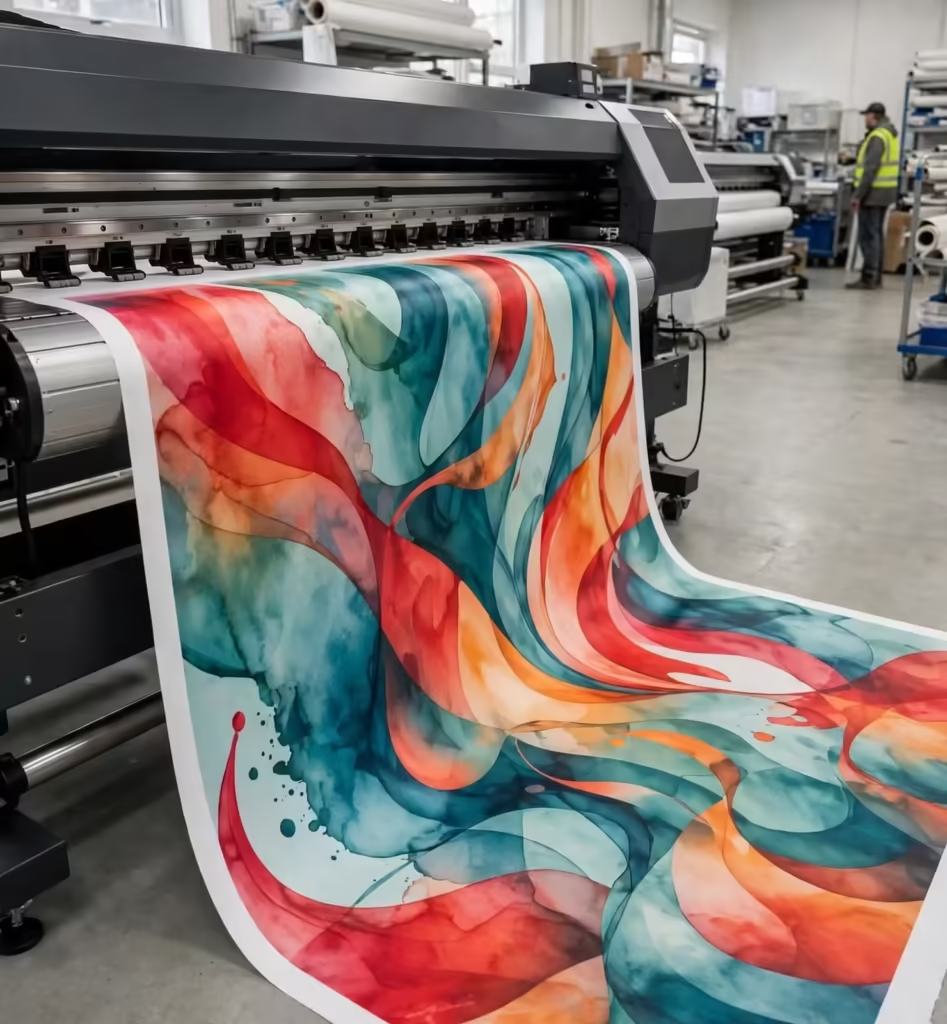
- Your design is printed with special inks onto transfer paper.
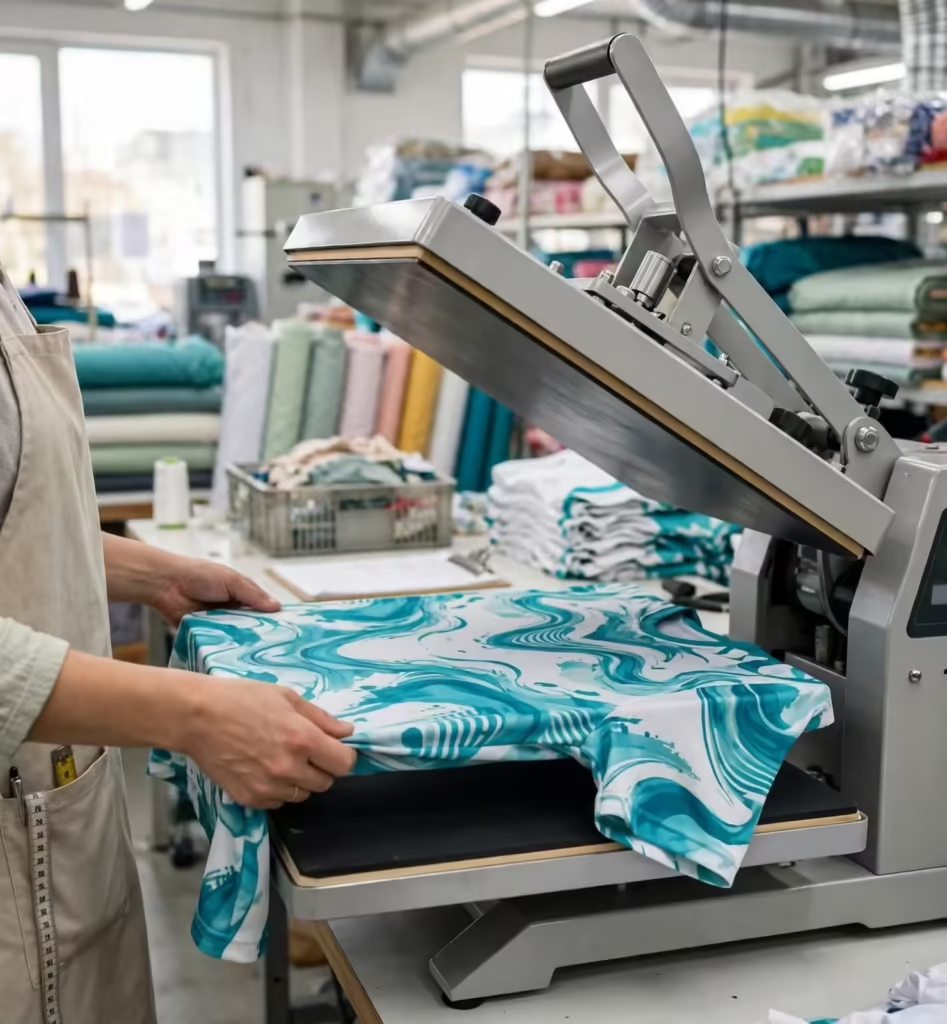
- The paper is pressed against the polyester fabric panels under heat, where the ink turns to gas and bonds into the fibres themselves.
- Panels are checked after pressing, before they travel anywhere near a sewing machine.
Because the print is inside the fibre rather than sitting on top of it, the colour cannot crack, peel or fade the way surface prints do, and the fabric keeps its stretch and hand feel.
Because the ink bonds into the fibre rather than coating it, the print also takes the working life of the garment with it: it flexes when the fabric flexes and washes when the fabric washes, without a surface layer to split away. That is why match kits and training wear - garments used hard and washed constantly - are the natural home of the method.
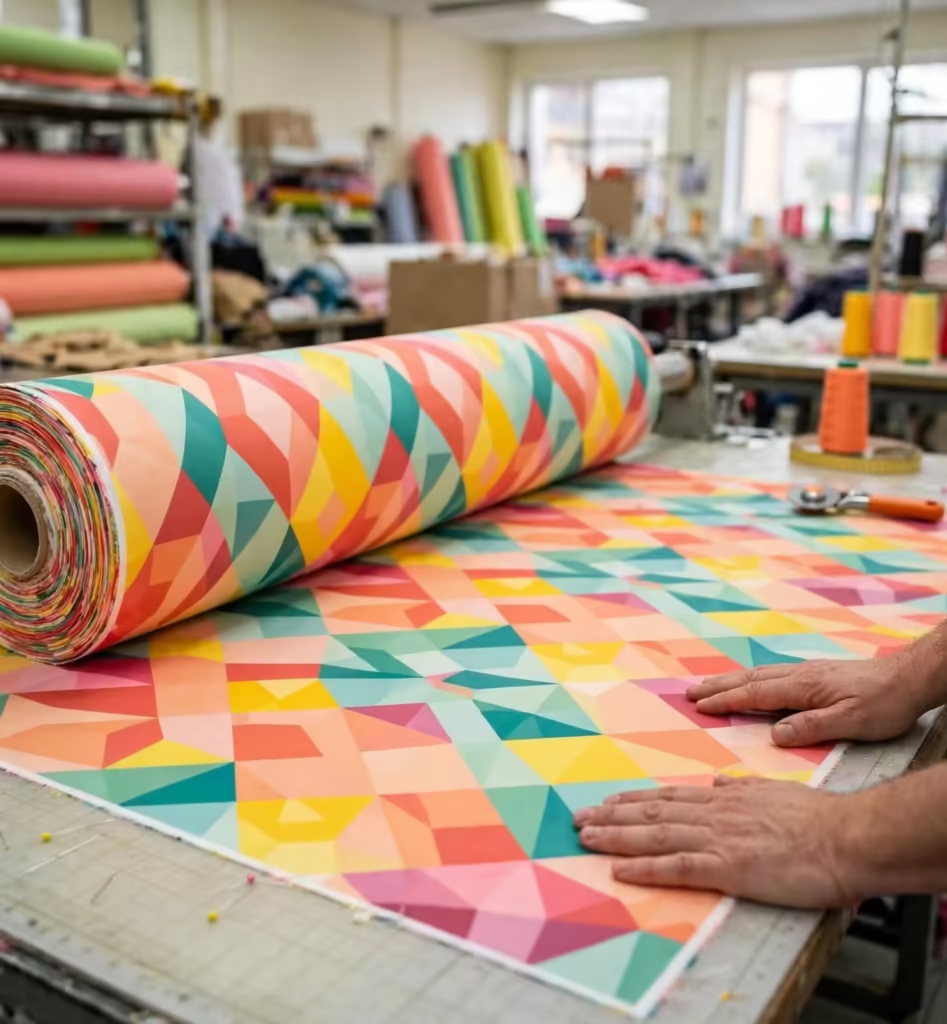
For all-over print, the design is printed across the full fabric panel before the garment exists. Fronts, backs and sleeves are printed as panels, then cut and sewn, so the artwork can run over seams and around the whole garment in a way no finished-garment printing method can match.
It also changes how the garment feels and behaves. Because the colour is inside the fibre, the fabric keeps its own stretch and breathability - there is no printed film sitting on the surface to stiffen the panel or crack when it flexes. For sportswear that is stretched, sweated in and washed constantly, that difference is the practical reason the method exists, not a marketing one.
2. What Sublimation Suits - and What It Does Not
The honest starting point is the fibre: sublimation bonds with polyester, and only polyester. That makes it the natural method for performance sportswear, and the wrong method for a cotton t-shirt. The work it suits:
- Team jerseys and kits - football, basketball and training kits where the design covers the whole garment.
- Training and gym wear - polyester tops and sets carrying bold all-over designs.
- Cycling and event wear - bright, full-coverage prints that have to survive hard use and washing.
- Promotional sportswear - short-design-life garments where the full-surface print is the point.
For cotton and cotton-rich garments, the right route is surface printing instead - see our screen printing service - and we will say so at enquiry stage rather than sell you a method that cannot work on your fabric.
3. Your Artwork, Panel Layout and Colour Matching
All-over print is designed on panels, not on a rectangle. Your artwork is laid out across the pattern pieces:
- Front.
- Back.
- Sleeves.
- Collars.
- Pocket panels.
So the design flows the way the finished garment will look. Repeat patterns are engineered so motifs land in balanced positions, and photographic or placement designs are mapped piece by piece. Where a design must match across a seam, the panels are aligned at pressing and checked again at sewing.
Colour is matched on printed fabric, not on a screen. Sublimation colours are vivid by nature, and the approved sample sets the standard the bulk printing is checked against, panel by panel, because a colour that drifts between the front panel and the sleeve of the same jersey is visible the moment the garment is worn.
One layout decision is yours to make at this stage: whether the design scales with the garment sizes or stays at one fixed scale across the range. Scaled designs keep the same visual proportion on a small and an extra-large; fixed-scale designs keep the artwork itself identical. Both are legitimate, they read differently on the body, and the approved sewn sample is where the choice is demonstrated before it is locked into the layout files.
4. From Printed Panel to Finished Jersey
Production runs in one flow in our factory:
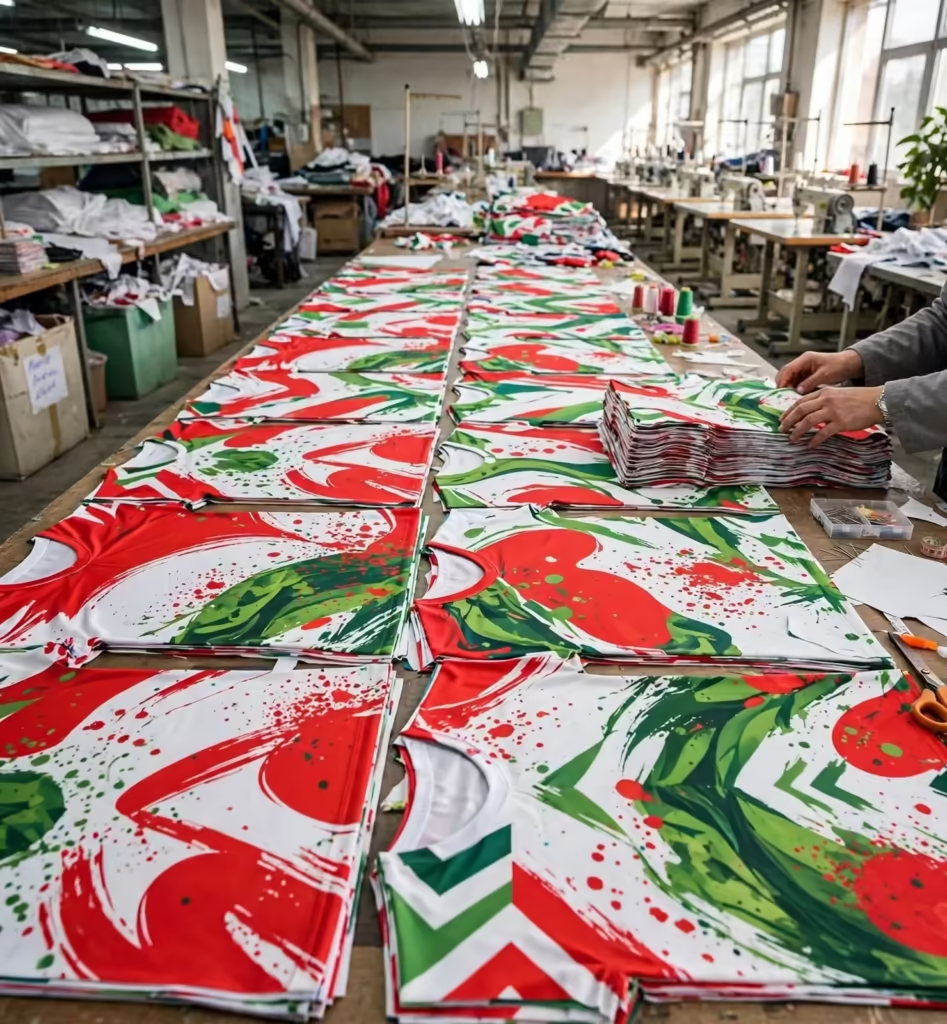
- Panels are printed and pressed.
- Panels are checked against the approved sample.
- Panels are then cut and passed to the sewing lines, where the garment is assembled by the same cut and sew team that makes our other sportswear.
Because printing and sewing share one order file, a panel fault found at the sewing stage goes straight back to the printing stage while the order is still in the building.
Finishing is standard garment finishing: trimming, pressing where the fabric allows, final inspection and packing to your ratio, with your labels and packaging applied where the order is a private label programme.
Matching pieces are treated as one design problem. Where a kit includes shorts or a training top alongside the jersey, the layouts are made together so colours and design elements agree across the set, and the approval samples are sewn as a set. A kit whose pieces were approved separately has a way of disagreeing with itself under stadium light; approving the set as a set is how that is avoided.
5. How All-Over Print Quality Is Checked
The faults in sublimation work are specific, and the checks are built around them. Printers check panels for:
- Colour shift between the approved sample and the run.
- Banding from the printer.
- White edges where a panel was short of print at a seam.
- Ghosting from a moved sheet.
- Repeats that drift out of alignment.
Panels that fail are reprinted before cutting - a panel is cheap to replace, a sewn garment is not. The same comparison is repeated at the sewing stage, where matched panels prove the alignment held.
Panels are checked as sets, not as loose pieces. A front, back and pair of sleeves that will become one jersey are compared together before they go to the line, because colour agreement inside one garment matters more than agreement between two different garments. A panel that disagrees with its own set is reprinted before sewing, while reprinting is still a panel and not a finished jersey.
Pieces that fail are not packed around. A mismatched panel set is reprinted or the garment remade, and the cause - a layout error, a press problem, a cutting shift - is corrected on the order, not just on the piece.
6. Quantities for Sublimation Sportswear Orders
Sublimation and all-over print orders start at 3,000 pieces per order, from 800 pieces per colour and style - the same structure as the rest of the factory. Each new design carries its own setup work:
- Artwork preparation for the panel layout.
- The paper printing setup.
- The press settings for the fabric.
- A sample panel for approval before the run.
That setup is why all-over print is priced per design as well as per garment, and why a programme running several designs plans them together where it can.
Buyers usually start with their strongest one or two designs, approve the sewn samples carefully, and extend the design range in the next order once the panel layouts and colour standards are on file.
The layout files and colour standards from an approved design stay on your record, so a repeat order reprints from the proven layout - same panel positions, same colour standard, same approved sample to check against - instead of rebuilding the design from the artwork file each season.
That record is what makes a second season's kit match the first season's - the standard travelling supporters and players actually compare.
Sublimation Sportswear Supply for Buyers in the USA, the UK and Canada
Sublimation programmes arrive from our main markets with different sports and seasons in mind. The three below are the patterns we see most often when an all-over print order is being set up.
Sublimation Jerseys for USA Teamwear Brands
USA teamwear brands run sublimation at programme scale: full kit designs - jersey, and often shorts and training tops to match - produced as coordinated sets. Laying out the design across every panel of every piece in the set, from one artwork file and one approved sample set, is what keeps a team's kit reading as one kit on the field.
All-Over Print Sportswear for UK Buyers
UK buyers bring a mix of club teamwear and event sportswear, where designs change more often than in core ranges. The per-design structure of an order fits that: new designs are laid out and sampled while proven designs reprint from their stored layouts and colour standards, all inside the same programme.
Custom Sublimation Kits for Canadian Importers
Canadian importers often combine sublimation kits with plain sportswear basics in one combined order - the printed kits carrying the design identity, the plain pieces carrying the volume. Both run through the same factory and the same order structure, with the printed work keeping its own panel layouts, samples and checks.