
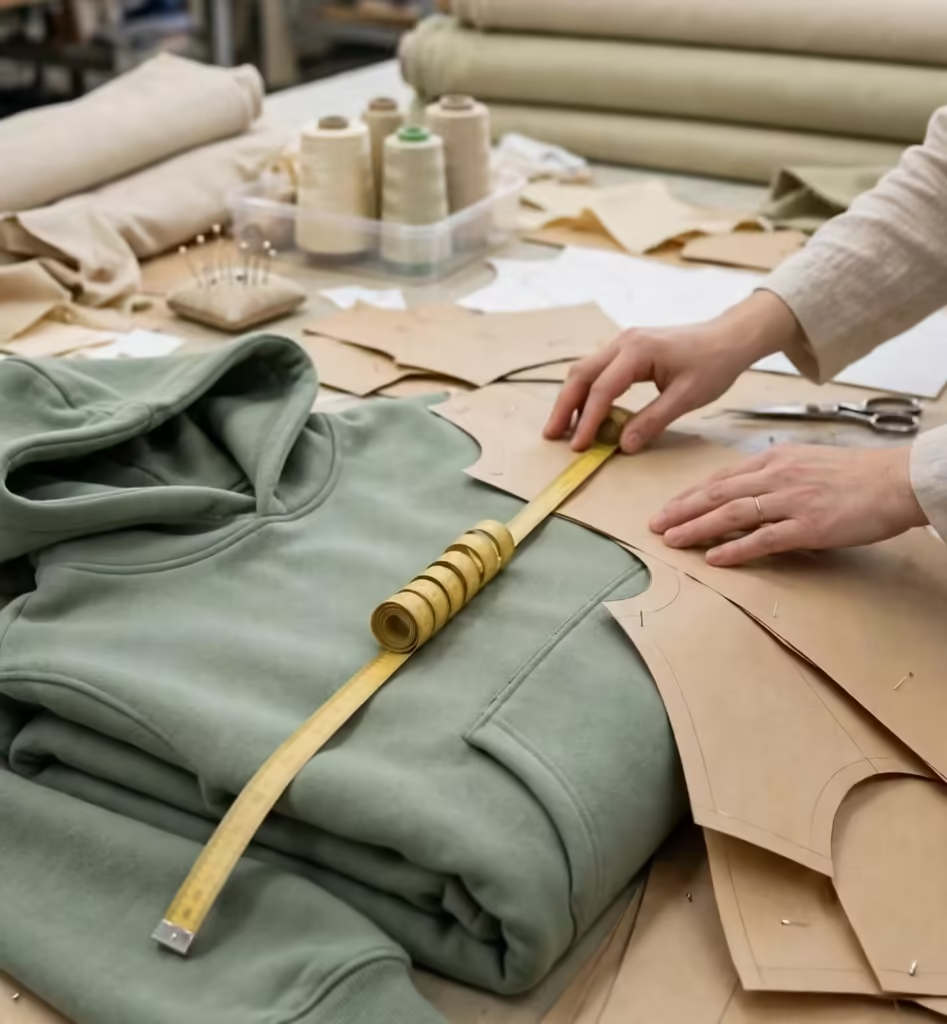

Pattern Making and Sampling for Clothing Brands Ordering from Bangladesh
Before a single bulk garment is cut, it exists as a pattern and a sample. This is the stage where fit is proved, costs are settled and most production problems are solved while they are still cheap to solve. This page explains how pattern making and sampling work at Siatex Bangladesh: what we need from you to start, how patterns are graded across your size range, and how salesman samples and pre-production samples lead into a bulk order you can approve with confidence.
1. Starting a Pattern: Tech Pack, Sample Garment or Sketch
Pattern work can start from whatever you have:
- A full tech pack with measurements and construction notes is the fastest route.
- A physical sample garment you send us is just as workable - our pattern makers take its measurements and construction apart and rebuild it as a production pattern.
- Even a clear sketch with target measurements can start the conversation for simpler styles.
What matters is that the starting point is recorded, so the pattern, the sample and eventually the bulk all trace back to the same reference.
Where your input leaves choices open - seam types, stitch density, how a hood or a placket should be finished - the sample is where those choices get made visible. Rather than guessing silently, we sew the first sample the way we judge best, flag the decisions in it, and adjust to your comments. That exchange, usually one or two rounds, is what turns a design into a garment your customers will experience exactly as you intended. It sits inside our wider product development work, alongside fabric and trim development.
2. How Patterns Are Made and Fitted
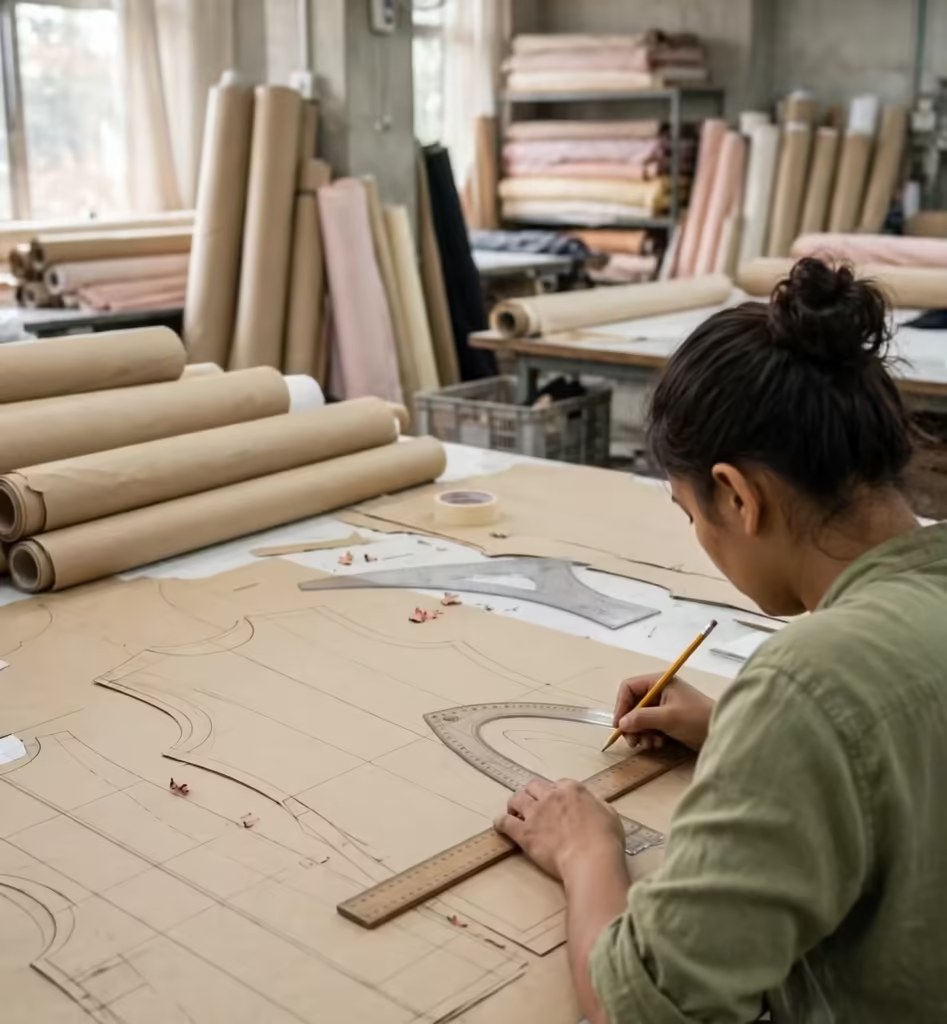
Patterns are drafted by experienced pattern makers working both by hand and on CAD, depending on the style. The base size is built first, fitted on a sample garment, and checked against your measurement chart point by point:
- Chest.
- Length.
- Sleeve.
- Shoulder.
- And the style-specific points - hood depth, pocket position, waistband height - that give a garment its character.
Fit comments from you are applied to the pattern, not just to the sample, so the correction survives into every size and every repeat order.
For private label clothing brands, this is also where your fit identity is protected. A brand whose customers buy the same size season after season cannot have its block quietly drift; we keep your approved pattern as the controlled master, version it when you ask for changes, and sew repeats against it. The pattern library behind a long-running programme is, in effect, part of the brand - and we treat it that way.
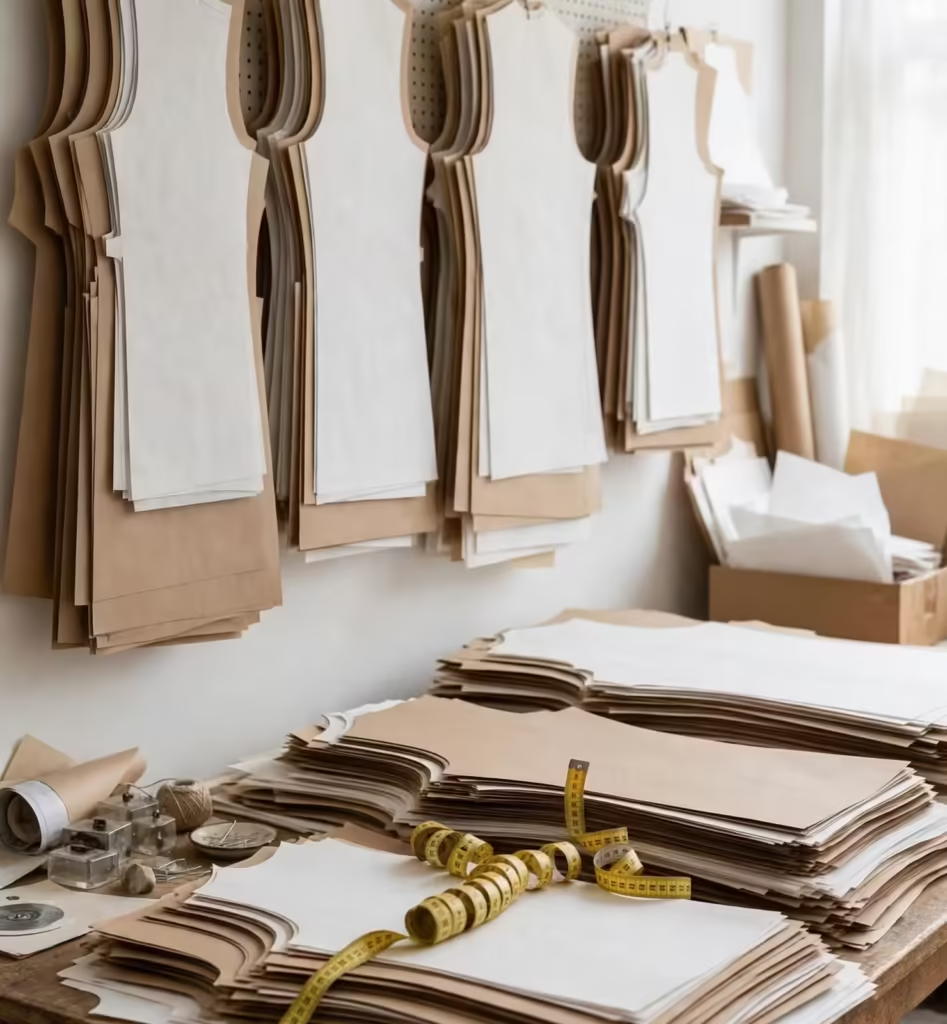
Approved patterns are stored both as the physical master and in the CAD system, with the measurement chart and comment history filed alongside. That archive is what makes a style easy to revive: a garment that sold well two seasons ago can be re-sampled from its own pattern rather than rebuilt from a photograph and a memory. Buyers running continuity programmes - core polos, basic tees, staple fleece - rely on this more than on any single sample, because it is what keeps next year's version of a bestseller the same garment as this year's.
3. Grading Patterns Across Your Size Range
Once the base size is approved, the pattern is graded across your size set - children's sizes, an XS to 3XL adult range, or whatever ladder your market uses. Grading is not simple enlargement: each point moves by the increment your size chart sets, so proportions stay true at the ends of the range, where poor grading shows first. A graded size set is then sampled at the extremes as well as the middle when a style is new, because a hoodie that fits beautifully in M and badly in 2XL is a returns problem waiting to happen.
The graded patterns feed the marker that cutting works from, and the same data drives fabric consumption figures - which is why accurate grading matters commercially as well as for fit. When you ask what a style costs, the answer is built on the graded set, not on a guess from the base size. Buyers running wide size ranges on core styles like our wholesale hoodies feel this most: the range sells as one product only if every size fits like it belongs to the same family.
4. The Sample Types in an Order, and What Each One Proves
Different samples do different jobs, and knowing which is which keeps the approval process quick:
- Development sample - the first sewn version of a style, proving the design works in real fabric and giving both sides something concrete to comment on.
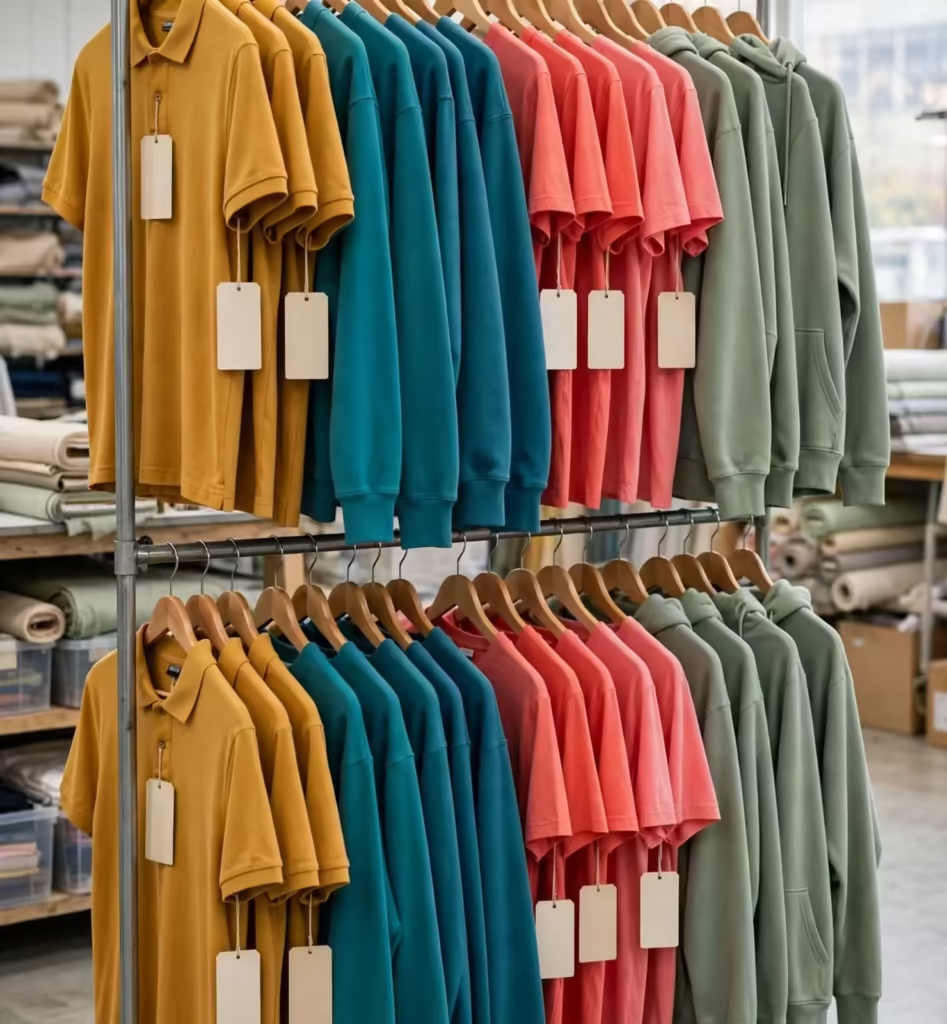
- Salesman samples - finished garments in your colours and trims, made for your sales team, showrooms and photography while bulk is still being prepared.
- Pre-production sample (PPS) - sewn from bulk fabric with bulk trims, exactly as production will run; your approval of the PPS is the gate bulk cutting waits for.
- Size set samples - the style sewn across sizes where fit across the range needs confirming before bulk.
Each sample is measured before it leaves us and shipped with its measurement record, so your comments are made against numbers, not impressions. Samples travel by courier, and the sampling process page sets out how rounds and timelines are usually handled.
One habit keeps rounds to a minimum: comment on everything at once. A sample round that answers fit, construction, trims and labelling together usually closes a style in two rounds; the same comments arriving one at a time can double the calendar. When your comments land, our reply maps each point to what changed in the pattern - not just in the next sample - so an agreed correction cannot quietly disappear in a later revision.
5. How the Sample Room Schedules Your Work
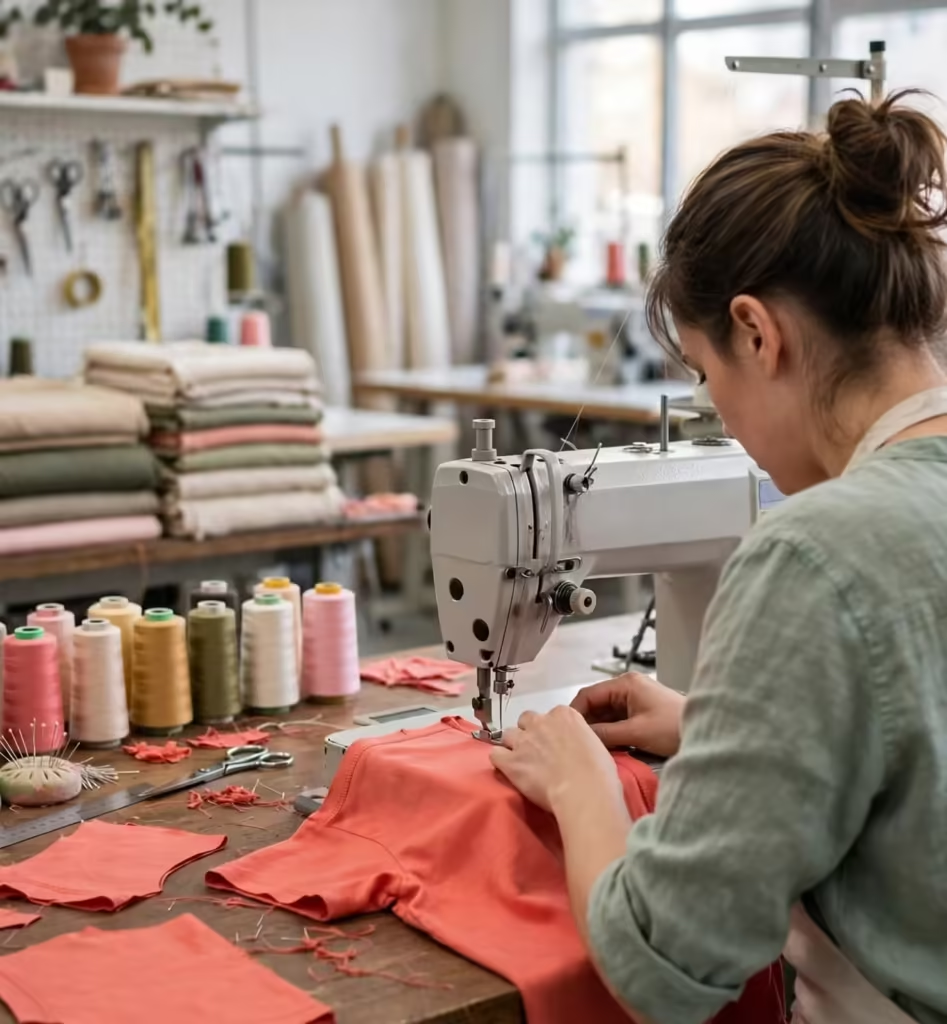
Our sample room runs its own machinists and its own queue, separate from bulk lines, because sampling is development work, not small production. A sample is sewn by one machinist start to finish wherever possible - the same way a style will be understood whole before it is broken into line operations. That whole-garment view is how construction problems surface early:
- A seam that will pucker at speed.
- A pocket placement that fights the placket.
- A rib quality that will not recover.
Priority in the queue follows your programme's dates. If samples are needed for a buying meeting, a photo shoot or a sales conference, tell us the date when the style is submitted and the schedule is built backwards from it. Rush sampling is possible for simple styles; complex styles get an honest answer about what is achievable rather than a promise the sample room cannot keep.
6. From Approved Sample to Bulk Production
The approved pre-production sample becomes the production reference: it stays with the order file, goes to the line with the production start, and is what inline and final checks compare against. Three approvals together form the gate, and bulk cutting does not begin until all three are closed:
- The pattern version.
- The fabric lot approval.
- The PPS approval.
This is the point where sampling hands over to our cut and sew manufacturing lines, and it is deliberately unglamorous: no gate, no cutting.
For you, the practical benefit is that what you approved is what you receive. There is no second interpretation of the style made on the factory floor, because the floor works from the same sample, the same pattern version and the same measurement chart you signed off. Repeat orders re-enter at the PPS stage with the master pattern, which is why repeats are faster - and why they match.
Pattern and Sampling Services for Brands in the UK, France and the USA
Sampling is where distance between buyer and factory is felt most, so the way samples are documented and shipped matters as much as how they are sewn. These are the patterns we see most in the markets we sample for.
Sampling Rounds for UK Clothing Brands
UK brands often run sampling tightly against range-building calendars, with several styles moving through comment rounds at once. We batch comments style by style and return revised samples with point-by-point replies, so a range meeting can clear a whole set in one sitting. Salesman samples for UK buyers are usually needed ahead of bulk, finished to retail standard with the buyer's own labels and tags fitted, ready for showroom and photography use.
Pattern Work for French Fashion Buyers
French buyers tend to lead with fit and fabric hand feel, and their sampling rounds reflect that: more attention to drape, to how a style sits across sizes, and to small construction details that carry the design. We expect, and welcome, detailed fit comments from French programmes, and the pattern makers keep a comment history per style so a preference expressed in one season is already in the block for the next.
Size Sets and Salesman Samples for USA Programmes
USA programmes usually carry the widest size ranges, so graded size sets and extreme-size samples feature heavily. Salesman samples also matter commercially: reps selling across states need finished, labelled garments well before bulk lands. We schedule USA sample sets early in the programme calendar, so photography, line sheets and rep samples are never the thing holding a launch date up.