



Compliance and Quality in a Bangladesh Garment Factory, in Practice
Buyers ask about compliance and quality because both decide whether an order can be sold with confidence in their market. Rather than listing claims, this page describes how the work is actually organised at Siatex Bangladesh: the working practices on the floor, the points where garments are checked, and the evidence available to you at every stage. Judge us by the system - it is the part that produces the garments.
1. Quality Starts Before a Stitch Is Sewn
Most quality problems are born before production: an unclear specification, an unapproved colour, a fabric accepted on trust. Our route removes those causes upstream. Styles are sampled and approved first, with the pre-production sample becoming the sealed standard for bulk - the process is set out on the sampling process page. Fabric is inspected when it arrives, before cutting, so a cloth problem is caught while it is still a cloth problem and not yet five thousand garments.
Trims and accessories are checked against the order the same way, each verified before they reach the floor:
- Labels.
- Tags.
- Buttons.
- Packing materials.
It is unglamorous work, and it is where quality is actually decided.
2. Checking During Production, Not Just After It
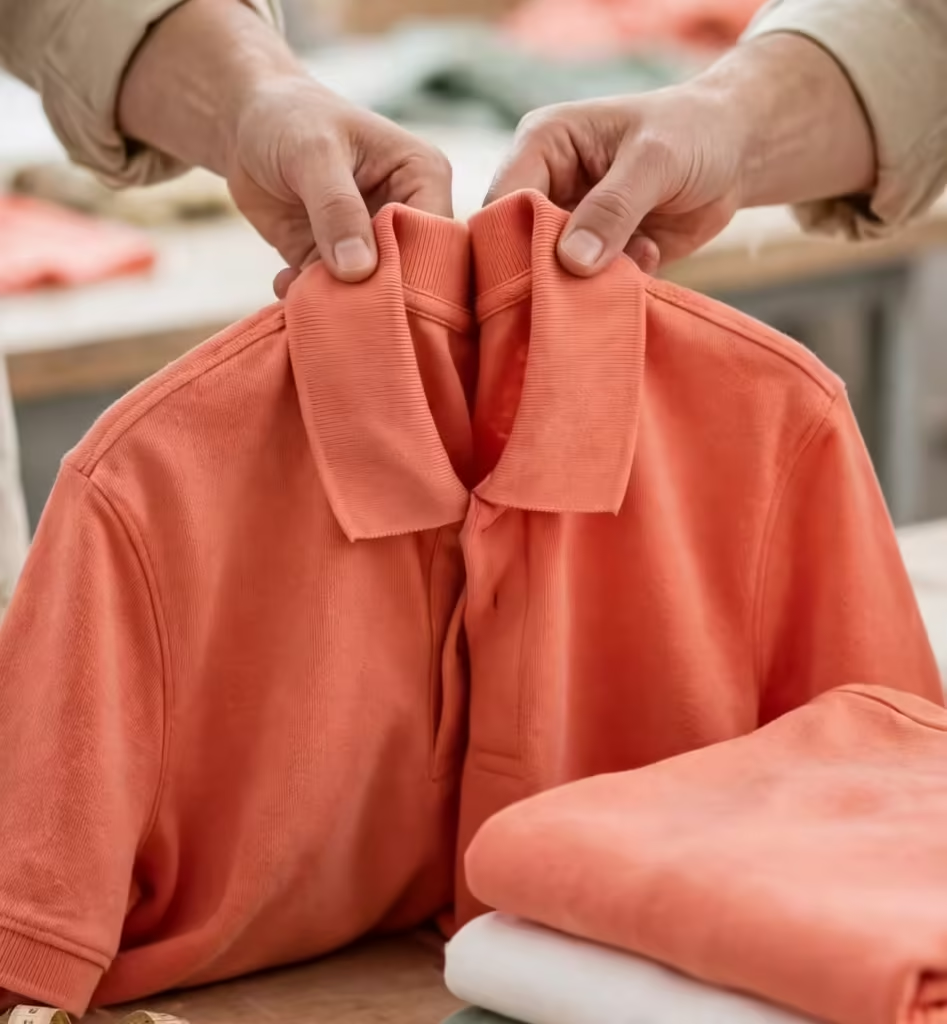
Garments here are checked while they are being made, not only when they are finished. Part-finished work is inspected as it travels the line, so a drifting measurement or a stitch fault is caught at the operation where it began - and corrected there - instead of being discovered over a finished pile. Supervisors work the lines with the approved sample as their reference, and anything outside it is pulled as it appears.
Finished garments pass a final check at finishing: construction, measurements against the chart, decoration, cleanliness, and presentation. Rejected pieces are recorded and dealt with openly - repaired where repair is honest, removed where it is not. A buyer asking how many rejects a style produced gets a straight answer from the record, because the record exists.
The checking points on any order, in the order they happen:
- Fabric and trims on arrival, before anything is cut
- The first garments off the line, against the approved sample, before the run continues
- In-line checks as part-finished work travels between operations
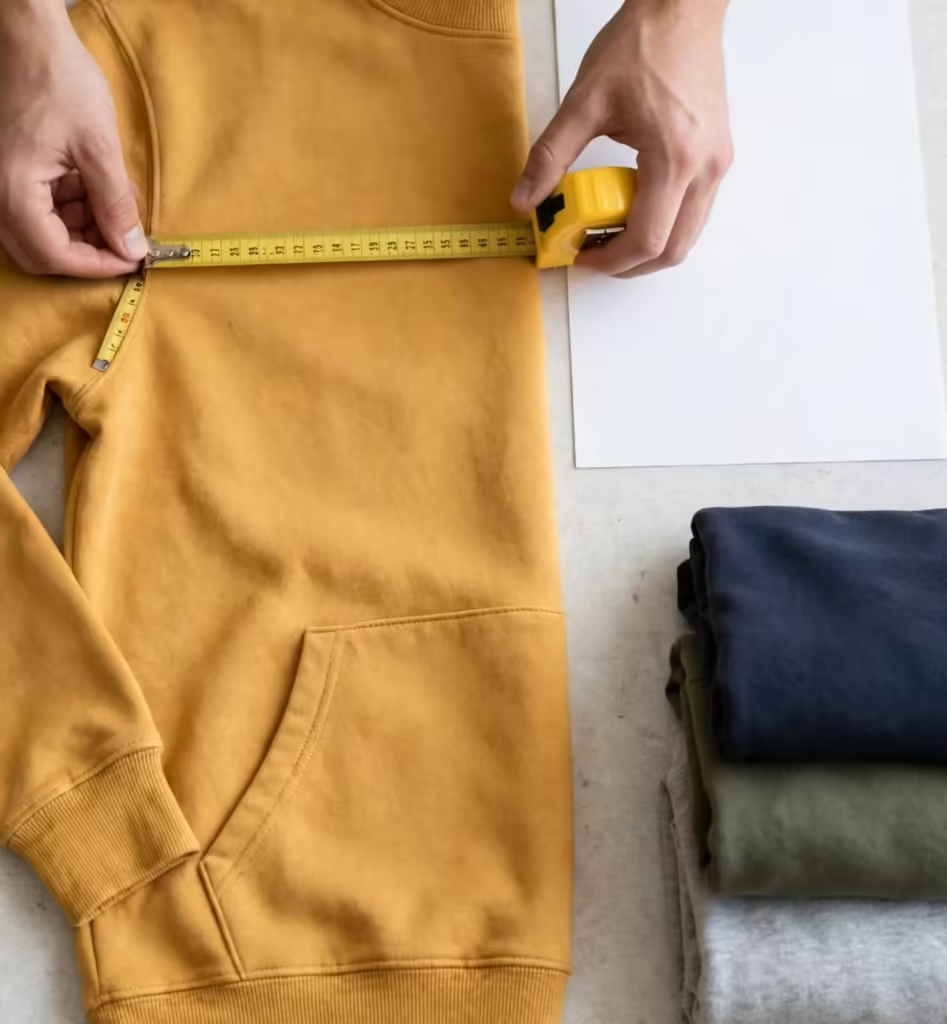
- Measurement checks against the size chart during production, not only at the end
- Final check at finishing - construction, decoration, cleanliness, presentation
- A last look at packing, so cartons contain what their marks say they contain
No single point on that list carries the whole responsibility. Quality here is a chain of small catches, any one of which is allowed to stop the work - and does, whenever the sample and the garment disagree.
3. Measured Against the Approved Sample and the Chart
Quality arguments usually come down to references, so we keep ours physical. Every order runs against two: the sealed pre-production sample, and the size chart it was approved under. Checking at the line and at finishing measures against those two, in centimetres, not against an opinion of what looks right.
That discipline protects both sides. If a delivery is ever questioned, the sample on our rail and its twin in your office settle what was agreed. Programmes running repeats benefit most: the standard does not drift between seasons, because it is a garment, not a memory.
It also changes how problems are handled. When a measurement drifts on the line, the question is never "is this good enough?" - a question with no honest answer - but "does it match the chart and the sample?" - a question with one. Garments that match ship; garments that do not are pulled, and the operation that produced them is corrected before the run continues. Buyers rarely hear about these small catches, which is exactly how it should be: they are the system working, not news.
4. The Working Floor: Practices You Can See
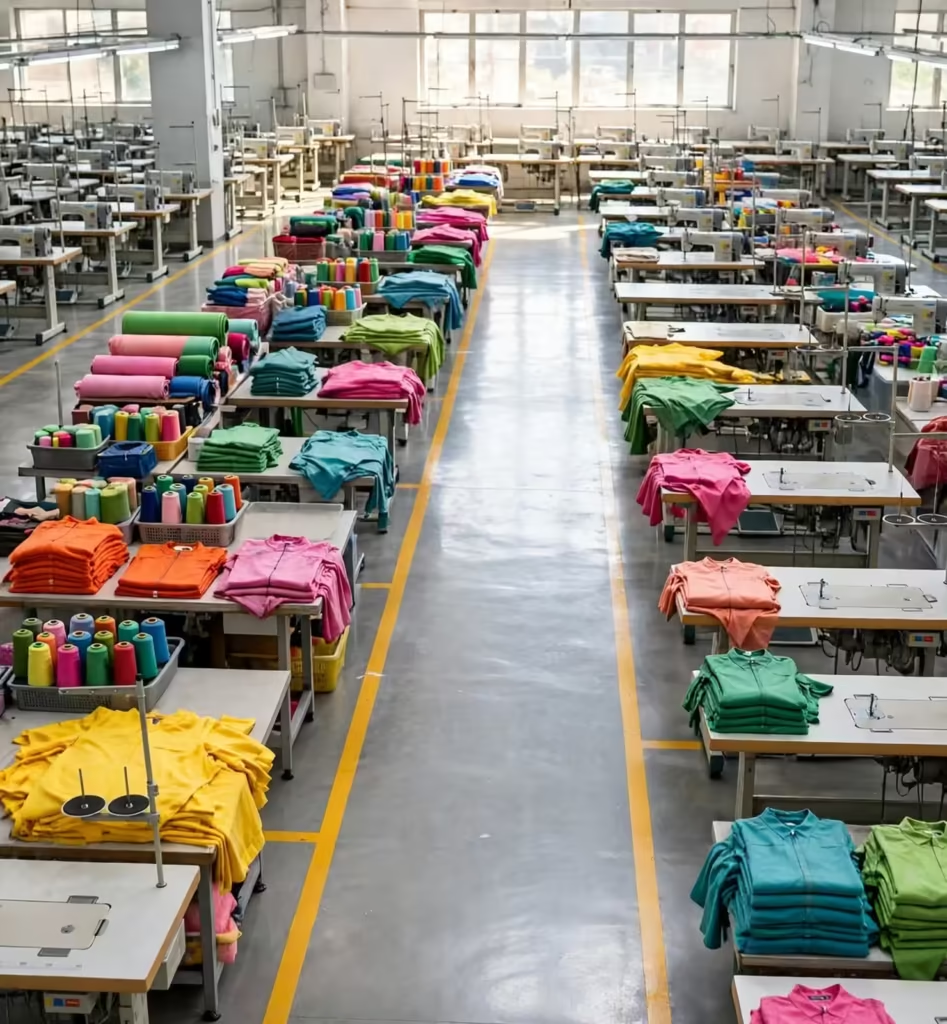
Compliance, in daily practice, is mostly about how people work. On our floors that means the things any visitor can observe:
- Organised lines with work flowing in order.
- Clear walkways.
- Fabric and garments handled and stored properly.
- A steady working pace.
- Floors kept clean enough to eat off - because garments that will be worn against skin should be made in a place that looks like it understands that.
We invite you to verify it rather than take this page's word for it. The factory tour page explains what a visit covers and how to arrange one, and buyers who cannot travel yet can judge the same culture through samples, reporting, and the questions we answer in writing.
There is a business reason the floor is run this way, beyond pride in the work. Garments are handled by people for hours between the cutting table and the carton; a workplace that is orderly, well lit, and calm produces fewer faults per hundred garments than a chaotic one, and it keeps experienced machinists and checkers - the people whose hands and eyes are the quality system - working here season after season. Compliance and quality are not two subjects on this floor. They are the same subject, seen from two sides.
5. Your Own Inspection Is Always Welcome
However an order is checked on our side, your right to check it yourself is absolute. Buyers may inspect before shipment - in person, or through an inspection service they appoint - and the balance stage of our payment terms is built to allow it, as the payment terms page explains. Goods are held ready for inspection at the agreed point, and findings are answered from the order record.
We would rather a problem be found by your inspector in our packing area than by your customer in a store. That is not politeness; it is arithmetic. An issue caught here costs a day. The same issue caught after shipment costs a season.
For buyers who inspect through an agency, the practicalities are simple: tell us the inspection point when the order is confirmed, and at that point these are ready:
- The goods.
- The packing area.
- The order file.
- A merchandiser present who can answer against the record.
Findings are dealt with the same day where they can be, and anything that cannot is reported to you plainly, with the options - not discovered by you later in a report.
6. Documents That Agree with the Goods
Quality includes paperwork. The document set is prepared against the actual order - quantities, colours, and cartons as packed - and checked before the goods sail:
- Commercial invoices.
- Packing lists.
- Shipment documents.
For retail programmes especially, documents that disagree with cartons cause clearance delays and chargebacks that have nothing to do with the garments themselves.
Our export desk works from the order file, so the paper describes the same goods your inspector saw. If your market or your customer asks for specific documentation with a shipment, tell us at confirmation stage and it is built into the schedule from the start.
What Quality Looks Like to Buyers in Our Main Markets
Every market checks quality; each checks it with a different accent.
Quality for Germany - Precision Buyers Can Measure
German buyers are the most measurement-led we serve: tolerances read against the chart, documents read against the cartons, presentation read against the instruction. The practices on this page suit that temperament - physical standards, recorded checks, paperwork that agrees - and German programmes usually specify their checking points with us at order stage, which we welcome: a buyer who says exactly how they will judge the goods is a buyer we can satisfy exactly.
Quality for the UK - Retail Presentation as Quality
For UK own-label programmes, quality includes how the garment meets the customer: labels straight, folding consistent, packing presentable enough for the shelf. Our finishing and packing checks treat presentation as part of the specification, not as decoration added later, and UK buyers often approve the packed presentation alongside the pre-production sample so the standard is fixed before bulk begins.
Quality for Canada - Consistency Across a Seasonal Range
Canadian seasonal programmes run several styles to one calendar, so consistency across the range is the quality question: the same checking discipline on the first style as on the last, even as the season's deadline approaches. Holding the standard steady at the busy end of a season is where a checking culture earns its keep, and it is the part of quality our Canadian buyers mention most when programmes renew.
If you want to see any of this rather than read it, start a conversation through the get a quote page - or come and walk the floor. Either way, bring your hardest questions.