


How to Get an Accurate Clothing Quote from a Garment Factory
Every buyer wants the same thing from a first inquiry: a price they can trust. The difference between a firm quote and a vague range is almost never the factory's mood - it is the information in the inquiry. This page is the checklist our merchandisers work from, so you can send in one message what usually takes four exchanges of questions and answers.
1. The Style: What the Garment Actually Is
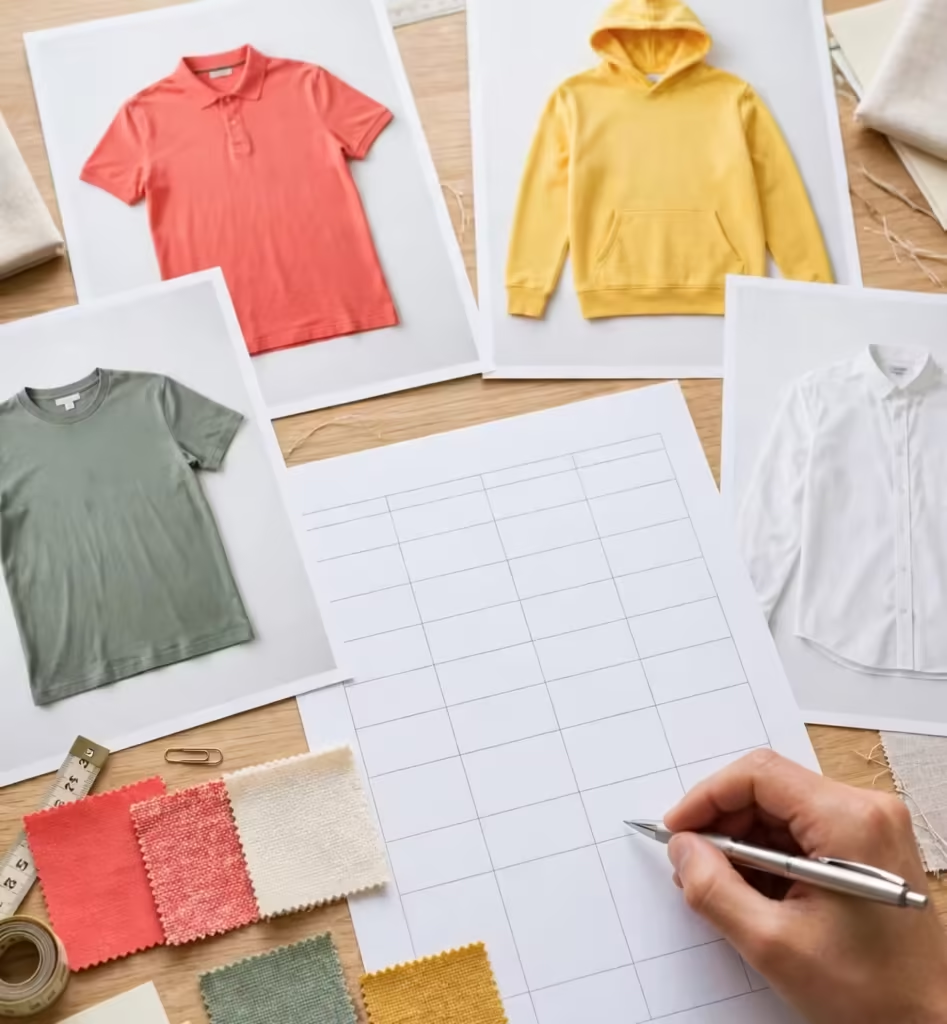
Start with the garment itself. A tech pack is ideal; clear photographs plus a written description work in most cases; a reference garment you can courier works too. What the merchandiser needs to see is the construction:
- Neckline or collar.
- Sleeves.
- Pockets.
- Closures.
- Stitching.
- And finish.
"Polo shirt" can be priced five ways depending on those details, and the honest factory asks rather than assumes.
If the style exists in our range already - a t-shirt, a polo shirt, a hoodie - name it or link it in your message. Starting from a known garment and listing your changes is the fastest route to a firm number there is.
A photograph of a similar garment you already sell is worth more than a paragraph of description, and a photograph of your current label and packing is worth more than either. Buyers sometimes apologise for sending too much material; merchandisers never do. The only genuinely unhelpful inquiry is the one-line kind - a garment name and "best price please" - because it forces the factory to guess at everything this page lists, and a price built on guesses helps nobody.
2. Quantity and Sizes: the Numbers That Set the Price Level
Quantity does more to a unit price than any negotiation: cutting and line costs spread across the run, so the per-piece price falls as the run grows. Our minimums are 3,000 pieces per order and 800 per colour and style - the structure behind them is explained on the MOQ and pricing page - and within that structure, send the breakdown as you plan it:
- Colours.
- Sizes.
- And the ratio between them if you have one.
Sizes matter to the price as well as to the garment. A size chart is best; the size range alone (for example S to XXL) is enough for a first quote. Extended size ranges change fabric consumption per piece, and a quote built on the real range will not move later when the chart arrives.
The same applies to colour count. Three colours of a style and eight colours of it are different orders wearing the same photograph: more colours mean more, smaller cutting and sewing runs inside the order. List the colours as you plan them, even provisionally, and the quote will already contain the shape of the real order.
3. Fabric: the Largest Single Cost in the Garment
Fabric is where most of the money in a garment sits, so its description earns its place in the first message. Send what you know:
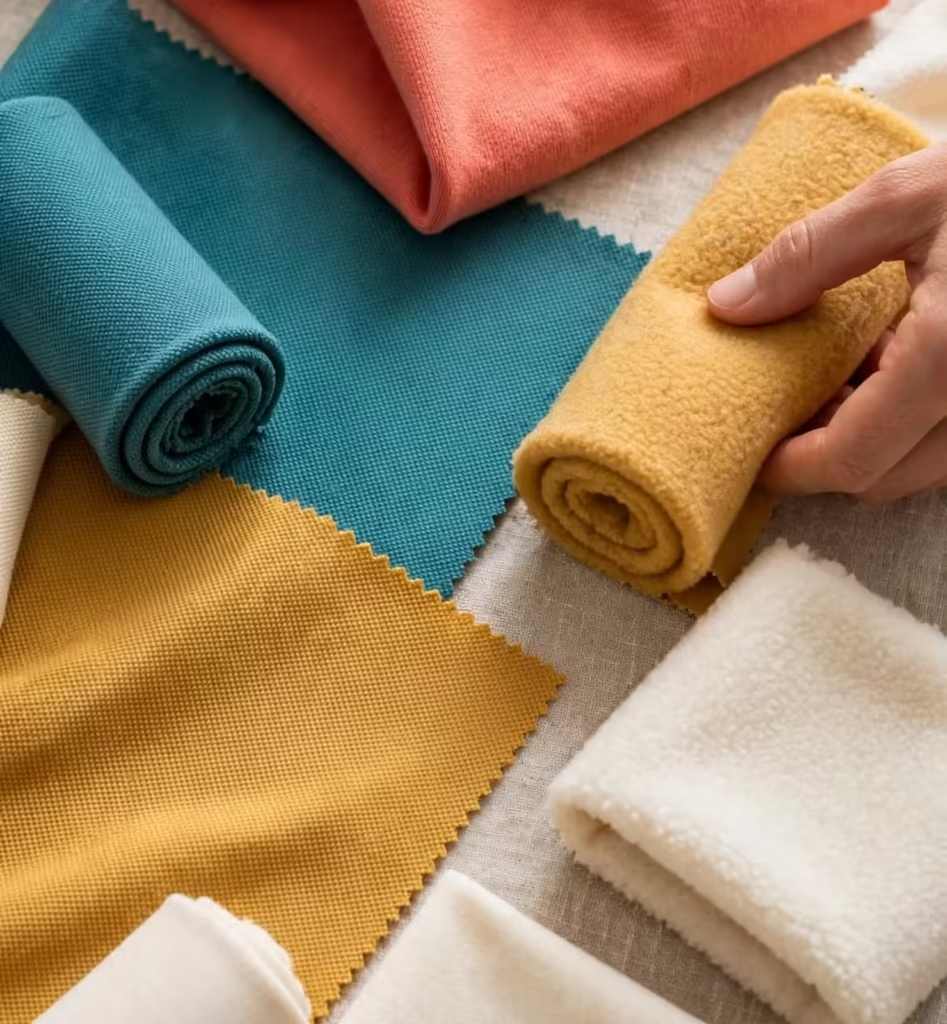
- The fabric type - single jersey, pique, fleece, twill, denim, and so on
- The composition - cotton, polyester, a blend, and in what proportion
- The weight, if you work to one - lighter and heavier cloth price differently
- The colours, and whether they are standard shades or matched to your swatch
Do not worry if some of that is unknown. Name the garment's job - a summer promotional tee, a winter work hoodie - and we will propose the fabric buyers in your market usually choose, with the quote built on it and the assumption stated in writing.
4. Decoration and Your Branding
Print, embroidery, and applique are priced from the artwork and its size and placement, so send the artwork files if you have them, or describe the decoration plainly:
- What it is.
- How large.
- Where it sits.
Your branding travels with it - woven neck labels, printed labels, hang tags - and belongs in the same message, because labels are made alongside the garments, not after them.
Private label buyers should say so at this point. It changes nothing about the route, but it puts your label and tag production into the same schedule as the garments, which is where it has to be for everything to arrive together.
Decoration is also where vague descriptions cost accuracy. "Logo on the chest" prices one way as a small single-colour print and another way entirely as a large multi-colour print or a dense embroidery - the garment may be identical. If your artwork is not final, send the closest version you have and say it is provisional; the quote will be built on it with that stated, and reworked when the final file arrives, instead of being silently priced on an assumption you never made.
5. Packing and Destination: the End of the Order, Priced at the Start
Packing is part of the garment's cost, so it is part of the quote:
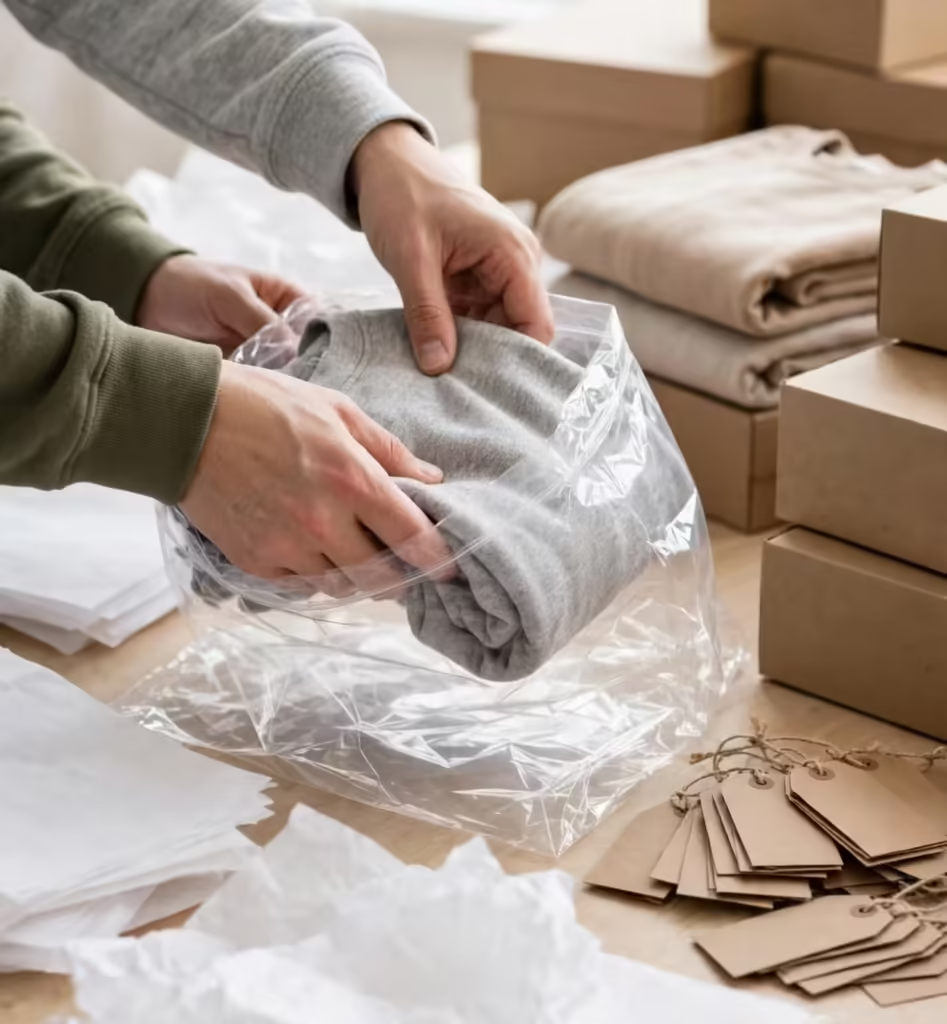
- Individual polybags or bulk packing.
- Folding.
- Your carton requirements and marks.
Send your packing instruction if you have one; if you do not, say so, and the quote will use the standard packing buyers in your market take, named in the reply.
Finish with the destination - the country and port or city the goods ship to. It does not change the garment price, but it shapes the document set and the shipment plan, and a quote that already knows its destination becomes an order without a second round of questions. Terms, for the record, are 40 percent with the order and 60 percent before shipment or after your inspection, by transfer or by transferable at-sight letter of credit - the full detail sits on the payment terms page.
6. How to Send It: Basket, Contact, or Both
Two routes work. For a range of styles, collect them in the inquiry basket as you browse, add your details per style, and send the basket as one inquiry - it arrives as a single organised message instead of five separate ones. For a specification-led inquiry with files to attach, write through the contact page and reference the styles there.
Either way, what happens next is the same:
- A merchandiser reads the inquiry against the checklist on this page.
- Anything missing is asked for by name.
- The quote comes back per style, in writing.
If a detail you sent cannot be made as described, you will be told that too, with the nearest workable alternative - a quote that hides a problem is not a quote, it is a delay.
What comes back is a garment price per style, stated against the specification you sent, with the assumptions named - fabric as described, packing as instructed, quantities as listed. That naming matters: if your specification changes, the quote is reworked openly against the change, so you can always see what moved the number and by how much. Programmes are planned on these figures, samples are ordered against them, and the order itself is confirmed on the same terms - the quote is the first document of the order, not a piece of advertising.
How Buyers in Our Main Markets Usually Send It
The checklist is the same everywhere; the emphasis differs by market and programme.
Quotes for the UK - the Tech Pack Habit
UK own-label buyers are the most likely to arrive with a full tech pack and artwork ready, and their quotes are correspondingly fast: specification complete on day one, numbers back without a clarification round. If your programme works that way, this page is mostly a confirmation - your first message already carries what we would have asked for.
Quotes for Canada - Seasonal Ranges in One Basket
Canadian buyers often quote a whole season at once: several styles, shared fabrics, one calendar. Sent through the inquiry basket as a single inquiry, that shape prices well - shared fabrics and combined cutting are visible to the merchandiser from the start, and the quote can reflect the programme as a whole rather than as disconnected styles.
Quotes for France - Fabric First, Then the Garment
French buyers tend to lead with the cloth: composition, weight, and hand feel settled before construction is discussed. It is a sound order of business for fabric-led ranges, and our replies match it - fabric proposals and swatches first, the garment price built on the cloth you approved, so the number never rests on a fabric you have not handled.
However you send it, send it complete where you can and honest where you cannot. The quote you get back will be built on exactly what you described - which is the only kind of quote worth having.