
Uniform and Workwear Production for Daily-Wear Garments
Fashion garments are judged on a rail. Workwear is judged on a wet Tuesday, six months after delivery, by someone who has worn it two hundred times. That difference changes how the garments are specified and sewn: fabric weight and wash performance matter more than drape, construction matters more than decoration, and consistency across years matters more than this season's look. The sections below cover the workwear styles we run, the fabrics behind them, and the programme discipline that uniform buyers depend on.
1. The Workwear and Uniform Styles We Make
The family splits into industrial wear and service uniforms, and most large buyers order from both sides:
- Work coveralls and overalls - one-piece and bib styles, including insulated and flame-resistant constructions to buyer specification.
- Work trousers and workwear sets - cargo and kneepad-pocket trousers, work jackets, vests and shorts.
- Chef uniforms - chef coats, cook shirts, trousers and aprons for kitchens and catering groups.
- Medical scrubs and healthcare uniforms - scrub tops and sets, tunics and patient gowns.
- High-visibility jackets and vests - with reflective tape applied to the buyer's layout.
- Corporate and service uniforms - shirts, polos and housekeeping tunics carrying the employer's branding.
Where a style carries a performance requirement - flame resistance, high visibility, medical use - the buyer supplies the standard the garment must meet, fabric and construction are agreed against it at sampling, and the approved sample becomes the reference the bulk is checked against. We do not improvise compliance: the specification is the buyer's, the discipline of meeting it is ours.
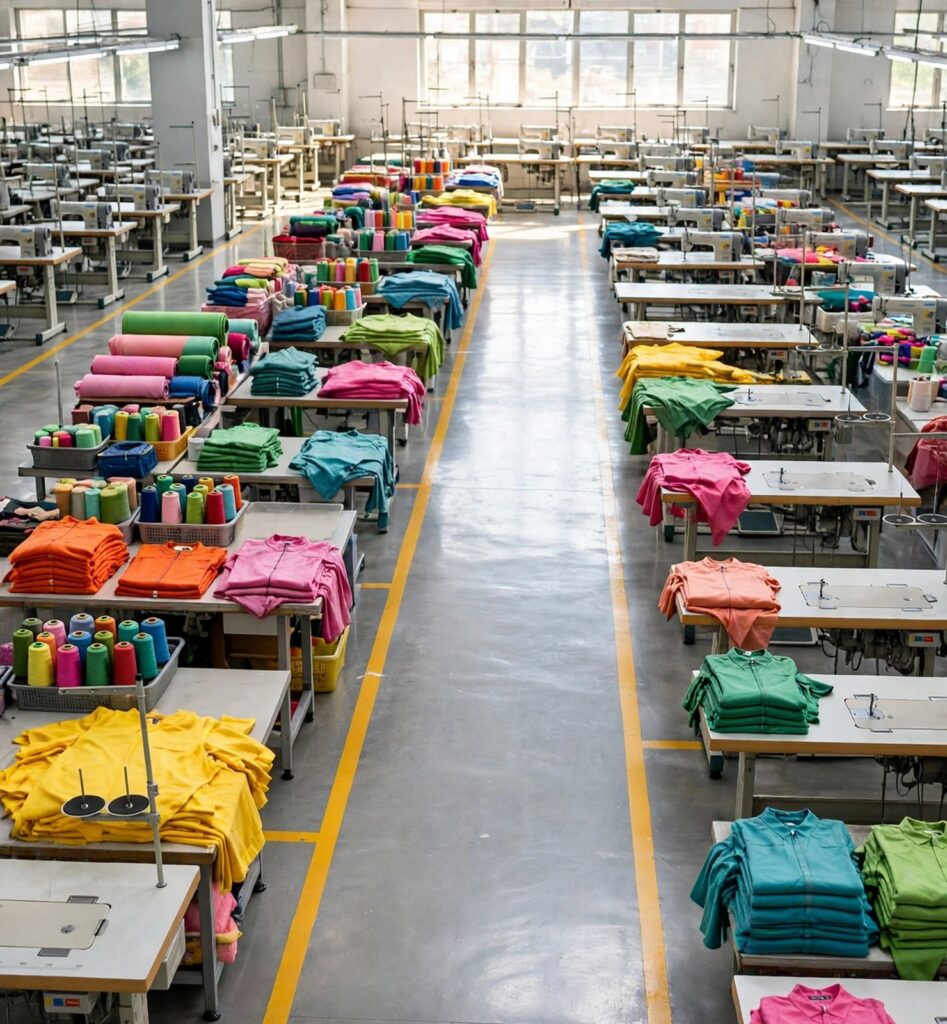
The breadth of the family is deliberate. A facilities buyer who can place industrial wear, kitchen wear and housekeeping uniforms on one programme, with one branding standard and one shipment, has a simpler supply chain than one managing three factories - and a single merchandiser here who can see the whole order when one style runs late.
2. Fabrics Chosen for Hard Wear and Hot Washing
Workwear fabrics are picked for survival, not softness. Cotton and poly-cotton twills carry most industrial styles because they hold their shape, take repeated hot washing and repair well; polyester-rich blends are used where colour retention through industrial laundering matters most; lighter poplins and poly-cotton blends serve shirts, tunics and healthcare wear where the garment is changed daily.
Colour is a working decision in this family, not a fashion one. A uniform colour has to hide the dirt of the job reasonably, match across garments bought in different years, and stay true through the buyer's laundry process. Shade standards are therefore set per programme and held on file, and replacement orders are dyed and checked against the retained standard, so a new starter's trousers do not clash with the team's existing kit.
Wash performance is agreed the same way. If a buyer's garments go through an industrial laundry, that process - temperature, chemistry, tumble drying - is part of the specification discussion at sampling, and the fabric choice follows from it. A fabric that performs in a domestic wash can still fail early under industrial laundering, and honest advice at this stage is cheaper than a workforce re-outfit.
3. Construction Details That Decide How Long a Uniform Lasts
Workwear fails at predictable points, and the sewing is organised around them:
- Bar tacks at pocket corners, belt loops and other stress points where fabric tears start.
- Reinforced and double-stitched seams on seat, inseam and underarm joins.
- Kneepad pockets, hammer loops and tool pockets built into the construction, not surface-stitched as decoration.
- Heavy-duty zips, snaps and buttons specified for daily use, tested on the first pieces off the line.
- Triple-stitched main seams on the heaviest industrial styles where the buyer specifies them.
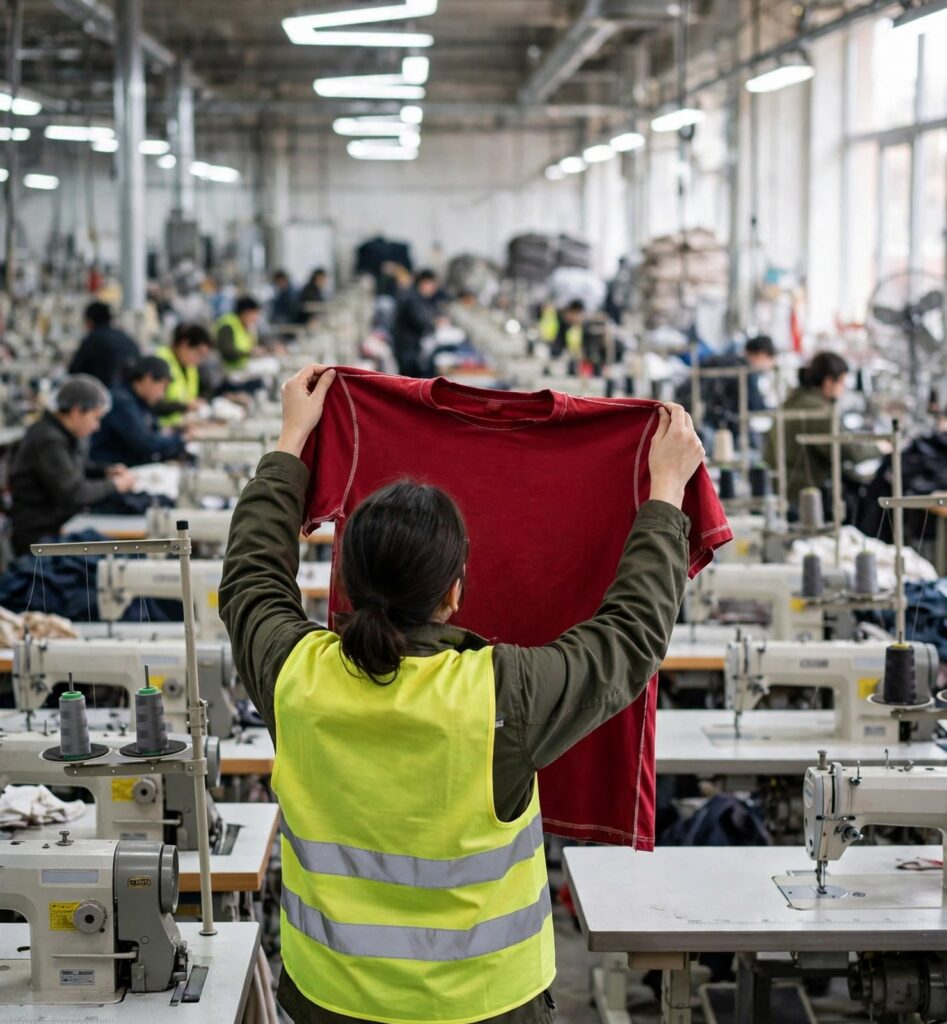
These details are agreed at sampling and written onto the style file, because they are invisible in a photograph and decisive in service. A buyer comparing two coverall prices is usually comparing two different garments; the construction list is where the difference lives, and we would rather have that conversation in the open at sample stage.
4. Logos and Identification on Uniforms
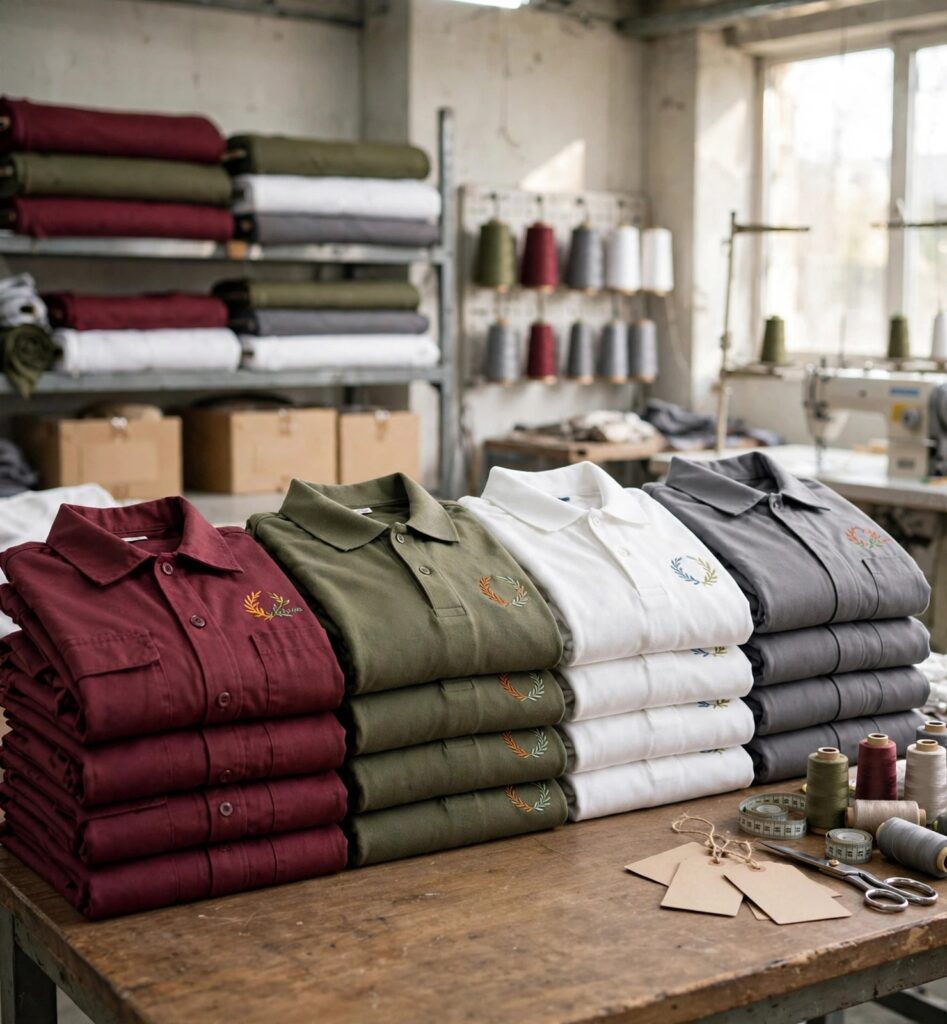
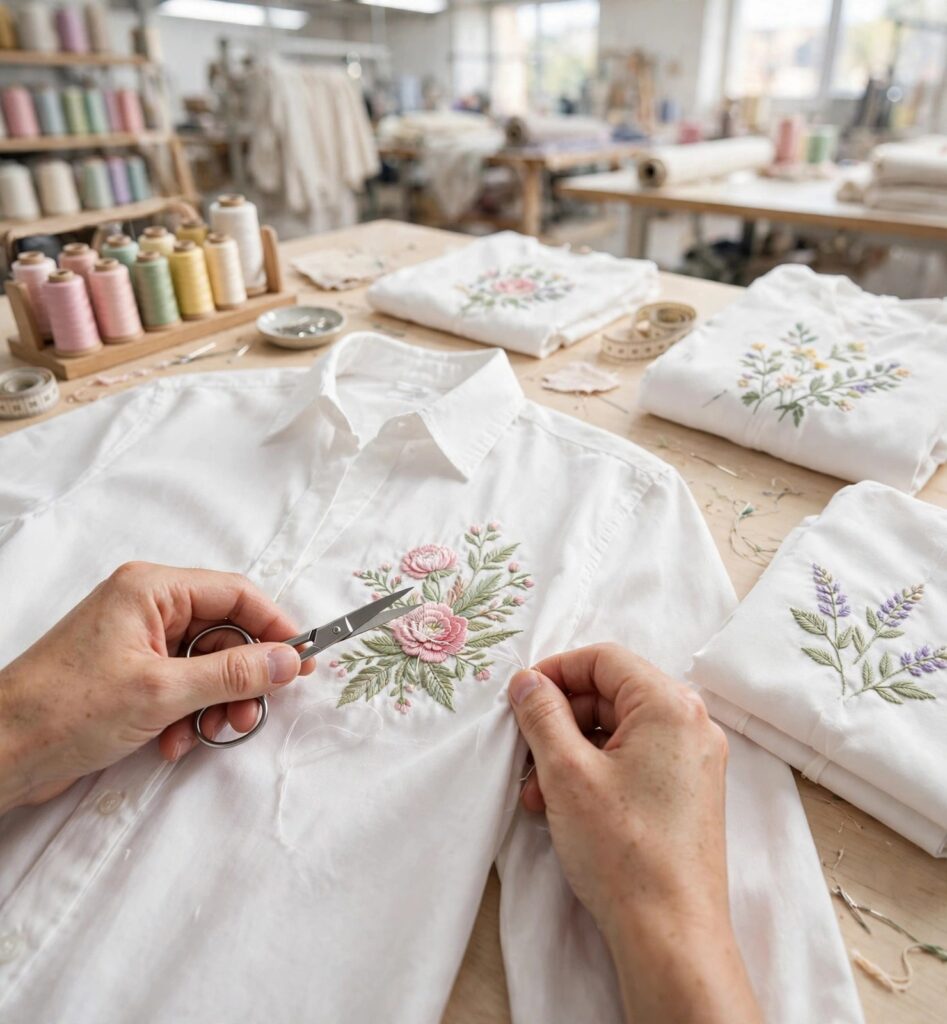
Most uniforms carry the employer's name, and embroidery is the durable way to put it there. Chest logos, name badges and department marks are embroidered in the same building through our embroidery section, on the finished garment or on panels before assembly depending on position, and approved on a real garment before bulk. Print is offered where a design suits it better, but for garments washed weekly at high temperatures, stitched identification outlasts printed identification, and we say so.
Position and size are fixed on the style file, so a logo sits in the same place on a small tunic and an extra-large coverall, scaled by the agreed rule rather than by the judgement of whoever is at the machine that day.
5. Repeat Programmes, Size Runs and Replacement Orders
Uniform buying is programme buying. An employer outfits a workforce, then orders tops-ups for new starters and replacements for worn garments, sometimes for years. Our uniform orders therefore run from a standing file: pattern, fabric, shade standard, construction list and logo artwork held together, so a replacement order of a few hundred pieces per style is produced to the same garment the workforce already wears.
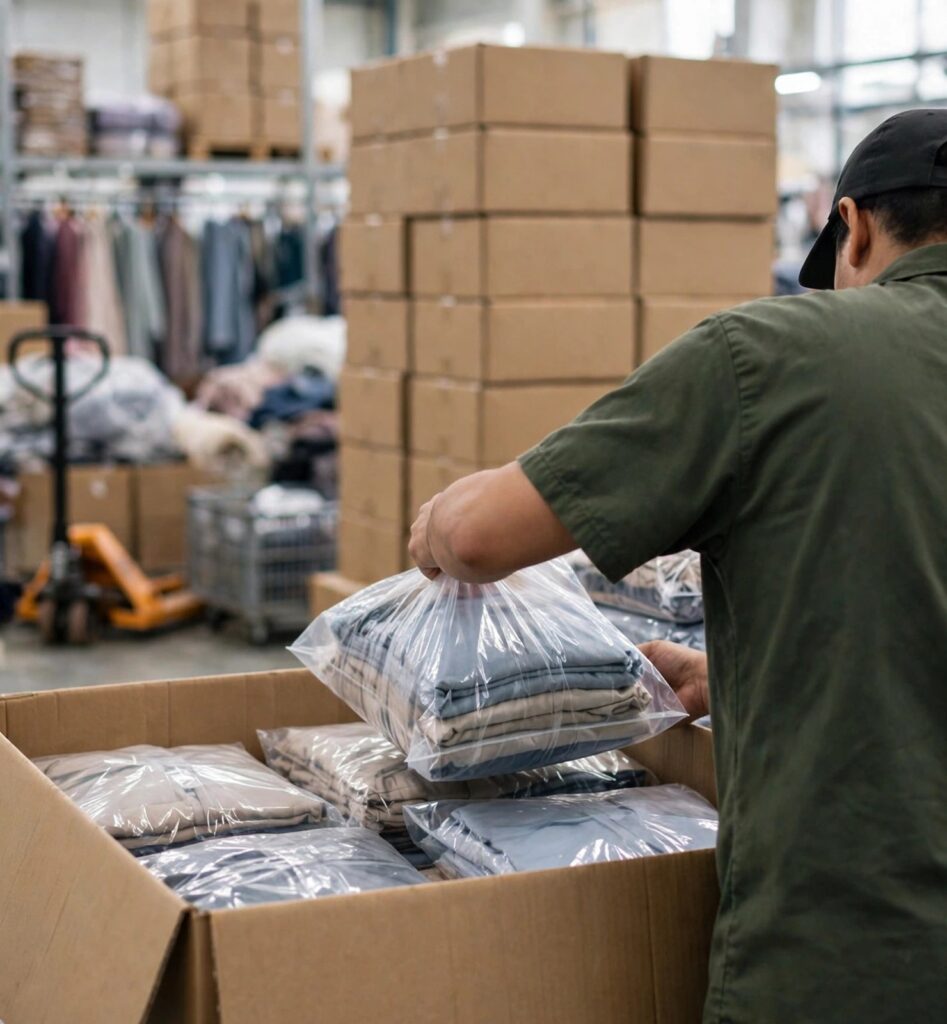
Quantities are agreed per colour and style with our team, and a programme total is often built across several uniform styles at once - trousers, shirts and jackets for one workforce in a single order. Payment follows the house terms: 40 percent by wire transfer with the order, 60 percent before shipment, or an irrevocable, transferable letter of credit at sight. Packing can be organised by size run, department or wearer group on the buyer's instruction, which saves the buyer's stores team a sorting job at their end.
6. Sizing a Whole Workforce, Not a Sample Rail
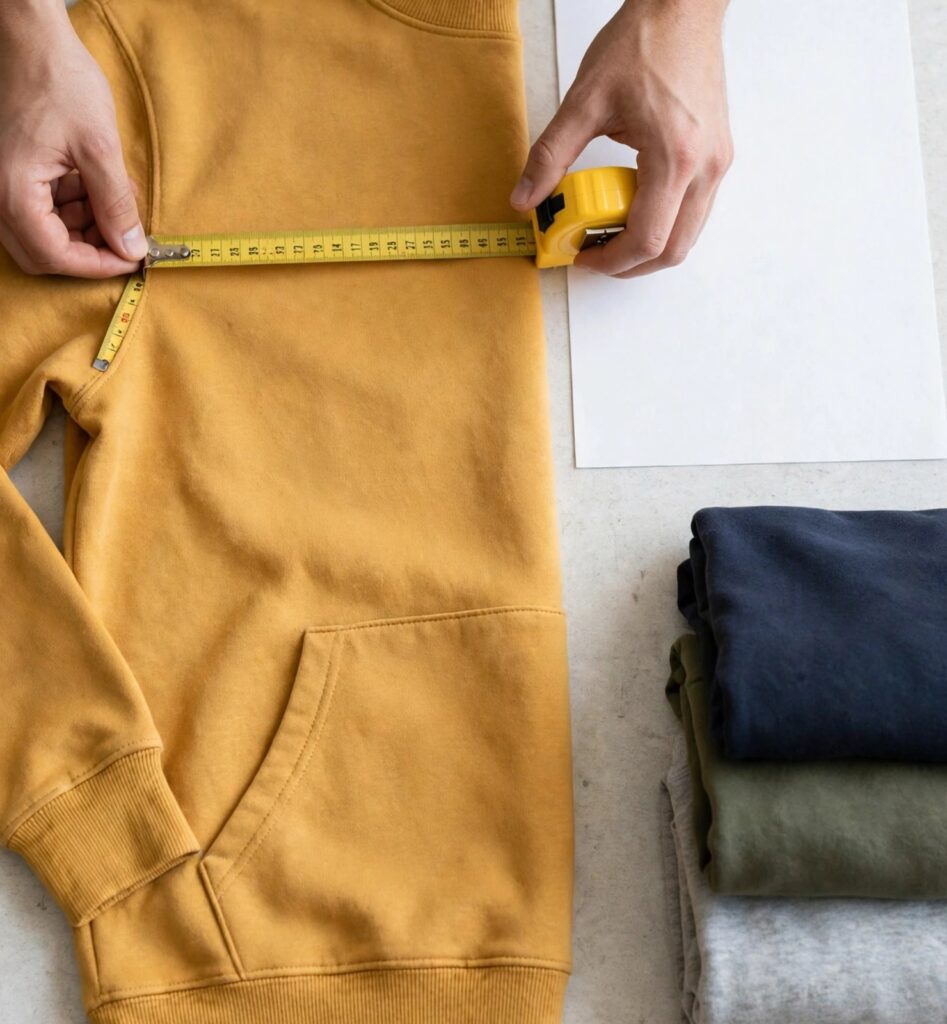
Uniform size runs are wider and less forgiving than fashion runs. A workforce includes every body shape, the garments must allow movement and layering, and a wearer given the wrong size simply hands the garment back. Size sets are sampled across the run before bulk, unisex and ladies cuts are graded separately where a programme carries both, and the measurement chart is checked on finished garments from each size, not just the middle one.
Buyers who supply a wearer list can have cartons packed to it. Buyers who do not can work from the standard ratio for their workforce profile, which we will sanity-check against the order history on the file - a ratio that drifted from the workforce's real shape shows up as exchanges, and the file is where that gets noticed.
Markets We Ship Workwear and Uniforms To
Every market buys uniforms, but the mix of industries behind the orders differs. These are the patterns we see most.
Uniform Programmes for USA Employers and Suppliers
USA buyers include uniform rental and supply companies alongside direct employer programmes: industrial coveralls, work trousers and service shirts in long size runs, reordered on standing files. Volume and shade consistency across years carry these orders. Tall and extended size ranges are common in this market, and they are graded and sampled as part of the main run rather than treated as an afterthought at the end of it.
Workwear for UK Facilities and Service Companies
UK buyers order heavily for facilities, catering and healthcare: chef wear, housekeeping tunics, hi-vis and general workwear, often with embroidered branding across several sites. Programmes are built so each site receives its allocation packed and marked separately.
Workwear Orders for German Industrial Buyers
German industrial buyers spec workwear in full - fabric composition, construction details and measurements in writing - and expect the bulk to match the document. The construction list and measurement chart on each style file are exactly what those orders are checked against.
Insulated Workwear for Canadian Buyers
Canadian buyers add a cold-weather layer to the family: insulated coveralls and padded work jackets for outdoor crews, alongside year-round core workwear. These programmes are planned ahead of the season so the heavier garments are sewn before winter demand peaks.
Service Uniforms for French Hospitality Groups
French buyers lean towards the service side: hospitality and catering uniforms where presentation matters as much as durability - chef wear, aprons and front-of-house shirts with careful branding. Fit and finish carry more weight on these orders than on industrial wear.
Uniforms for UAE Hospitality and Facilities Buyers
UAE buyers order uniforms at scale for hotels, facilities and service companies: housekeeping, kitchen, security and maintenance sets under one programme, with branding standardised across properties. Mixed-style orders in one shipment are the normal pattern.