



Product Development for Clothing Brands Ordering from Bangladesh
This part of the page covers the working detail: what development includes, the three ways a style can start, how patterns and fabrics are settled, how sample rounds and approvals work, and how an approved sample carries into bulk production.
1. What Garment Product Development Covers
Product development is everything between an idea for a garment and a sample approved for production. On a typical development, that means:
- Pattern making - a base pattern drafted from your measurements or your reference garment, then graded across your size range.
- Fabric and trim work - suitable fabrics sourced or matched, with buttons, zips, drawcords and other trims settled alongside.
- Sample sewing - the style made up in our sample room, by machinists who sew development work only.
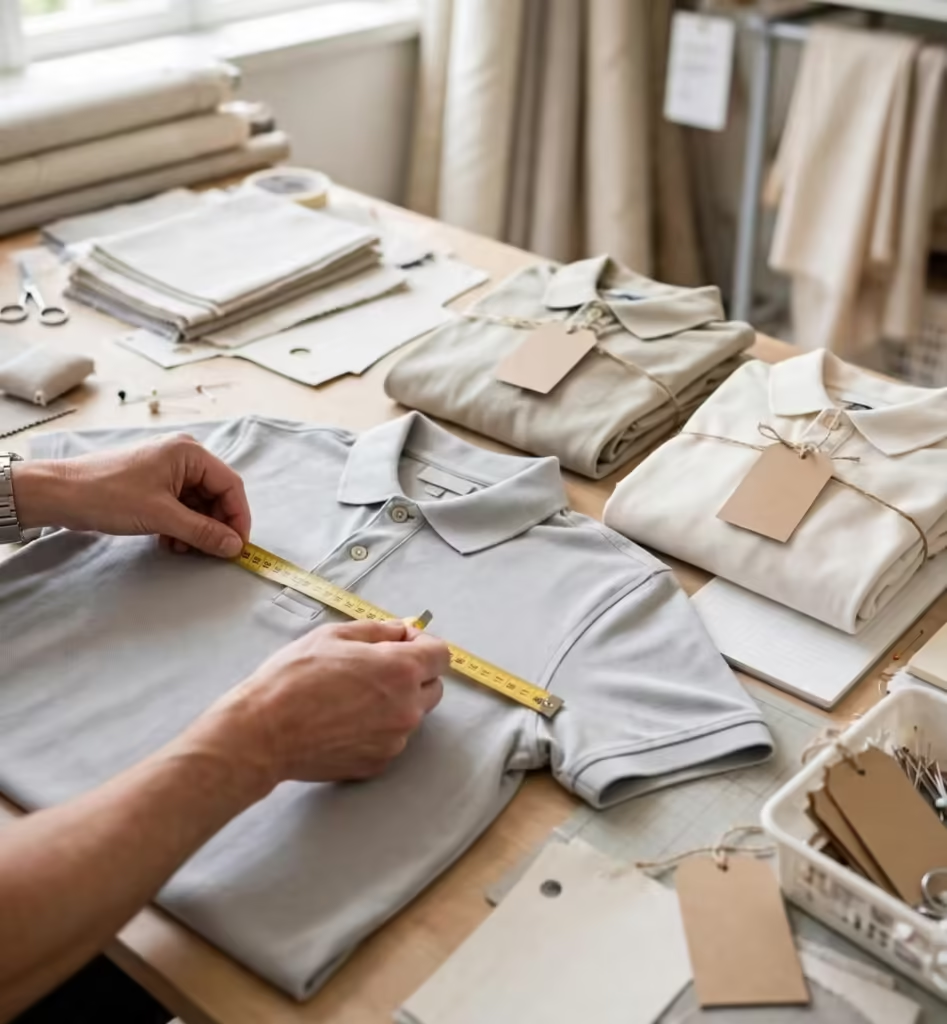
- Measurement and fit checking - the sample measured against your table, size by size, with differences recorded.
- Costing on real figures - a price built from the actual fabric, trims and making time the sample proves.
The output is not just a garment. It is the garment plus the written record behind it, and that record is what bulk production runs on.
Buyers sometimes ask whether development can be shortened by skipping straight to a production sample. It can be shortened on paper, but the rounds exist because each one retires a risk while retiring it is still cheap: a fit question answered in sampling costs a pattern correction, while the same question answered on a finished bulk order costs the order. Development time is not delay added to your programme - it is the part of the programme where the expensive mistakes are made small.
2. Where a Development Starts: Sketch, Tech Pack or Sample
Styles arrive at three levels of readiness, and development meets each where it stands:
- A full tech pack with measurements and construction details is the fastest start, because the pattern can be drafted straight from it.
- Photographs plus a written description suit styles that exist in the market rather than on paper, and the pattern maker works out construction from the pictures and your notes.
- A reference garment is the most complete starting point: it can be measured, taken apart mentally and rebuilt in your fabric and your colours.
Whichever route a style takes, development follows the same discipline from here.
Whichever the starting point, the first conversation is about the same questions: what fabric, what fit, what size range, and what the garment has to cost at the end. Settling those early is what keeps a development to a small number of rounds instead of an endless exchange of samples.
What helps most from your side is honesty about the garment's job. A sample destined for hard-wearing workwear is developed differently from a fashion piece at the same price: fabric choices, seam construction and tolerance decisions all follow from the use. Tell us where the garment will be sold and worn, and the development aims at that target instead of at a generic idea of the style.
3. Patterns, Fabrics and Trims Settled in Sampling
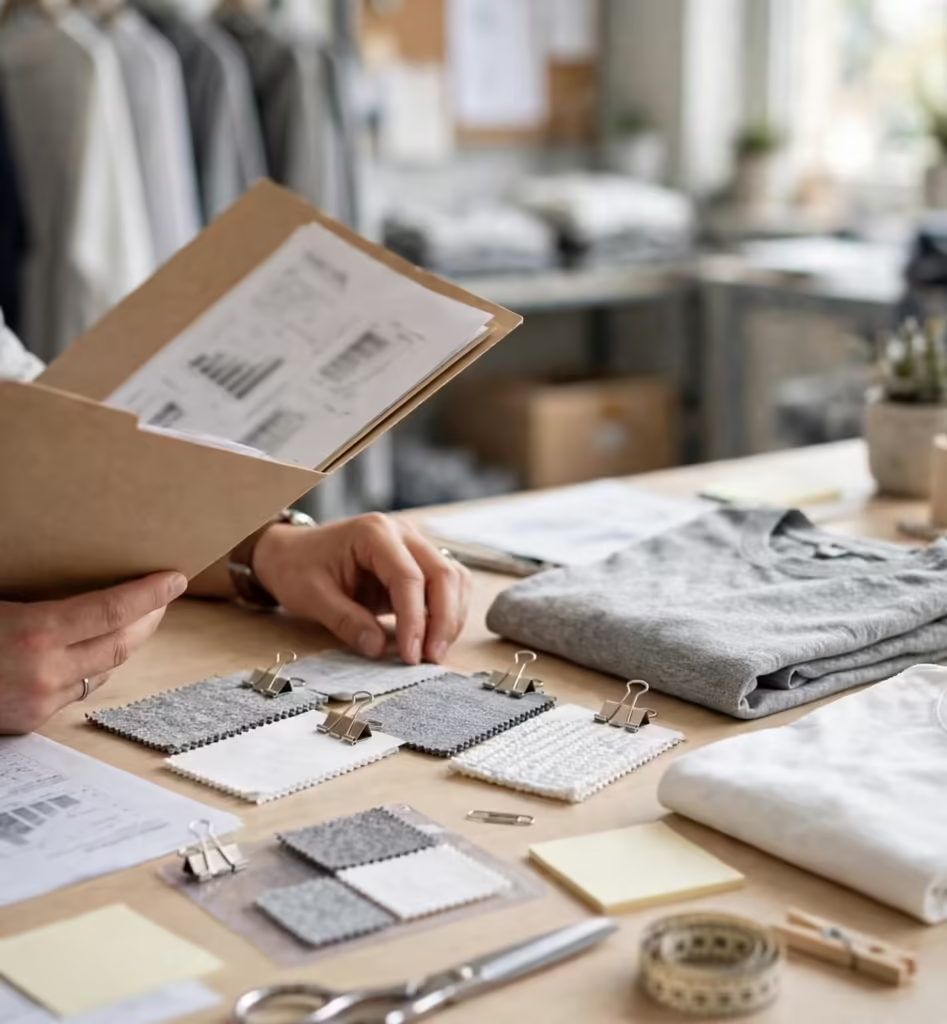
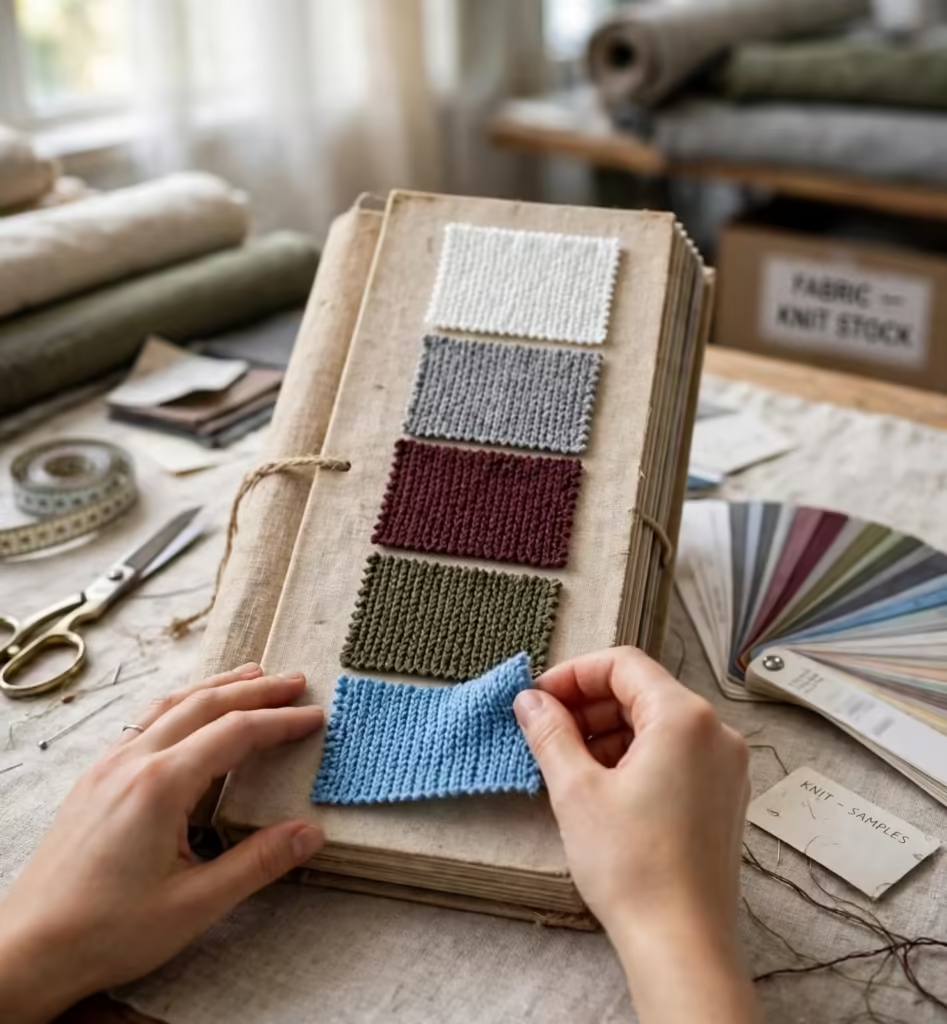
Most sampling problems are really material problems: a pattern that behaves in one fabric misbehaves in another. So development settles fabric and pattern together. If you have a specified fabric, we source to that specification and sew the sample in it or in the closest available match, telling you plainly which. If you are open on fabric, we propose options at the weight, composition and hand-feel your price point needs, with swatches sent for your decision.
Trims are settled the same way and at the same time - a zip, a button or a drawcord chosen after the sample is approved has a way of delaying the bulk order behind it. By approval, the order file should hold every material decision the garment needs.
Where you nominate your own fabric or trim supplier, development works with their material and proves the style in it. Where you leave sourcing to us, the proposed materials come with the reasons for the choice - weight, composition, behaviour in washing and making - so your approval is a decision you can defend inside your own business, not a guess you are asked to sign.
4. Sample Rounds and How Approvals Work
A development usually runs in named rounds, each with a clear job:
- The first sample proves the style and the fabric choice.
- A fit sample puts the garment on a body or a stand so proportions can be judged properly.
- A size set sample confirms grading across the full size range.
- The pre-production sample is the final round: bulk fabric, bulk trims, your labels and packing, made exactly as production will run.
Rounds are not bureaucracy: each one removes a class of surprise from the bulk order, and skipping a round does not remove the surprise - it moves it into production, where it costs more.
Approvals are recorded in writing against measurements, not given as a general nod. When you approve the pre-production sample, you are approving a measured garment with a written record, and that record - sample, measurement sheet and agreed comments - is kept on your file as the production standard. Our sampling process page sets out the stages in the order buyers usually meet them.
Decoration is sampled in the same rounds, not after them. If the garment carries a print, an embroidered logo or a special finish, the pre-production sample carries it too, in its final position and size. A garment approved plain and decorated later is two approvals pretending to be one, and the difference has a way of appearing on the bulk. One finished sample, approved whole, is the standard we work to.
5. From Approved Sample to Bulk Production
The hand-over from development to production is where many factories quietly lose the garment: the bulk is sewn from memory, or from an early sample, instead of from the approved one. Our hand-over is a written record. The production file receives:
- The finalised pattern.
- The approved sample.
- The fabric and trim approvals.
- The costed specification.
The merchandiser who ran development stays on the order through its first production. What was approved is what gets made, because the record - not someone's recollection - is what the line works from.
Production itself then runs as a standard made-to-order clothing order - see how the making side works on our cut and sew manufacturing page. If the bulk order carries your own branding, development is also where label positions and decoration placements are fixed, working with our private label and OEM team so the finished garment is approved as one product, not as a garment plus afterthoughts.
6. How Development Fits Your Order Quantities
Development is done against a real order intention: bulk production with us starts at 3,000 pieces per order, from 800 pieces per colour and style. Sampling a style that will never reach a workable quantity helps neither side, so the quantity conversation happens at the start of a development, not at the end. Within an order, several styles can be developed in parallel and combined towards the total, which is how a new range is usually built: the whole range sampled, costed and approved together, then produced as one programme.
Styles that are developed and not taken to bulk in the first season are not wasted work: the patterns, costings and approval records stay on your file, and the style can enter a later order from a standing start.
Development also protects you when people change. Buyers' teams change, merchandisers change, a season is picked up by someone new on either side. Because the development file holds:
- The patterns.
- The costings.
- The approvals.
A style can be re-run a year later by different hands and come out the same garment. That continuity is worth more than it sounds: most repeat-order problems in this trade are really lost-information problems.
Product Development Support for Buyers in the USA, UK and France
Development work arrives from our main markets in slightly different shapes. The three below are the patterns we see most often when a buyer is setting up a new range with the factory.
Developing Ranges for USA Private Labels
USA private labels typically develop whole ranges at once - a season of knitwear styles sharing fabrics and trims, sampled together so the costings and fits can be compared side by side. Running those developments in one sample room, on one record system, keeps the range coherent: a fit decision made on one style is applied knowingly to the styles that share its block.
Sample Development for UK Clothing Brands
UK brands often start from reference garments - a proven seller they want reproduced under their own label with adjustments. Development from a physical sample is measurement-led work: the garment is patterned from the piece, the changes are built into the pattern, and the first sample is checked against the original measurement by measurement so the buyer can see exactly what moved.
Product Development for French Fashion Buyers
French fashion buyers tend to bring design-led styles where construction details matter as much as measurements - a seam placed a certain way, a finish done a certain way. Sampling rounds for that work are comment-heavy by nature, and the written approval record matters most: every agreed detail is on the order file before bulk, so the production line is judged against what was actually agreed.