



Shipping and Logistics for Clothing Orders Exported from Bangladesh
A finished order still has one job left: reaching your warehouse in the condition it left ours, on the date your programme planned for. Shipping is where production time turns into transit time, and where small misunderstandings - about who books the vessel, what FOB really covers, which documents travel where - cause the expensive delays. This page explains how shipping and logistics work at Siatex Bangladesh, by sea and by air, and how your own forwarder fits into the picture if you prefer to use one.
1. Sea Freight: The Standard Route for Garment Orders
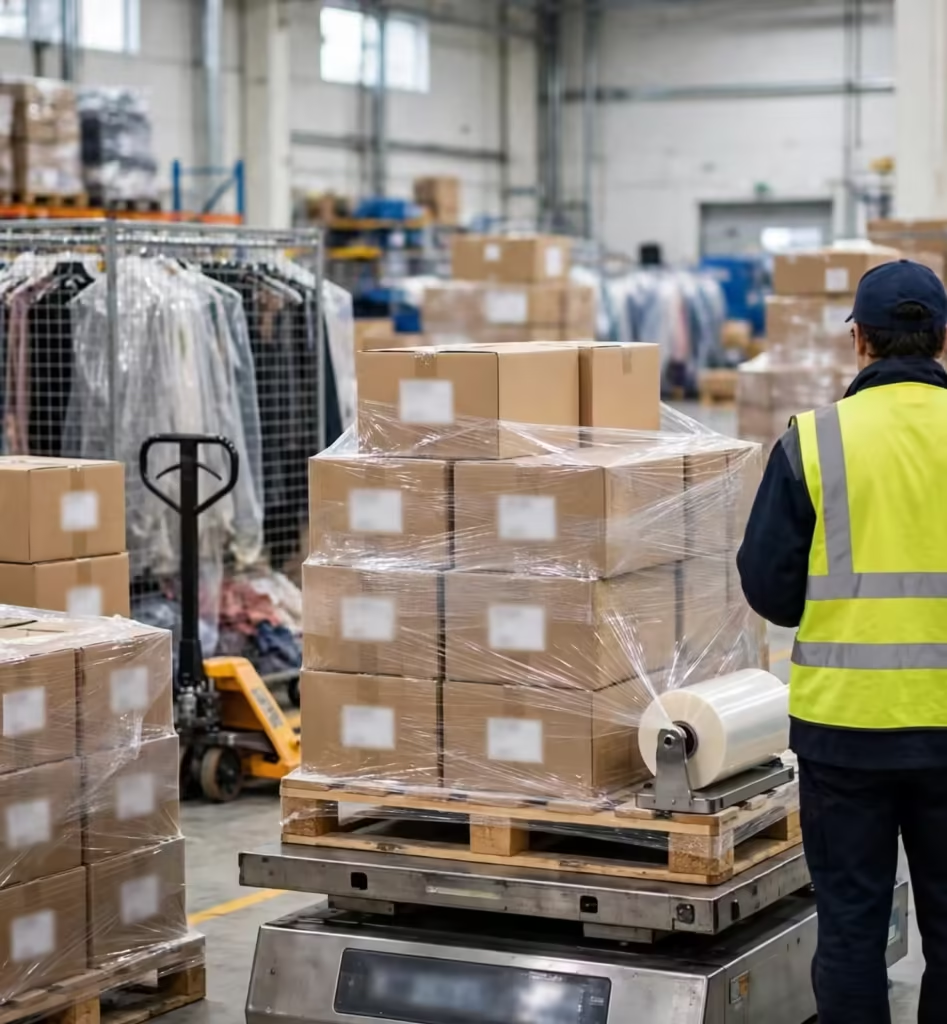
Most garment volume moves by sea, in containers loaded either at our factory or at the port depot. Cartons are stuffed to the container plan, and the load is checked as it goes in:
- Carton counts against the packing list.
- Weight distribution sensible.
- No crushed corners at the door.
The sealed container then moves to Chattogram port for vessel loading. Sea freight is the economical route for bulk programmes, and its lead time is planned backwards from your required delivery date when the order is confirmed, not guessed at when production ends.
Consolidation is part of the sea picture for smaller programmes: orders below a full container load ship as LCL, grouped with other cargo, which keeps sea freight open to trial orders and smaller seasonal runs. Your merchandiser will tell you plainly which route your volume suits and what each does to the timeline and the cost picture, so the choice is made on facts at order stage. Our low MOQ programme page explains how smaller orders are structured to keep routes like this practical.
2. Air Freight for Urgent and High-Value Orders
Air freight is the pressure valve of garment logistics:
- Late approvals.
- A retail launch that cannot move.
- A bestseller that sold through early.
Cartons for air are weighed and measured precisely, because air is charged on whichever is greater - actual or volumetric weight - and packing choices made weeks earlier decide what an air shipment costs. Where a programme knows air is likely, we pack with that in mind from the start.
Air is also used selectively inside sea programmes: a first drop flown to meet a launch date while the balance follows by sea, for example. Splitting a shipment this way is a normal merchandising decision, and we will model both routes honestly - air is fast, and it is never the cheap option, and any factory that tells you otherwise is not costing your order properly.
3. FOB Explained Plainly: What It Covers and What It Does Not
Most of our orders ship FOB - free on board - and it is worth being exact about what that means, because it is the point where responsibility changes hands. In plain terms:
- We handle - production, packing, export documentation, customs clearance on the Bangladesh side, and delivery of the goods loaded on board the vessel at Chattogram.
- You handle - the sea or air freight from that point, insurance as you arrange it, and import clearance and duty in your country.
- The handover point - once the goods are on board, they are travelling at your instruction and your risk, under your forwarder or the one we book on your instruction.
Nothing in that division is unusual - it is how most of the world's garment trade moves - but agreeing it clearly at order stage is what prevents the classic misunderstanding where each side assumed the other had booked something. Where a buyer prefers different terms, the conversation happens at quotation, and the agreed terms are written into the order confirmation like everything else.
4. Your Forwarder or Ours: Both Work
If your company works with a nominated freight forwarder, we ship through them as a matter of routine: your forwarder's local office receives the booking details, the carton data and the handover schedule from our export desk, and the goods move under your arrangements from the FOB point. Many of our long-running programmes run exactly this way, with the same forwarder relationships season after season.
If you do not have a forwarder, we book through the lines and agents we work with regularly and keep you informed of vessel, sailing and arrival dates as they are confirmed. Either way, you receive the same things from us:
- Accurate carton weights and dimensions before booking.
- Honest readiness dates.
- Prompt notice if anything about the shipment plan changes.
The production timeline page shows how the shipping stage is sequenced against production so readiness dates are real ones.
5. Export Documents and Customs on Our Side
A shipment travels on its documents as much as on its vessel. Our export desk prepares the full set:
- Commercial invoice.
- Packing list.
- Bill of lading.
- The certificates your order terms call for.
The set is checked against each other before the container is sealed - because a document error discovered at destination customs costs more than any delay in preparing them properly. The document side of payment - how these papers interact with letters of credit and transfers - is covered on our payment terms page.
Bangladesh-side export customs is handled by us as part of the FOB responsibility: declarations filed, inspections accommodated where customs selects a container, and the cleared shipment released to the vessel. You receive copies of the document set as soon as it is issued, so your import broker can prepare clearance while the goods are still on the water - the cheapest days in logistics are the ones where paperwork travels faster than freight.
6. Shipment Updates From Dispatch to Arrival
Once a shipment sails, you are told the vessel, the sailing date and the expected arrival, and the document copies follow immediately. If a sailing slips - weather, port congestion, a rolled booking - you hear it from us with the revised dates, not from your forwarder's tracking page days later. Your merchandiser stays the single contact through transit, the same person who ran production, so a question about a shipment is answered by someone who knows what is inside the cartons.
That continuity matters most when something needs deciding mid-transit: a document correction, a delivery instruction change, a split in the consignment. One file, one contact, and the full record from order confirmation to bill of lading - shipping run this way is a stage of the order, not a separate adventure after it.
On arrival, the same file closes the loop. If your warehouse finds a discrepancy - a carton count question, a document query from your broker - it is answered against the dispatch record:
- What was loaded.
- When it was loaded.
- Under which seal.
- Which documents covered it.
Most arrival questions are settled in one exchange because the evidence was assembled at loading, not reconstructed afterwards. And where a shipment teaches us something - a route that ran slower than quoted, a packing choice that travelled badly - it is noted on the programme file, so the next order ships on better information than the last.
Shipping Realities for Importers in Australia, the USA and the UAE
Routes, transit patterns and port habits differ by destination. These are the destinations our export desk ships to most, and what each tends to mean for an order.
Sea Routes for Australian Clothing Importers
Australian programmes typically ship by sea with transhipment on the way, which makes honest transit planning important: the sailing date is only the start of the story. Australian buyers usually build the transhipment leg into their delivery windows from the outset, and seasonal launches are planned backwards with a buffer rather than on the tightest possible connection. Documents are prepared to Australian import requirements from the start, so arrival clearance is a formality rather than a negotiation.
East and West Coast Delivery for USA Buyers
USA shipments split by destination coast, and the routing choice - which port the container is consigned to - is made with your warehouse location in view, because domestic haulage from the wrong coast erases a good freight rate quickly. USA programmes also tend to run the largest volumes, so container planning starts early: full loads booked against production completion, with carton data supplied to forwarders ahead of readiness so space is held rather than hoped for.
The UAE as a Distribution Point for Regional Programmes
Some buyers route programmes through the UAE, using its ports as a distribution point for the wider region. Those shipments are planned as hub movements: documentation prepared for re-export handling, carton labelling kept neutral and clear, and consolidation arranged so a single arrival can split into several regional deliveries. If your programme distributes this way, tell us at order stage - the packing and paperwork choices that make hub distribution smooth are made long before the container is loaded.