




Sampling for Clothing Buyers Developing Styles in Bangladesh
Every bulk order that goes well was a good sample first. Sampling is where fit is proven, fabric is judged in the hand rather than on a screen, and decoration is approved as it will actually appear. This page walks through the sampling route at our factory - what we need from you, what each sample is for, and how the stage stays quick and honest.
1. What to Send Us to Start a Sample
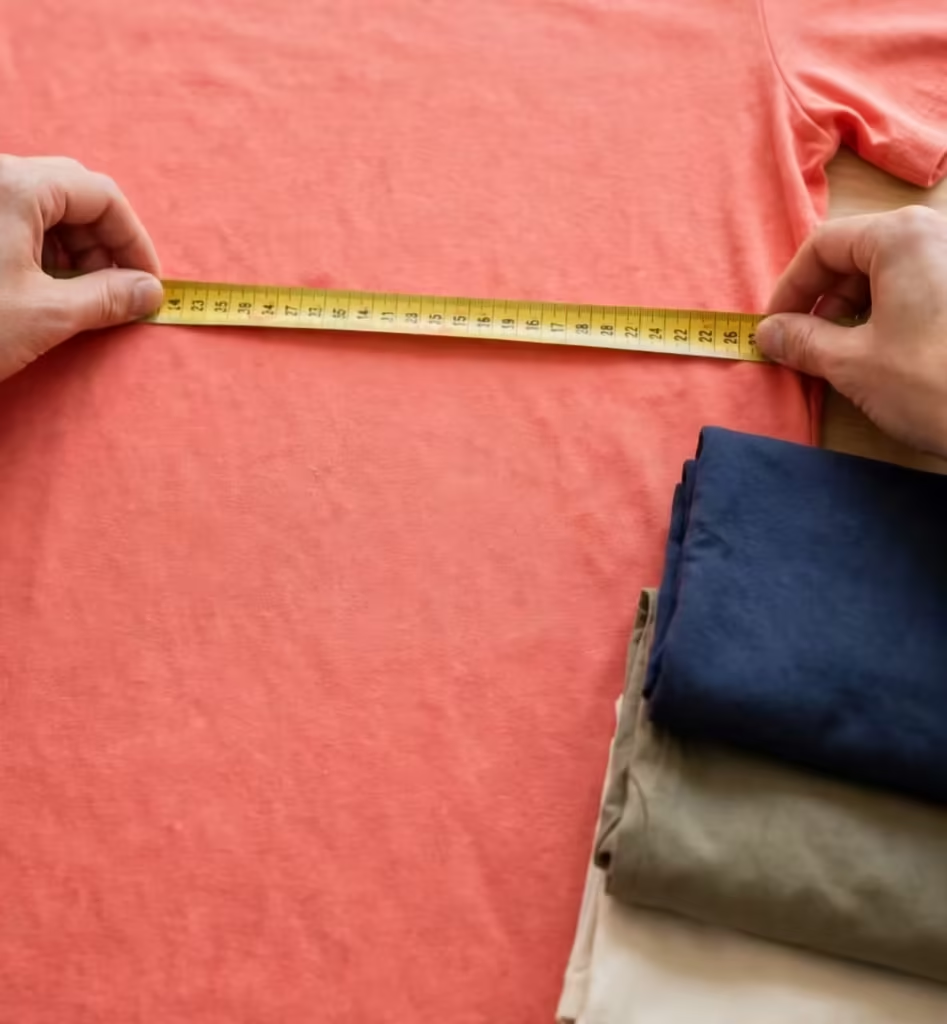
A sample can only be as accurate as the information behind it. You do not need a perfect technical file to begin - buyers start from many different points - but the more of the following you can send, the closer the first sample lands:
- A tech pack, if you have one - style drawings, measurements, construction and trim details
- Or a reference garment - a physical sample of the style, which we can measure and match
- Your size chart, or the sizes and fit you are aiming for if the chart is still being built
- Artwork for any print or embroidery, in the best file quality you have
- Fabric direction - the type and weight you want, or a swatch or garment whose hand feel we should match
- Your label and tag artwork, if the sample should carry your branding
If some pieces are missing, say so rather than waiting. Our pattern and sample team works from partial information every week, and we will tell you exactly which gaps matter for the first make and which can be settled in later rounds.
2. The Development Sample: Your Style Made First
The first make is the development sample: your style cut and sewn as a real garment, so its shape, construction, and proportions can be judged properly. Where the exact bulk fabric is not yet in hand, the development sample may be made in a close available cloth, so the style itself can be assessed without waiting on fabric sourcing - the fabric itself is proven separately, and finally in the pre-production sample.
Your comments on the development sample drive the next round. Mark what you want changed:
- Fit points.
- Pocket positions.
- Stitch details.
- Proportions.
And the sample is revised. This loop is the cheapest place in the whole order to change your mind, and we would rather run it twice here than correct anything in bulk. Most styles settle within a small number of rounds when the original information was clear.
3. Strike-Offs and Colour Approvals
Decoration is approved on its own evidence, not from a screen image. For printing, a strike-off puts your artwork onto fabric:
- At real size.
- In the real colours.
- And in the real method - screen print, or whichever technique your programme uses.
So you approve the actual result. Embroidery is sampled the same way, stitched out so these can be judged:
- Thread.
- Size.
- Placement.
Colour works the same way. Where a colour must be matched - to a standard, a swatch, or a previous season - fabric is dyed or sourced against it and the result sent for your approval before bulk fabric is committed. Approving colour and decoration at this stage, separately from the garment fit, means the pre-production sample only has to prove one thing: that everything already approved comes together correctly.
One discipline matters here: approve colour under the light your customers will see it in, and say so if a shade reads differently in your market. Dyes and screens both shift between light sources, and a colour signed off carelessly at this stage cannot be argued with later - the bulk will match the approval, right or wrong. We would rather hear "too warm, go again" at strike-off stage than at any later one.
4. Fit and Size Sets: Getting the Range Right
A sample in one size proves a style; an order needs a range. Once the base size is approved, the pattern is graded across your size chart, and a size set - samples across the range - can be made where the style or the market calls for it. This is where grading is checked as your customers will feel it: not just numbers on a chart, but how the garment grows from the smallest size to the largest.
Buyers building private label clothing programmes often use this stage to settle their standing size chart with us. Once a chart is proven on real garments, later styles in the programme grade from it directly, and sampling on repeat styles becomes noticeably quicker.
Fit comments deserve the same honesty as colour comments. If a sleeve feels long or a body feels close, say it against the size you tried - our pattern makers work from measurements, not impressions, and a comment tied to a number ("two centimetres off the chest on the medium") is corrected in one round, where "feels small" can take two. Precision at this stage is a favour to your own calendar.
5. The Pre-Production Sample: the Bulk Standard
The final sample is the pre-production sample - the PP sample. It is made exactly as production will run:
- In the actual bulk fabric.
- With the actual trims.
- With the actual labels.
- With the actual decoration.
- With the actual packing.
Nothing about it is approximate. When you approve the PP sample, you are approving the order itself; its twin stays on our sample rail as the standard the bulk is sewn and checked against.
This is the gate bulk production waits behind, and it is firm: no approval, no bulk. It is also why the earlier stages matter - a PP sample should confirm decisions, not introduce them. When it is approved, the order moves to confirmation and production on the route described in how it works.
6. How Sampling Stays on Track
Sampling slows down for predictable reasons:
- Comments scattered across messages.
- Artwork replaced mid-round.
- A decision waiting on someone who has not seen the sample.
We keep the stage moving with a few simple disciplines. Your comments come back to one merchandiser, who logs every change against the style, so round two corrects what round one raised - all of it, not just the last message.
We also say plainly when something in a request will not sew, print, or wash the way you expect. A sample room that quietly makes what was asked, knowing it will disappoint, wastes a full round. Ours will flag the issue with the sample and suggest the workable alternative, so your approval is always given on honest evidence.
What we ask from you during sampling is short:
- Comments in one place, against the sample you received - not split across old threads
- A clear yes or no on each round, with the changes you want listed together
- Artwork changes sent as new files, named as replacements, never edited silently
- One decision-maker we can take approval from, so rounds never wait on a committee
None of that is bureaucracy. Each item removes a known cause of a wasted round, and sampling rounds are where an order's calendar is won or lost.
Sampling for Buyers in Our Main Markets
The sampling route is the same for everyone; the emphasis shifts with the market the garments are being developed for.
Sampling for the UK - Own-Label Fit and Presentation
UK own-label buyers usually carry established fit expectations from their existing ranges, so the development stage leans heavily on matching a reference garment or a proven size chart exactly. Presentation samples matter too: labels, tags, and folding are often approved alongside the garment, because the sample is judged the way a retail customer will meet the product. Settling those details in sampling keeps the bulk packing stage free of surprises.
Sampling for Australia - Seasons Running Opposite
Australian programmes sample against a calendar that runs opposite to ours: while Bangladesh is in one season, Australian buyers are developing for the next. That makes the sampling stage the schedule's foundation - styles approved in good time let fabric be booked and production planned calmly. Australian buyers who start sampling early in their cycle get the most from the route, because every later stage inherits the time they saved here.
Sampling for the USA - Standards That Repeats Are Sewn Against
For USA private label programmes, the PP sample carries a second life beyond the first order: it becomes the counter-sample standard for repeats. Getting it exactly right - fabric, fit, decoration, packing - pays back on every reorder, because later runs are sampled lightly and checked against the sealed standard. USA buyers developing core styles treat this stage as an investment, and it is the right instinct.
To start a sample, send what you have through the get a quote page - a tech pack if you have one, a reference and a few honest lines if you do not - and the sample room will take it from there.