



Garment Packaging, Tags and Labels Made to Your Specification
Packaging is the last thing your customer touches before the garment itself, and for private label programmes it is where your brand becomes physical: your woven label in the neck, your hang tag on the garment, your barcode on the bag. This page explains how packaging, tags and labels work at Siatex Bangladesh - what we fit as standard, what is made to your artwork and specification, and how packing is controlled so every carton arrives uniform, scannable and ready for your warehouse or your stores.
1. Woven Labels, Care Labels and Size Markings
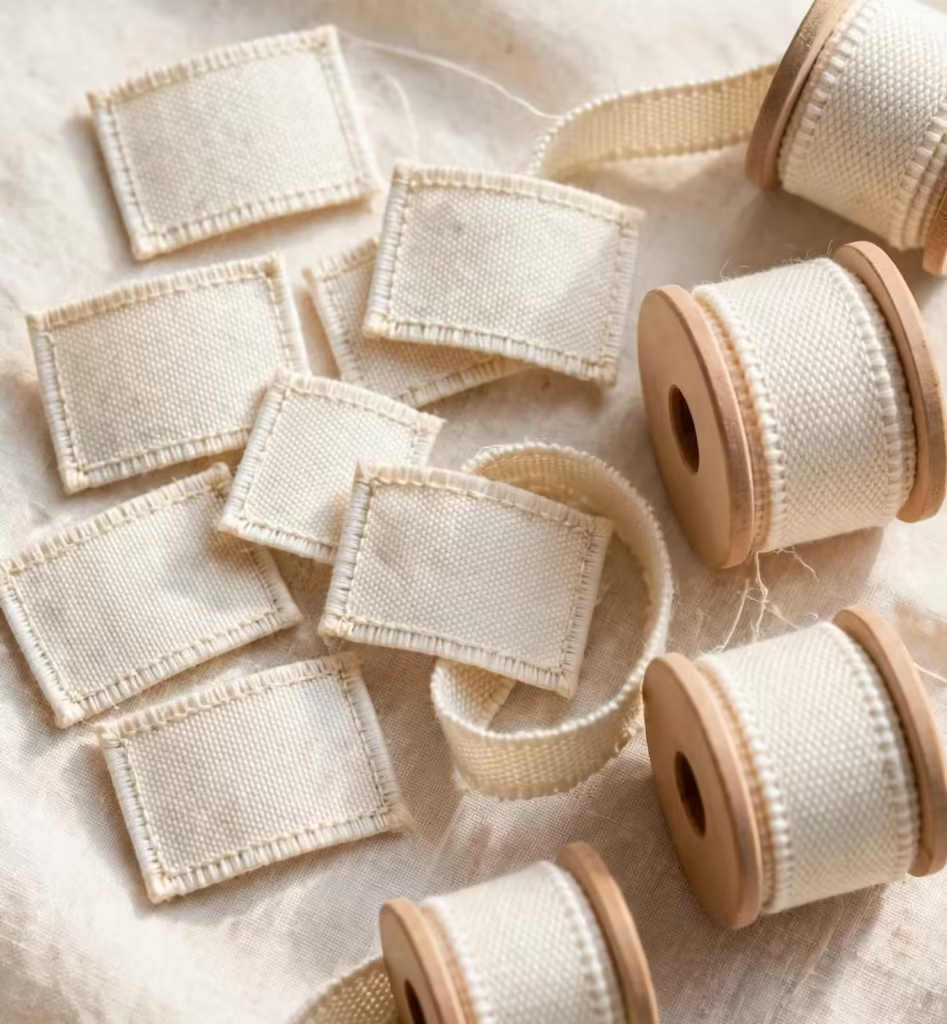
Your main label is fitted during sewing, at the position your specification sets - inside back neck for tops, inside back waistband for bottoms - so labelling is part of the garment, not an afterthought at the packing table. Woven brand labels are made to your artwork: your name, your size marking, your colours. Care and composition labels carry the fibre content and care instructions your market requires, in the languages your market needs, printed from the composition the garment was actually made from - never copied from a previous style by habit.
Label stock is ordered against the programme and checked on arrival like any other trim:
- Spelling.
- Colours.
- Weave quality.
Each is compared with your approved artwork before a single label is sewn. A misspelled label found at the packing table is a disaster; found at goods-in, it is a phone call. For brands still finalising artwork, our private label and OEM page explains how label development runs alongside sampling.
Consistency across a range is part of the same discipline. When a programme carries several styles under one label, the label's position, the size marking format and the care text layout are held identical across all of them, so your customer meets the same brand presentation whichever garment they pick up. It sounds like a small thing until a range hangs side by side in a store - which is exactly where your customers will meet it.
2. Hang Tags, Price Tickets and Tagging
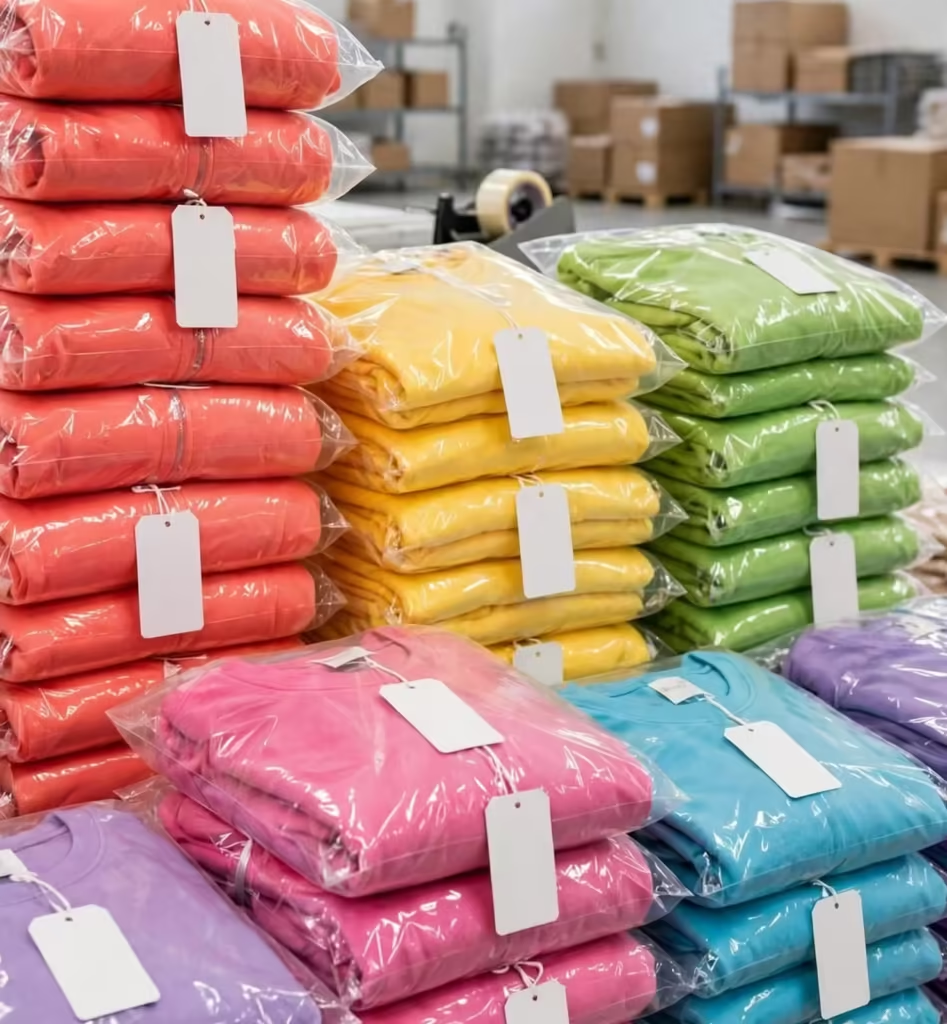
Hang tags are attached at finishing, after final inspection, so a tagged garment is a passed garment. Tags are made to your specification:
- Board weight.
- Finish.
- String or pin fixing.
Tags can carry your price ticket, your style codes and your retailer's own ticket where a programme supplies one. Tag position is set in the specification as well, so a range arrives uniformly tagged rather than each operator choosing a spot.
Where your retail channel needs it, swing tickets can be printed with variable data - size, colour and price per variant - and matched to the garment at tagging. The check is simple and strict: the ticket on the garment, the label in the garment and the bag the garment goes into must all say the same thing, and the packing team works to that three-way match on every piece.
Artwork for tags is proofed the same way labels are: a printed proof or a finished sample tag is approved by you before the tag run is printed, because a tag error multiplies across every garment in the order. If your brand works to a style guide - board colour, typography, logo placement, the order information appears in - send it with the first order and it is filed with your programme, so repeat orders are tagged identically without the artwork conversation starting again. Buyers who change tag designs seasonally simply approve the new proof at sampling stage, alongside the garment samples themselves.
3. Barcodes and Retail Stickers
Barcode stickers are applied to the polybag - or to the tag, where your system prefers - from your barcode data:
- Codes are generated per style, colour and size from the data you supply.
- Codes are printed in our packing department.
- Printed codes are sampled for scan quality before the run.
A barcode that will not scan at your warehouse till or goods-in is a problem we would rather find here. Sticker position is standardised per programme so your warehouse team handles every carton the same way.
For buyers supplying their own printed stickers or retailer-specific labels, those are received, counted and checked in as trims, and applied to the same standard. Either way, the rule stands: what the sticker says, the bag says and the garment is - verified by sampling through the packing run, as part of the same discipline described on our quality control page.
4. Folding, Polybags and Presentation
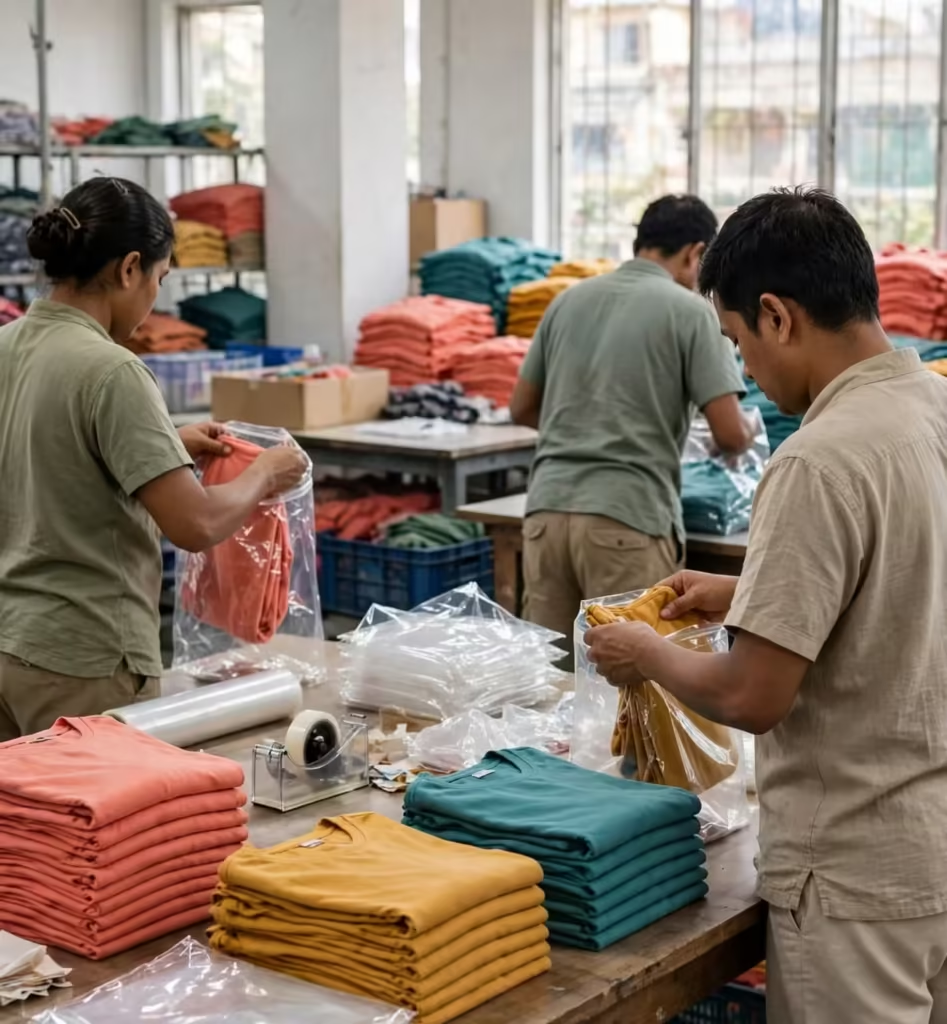
How a garment is folded decides how it looks when the bag opens. Folding is done to your presentation standard:
- Board or tissue where your programme specifies them.
- Fold dimensions set so the garment sits flat and the label or chest print shows where it should.
Polybags are specified the same way:
- Thickness and size.
- Ventilation holes.
- The safety wording your market requires, printed on the bag itself.
Recycled-content bags are available where your programme calls for them.
Presentation options are agreed at sampling stage wherever possible, because fold and bag choices affect both cost and how a garment survives transit. A garment packed tight for container economy and a garment packed for direct-to-store display are packed differently, on purpose - tell us the destination the bag has to perform in, and the packing specification is built for it.
5. Carton Packing, Assortments and Ratio Packs
Cartons are packed to your assortment instruction: solid colour and size, ratio packs across a size curve, or mixed assortments for direct distribution. Each carton carries a packing list of its own contents, and carton weights and dimensions are recorded as they are sealed - the data your freight and warehouse planning runs on. Carton quality itself is specified for the journey: board strength matched to stacking and sea freight conditions, because a carton that arrives crushed has failed even if the garments inside have not.
The main packing configurations buyers ask for are:
- Solid pack - one style, one colour, one size per carton; simplest for warehouse breaking and re-picking.
- Ratio pack - sizes packed in your selling ratio inside one carton, ready for store allocation.
- Assorted pack - mixed colours or styles to your instruction, for direct-to-store and online fulfilment programmes.
- Hanging delivery - available for the styles and markets where garments must arrive on hangers rather than folded.
Outside the carton, shipping marks carry the information your warehouse and forwarder work from: order number, style, carton number and destination, printed to your format or to the standard format our export desk uses. Marks are applied as cartons are sealed and checked against the master packing list, so the carton count a forwarder signs for is the carton count the documents describe. Where your programme uses its own carton labels - retailer-branded or system-generated - those are applied at the same stage and sampled like any other label on the order.
6. Packing Checks Before Cartons Are Sealed
Before a carton is sealed, its contents are checked against the packing list:
- Count.
- Sizes.
- Colours.
- Ticket and barcode match.
Sealed cartons are weighed, and a weight outside the expected range sends the carton back to be opened - a simple control that catches count errors a list alone would miss. The carton audit forms part of the pre-shipment inspection our buyers can attend or delegate, as the compliance and quality page outlines.
By the time cartons reach the loading stage, every layer of the packaging has been checked at least twice: the garment against its label and ticket, the bag against its barcode, the carton against its list. That layered checking is unglamorous and entirely deliberate - packaging errors are the cheapest errors to prevent and among the most expensive to discover at destination.
Packaging Expectations in Canada, the USA and the UK
Retail systems differ by market, and packaging specifications follow them. These are the differences we pack for most often.
Retail Packaging for Canadian Clothing Brands
Canadian programmes commonly need bilingual labelling - English and French care and content text - and packaging specifications should settle that at label ordering stage, not at packing. Winter-weight garments also pack differently: heavier fleece and layered styles need bag sizes and carton dimensions planned around bulk, which we build into the packing specification when the programme is costed.
Barcode-Driven Packing for USA Retail Programmes
USA retail and e-commerce programmes are the most barcode-driven we pack for: UPC stickers per variant, carton labels matched to retailer routing requirements, and assortment packs built for distribution centres. The discipline is data accuracy - the code, the ticket and the carton list agreeing exactly - because USA retail systems charge back for packaging errors rather than absorbing them.
Store-Ready Presentation for UK Buyers
UK buyers tend to specify presentation hardest: how the garment folds, what shows through the bag, where the tag sits. Store-ready packing is the goal - a garment that can go from carton to rail with minimal handling - and UK programmes usually approve a packed sample, not just a sewn one, before bulk packing begins.