

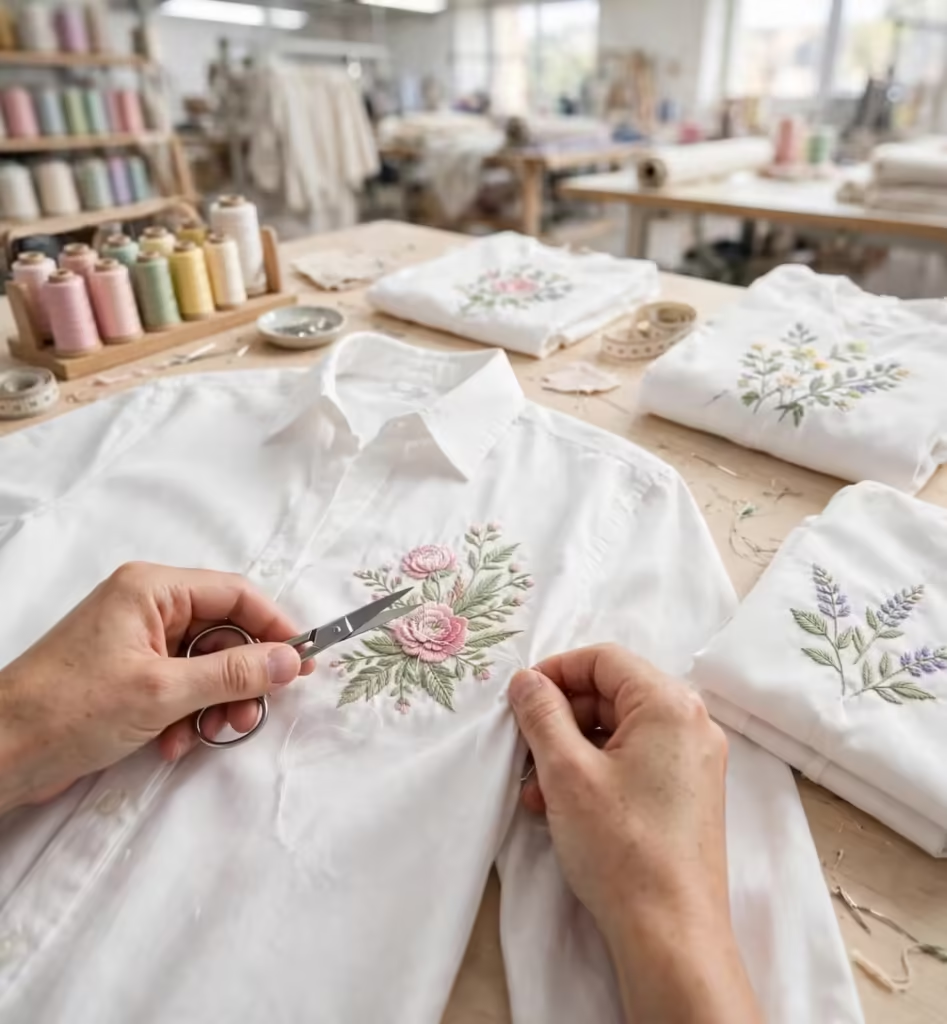
Embroidery Services for Logo Clothing and Branded Workwear
This part of the page covers the working detail: the garments and placements we embroider, how a logo is digitised for the machines, how the stitched sample approval works, and how stitch quality is checked on every piece of an order.
1. Garments and Placements We Embroider
Embroidery at our factory runs on garments we are making for the buyer, with the stitching placed where the garment design specifies. The work buyers bring us most often:
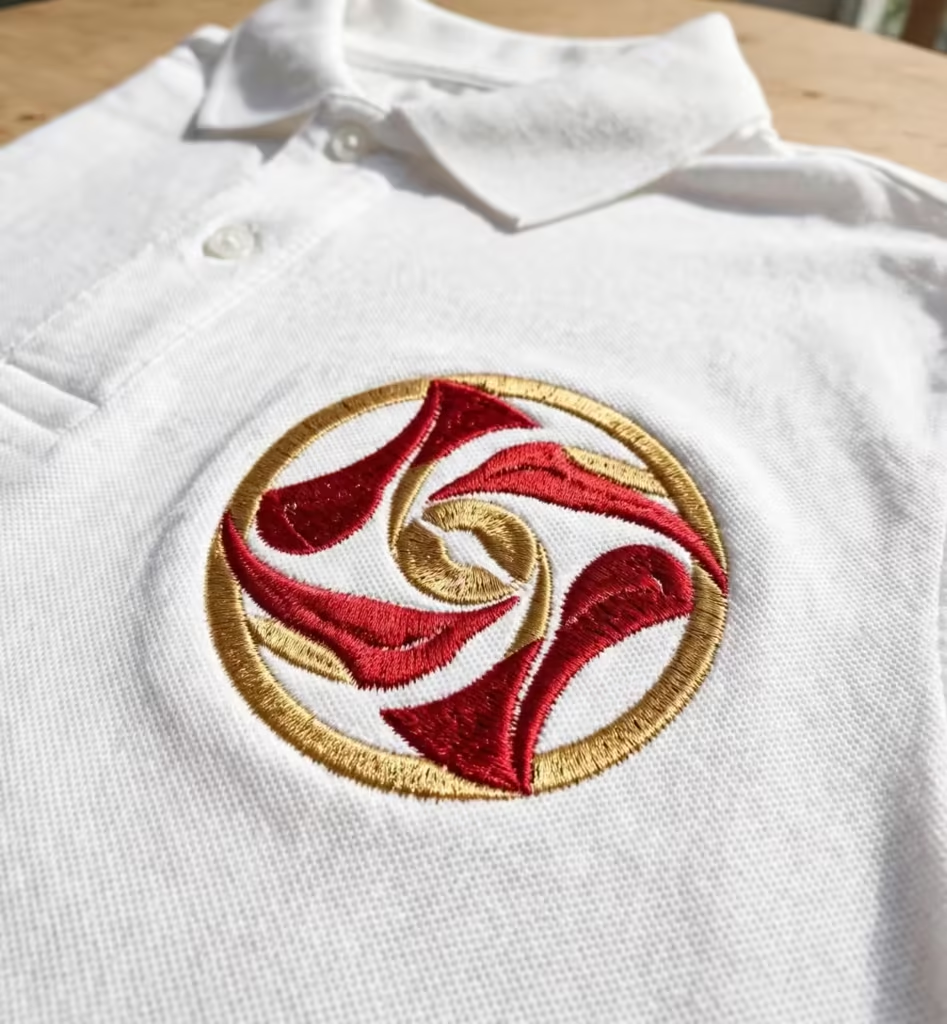
- Chest logos on polo shirts - the standard corporate and team position, stitched on the left chest or centred.
- Logos and badges on t-shirts and sweatshirts - chest, sleeve and back positions.
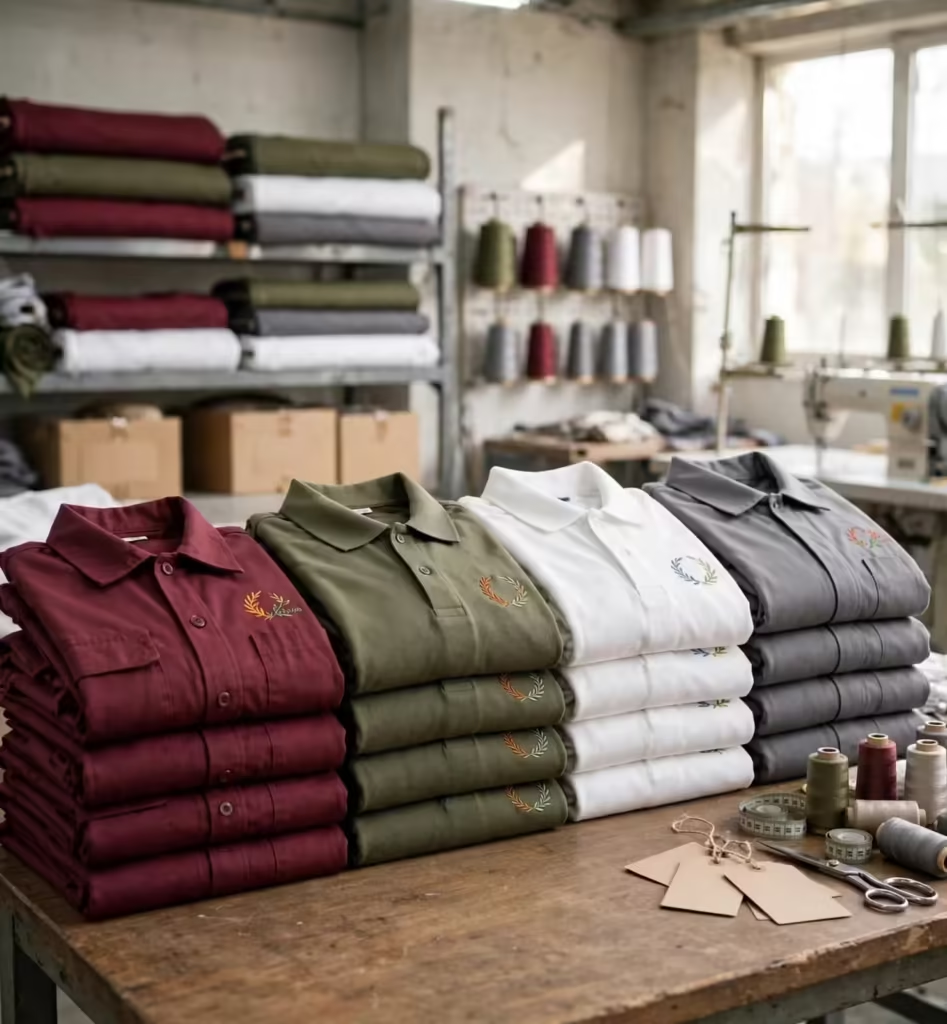
- Workwear embroidery - company logos on work shirts, jackets and uniforms, where the mark has to survive hard wear and washing.
- Names and small text marks - individual names or department marks added alongside a main logo.
Our custom logo polo shirts are the garment most buyers start with: the pique knit holds a stitched emblem cleanly, and the polo is the piece their customers and staff actually wear.
Embroidery also carries small work well. A sleeve mark, a cuff emblem or a name above a pocket can brand a garment whose chest is already occupied, or give a uniform programme a second level of identity - team, department or branch - without changing the main logo. Those smaller marks are digitised and sampled with the same discipline as the main emblem, because a small mark sewn badly is read at exactly the distance people stand from it.
2. Digitising Your Logo for the Machines
A logo file is not yet an embroidery design. Before a machine can stitch it, the artwork is digitised:
- The artwork is redrawn as stitch paths.
- Stitch types are assigned element by element - satin stitch for lettering and borders, fill stitch for solid areas, running stitch for fine detail.
- Density is set for the fabric the logo will sit on, because a design digitised for a stable woven cloth will pucker a stretchy pique or sink into fleece.
- Pull compensation is built in so letters keep their shape as the thread tension draws the fabric.
Digitising is skilled work, and it decides most of what the finished emblem looks like.
Thread colours are matched to your brand references from the thread range the machines run, and the matched colours are recorded on your file so a repeat order stitches in the same threads without a fresh matching exercise.
The digitising itself is skilled judgement, not a file conversion. Filled areas are stitched to cover without pulling the fabric; outlines are given the stitch type that keeps them crisp at production size; and the order in which sections are sewn is planned so the design builds cleanly on the garment. Two digitised versions of the same logo can look identical on screen and sew very differently - which is why the stitched sample, not the screen image, is the approval piece.
3. The Stitched Sample: Approval Before Bulk
Embroidery is always approved in thread, never on paper. We stitch the digitised design onto the actual garment fabric and that stitched sample goes to you: it shows the real size, the real colours and the real edge quality of the design. A logo that looked sharp on a screen can read differently in thread, and this is the stage where a size adjustment or a simplified detail is still a small, cheap decision.
Once approved, the stitched sample and the digitised design file are kept on your order record. Repeat orders run from the same design file and are checked against the same sample, so your tenth order carries the same emblem as your first.
The inside of the garment is part of the approval too:
- Backing is trimmed clean.
- No scratchy edges are left against the skin.
- The stabiliser choice - cut-away for knits that will be worn and washed, tear-away where the fabric carries the design - is part of what you are approving.
A chest logo that looks perfect from the front and irritates from behind fails the buyer's test the first time the garment is worn, so both sides are shown and approved.
4. Embroidery Runs With Your Garment Order
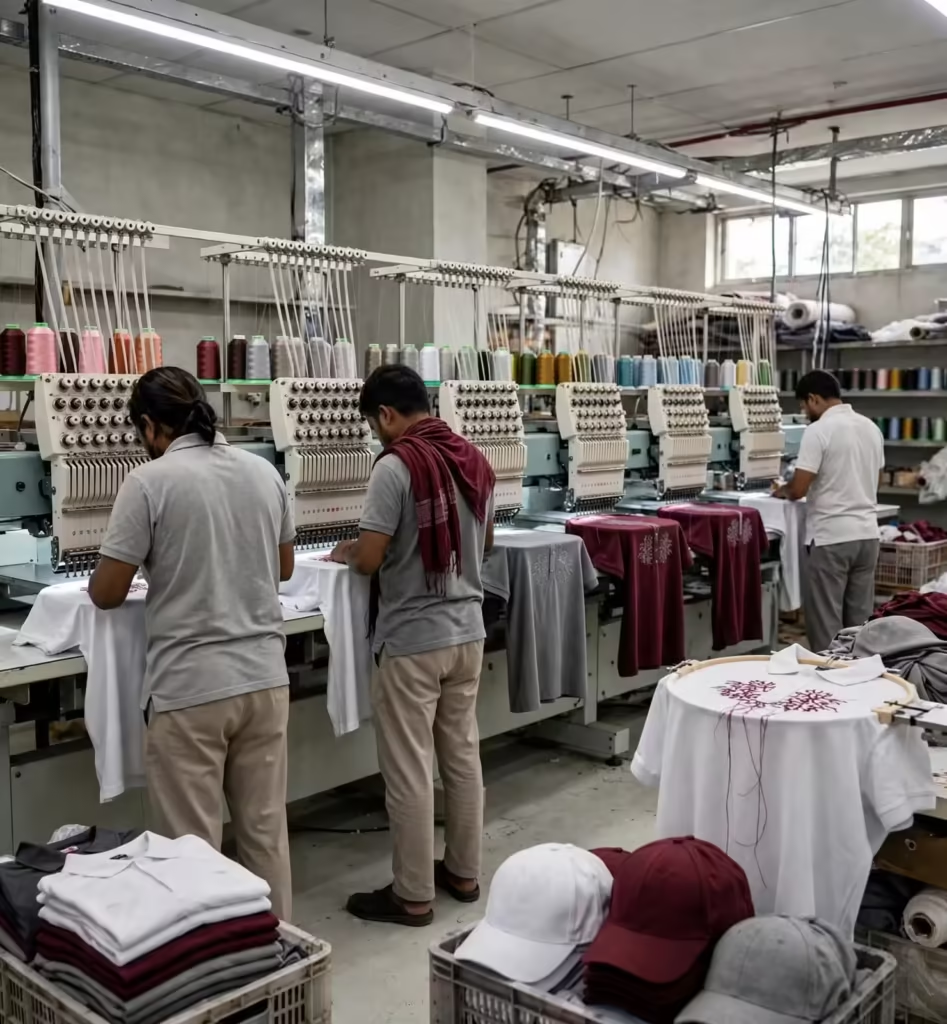
The embroidery machines sit in the same factory as the sewing lines, so an embroidered order is one order, not two:
- Garments arrive from the sewing lines.
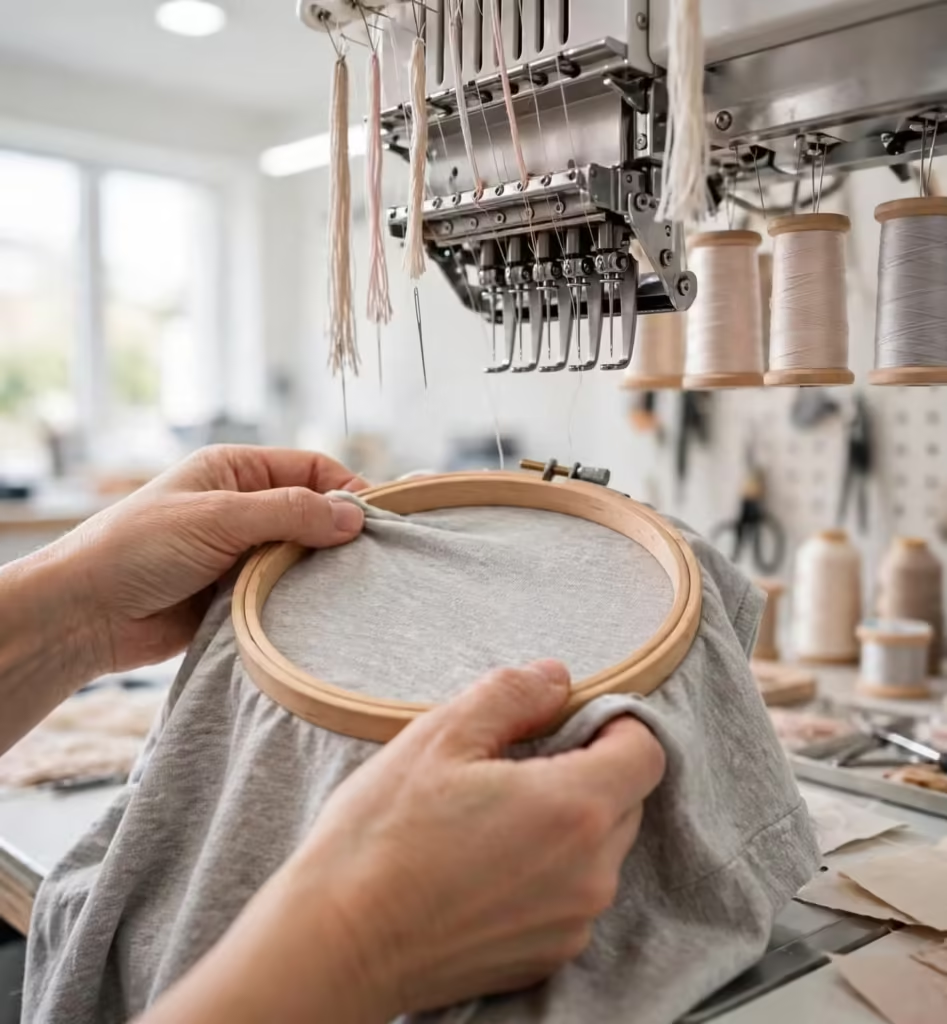
- They are hooped and marked for position.
- They are stitched in colour and size order.
- They are then unhooped, trimmed and returned to the sewing floor for finishing.
Position is set from the approved sample - a chest logo sits where the sample put it, on every size - and multi-head machines keep the stitch quality consistent across the run. One order file covers the whole path, so a question about an embroidered garment is answered from the same record as the rest of the order.
The stage matters to quality as well as logistics. A chest panel embroidered flat, before the garment is closed, sits flatter and registers more accurately than the same design worked onto a finished, shaped garment. Where your design allows the choice, we will recommend the stage that gives the cleaner emblem - and where it does not, the stitched sample is made at the real stage, so the approval shows the true result.
Many branded programmes mix techniques on one garment: an embroidered chest logo with a printed back design, for example. Those orders are planned as one file across our embroidery section and our screen printing section, and the garment itself is usually built through our private label and OEM programme so labels, decoration and packing are approved together.
5. How Stitch Quality Is Checked
Embroidered pieces are checked emblem by emblem. The faults checkers look for are specific to stitching:
- Loose threads.
- Skipped stitches.
- Puckering around the design.
- Hoop marks that have not steamed out.
- Misalignment against the garment's centre and seams.
Pieces with stitch faults are unpicked and re-stitched where the fabric allows, or replaced from the order's cutting where it does not. The check happens at the embroidery stage, not at final inspection, so a corrected piece re-enters the line while the order is still running.
Placement is measured as well as looked at - the emblem's position is checked against the specification from fixed garment points, across sizes, because a logo that sits correctly on a medium and drifts on an extra-large is a sizing fault, not a detail.
Emblems are also checked in the context of the finished garment: centred where the design says centred, level where it says level, and sitting correctly once the garment is pressed and folded, not only flat on the inspection table. What your customer sees on the rail is the standard, so the rail is where the final check is aimed.
6. Quantities for Embroidered Garment Orders
Embroidery runs on garment orders from 3,000 pieces per order, from 800 pieces per colour and style. One logo design normally serves the whole style it belongs to, and styles combine towards the order total, so a workwear programme can carry the same emblem across shirts, polos and jackets inside one order. The digitising and sampling work behind a design is a one-time fixed effort, recorded on your file and reused on every repeat.
For buyers new to embroidered programmes, the sensible start is one emblem on your core garments, approved carefully in thread, and then the same design extended across more of the range once its stitched standard is set.
From that point the programme runs on records, not on fresh decisions: the design file, the thread list and the approved sample carry every repeat.
Embroidery Services for Buyers in the USA, Germany and the UAE
Embroidered programmes arrive from our main markets with different work in mind. The three below are the patterns we see most often when an embroidery order is being set up.
Embroidered Logo Apparel for USA Brands
USA brands embroider at programme scale: one emblem carried across polos, fleece and workwear in the same order, often as the anchor of a private label range. Keeping the digitised design, the thread record and the approved sample on one file is what holds that emblem identical across garment types that are sewn on different lines.
Logo Embroidery for German Workwear Buyers
German workwear buyers judge embroidery on durability as much as appearance: the mark must stay clean through industrial washing and daily wear. Stitch density and backing choices are settled at sampling with that use in mind, and the stitched sample is approved as a working garment, not as a decoration - the standard the bulk is then checked against, piece by piece.
Embroidered Uniforms and Polos for UAE Importers
UAE importers bring a steady flow of uniform work: staff polos and shirts carrying a company emblem, ordered in repeat programmes across the year. Repeat structure suits embroidery well - the design file and thread record are already on file, so a repeat order goes straight to a stitched check against the approved sample and into production.