



Low MOQ Clothing Manufacturing: How Smaller Programmes Work at Our Factory
"Low MOQ" means different things in different factories, so this page is exact about ours. Our minimum order is 3,000 pieces per order - and the important part is how that order can be built: colours and styles combine inside it, from 800 pieces per colour and style. That structure is what makes smaller programmes practical for growing brands, and this page explains how it works, what it suits, and how a first smaller order grows into a standing programme.
1. The Structure, Explained Simply
One order of 3,000 pieces does not have to mean 3,000 pieces of one garment in one colour. Inside the order, the pieces divide across your range:
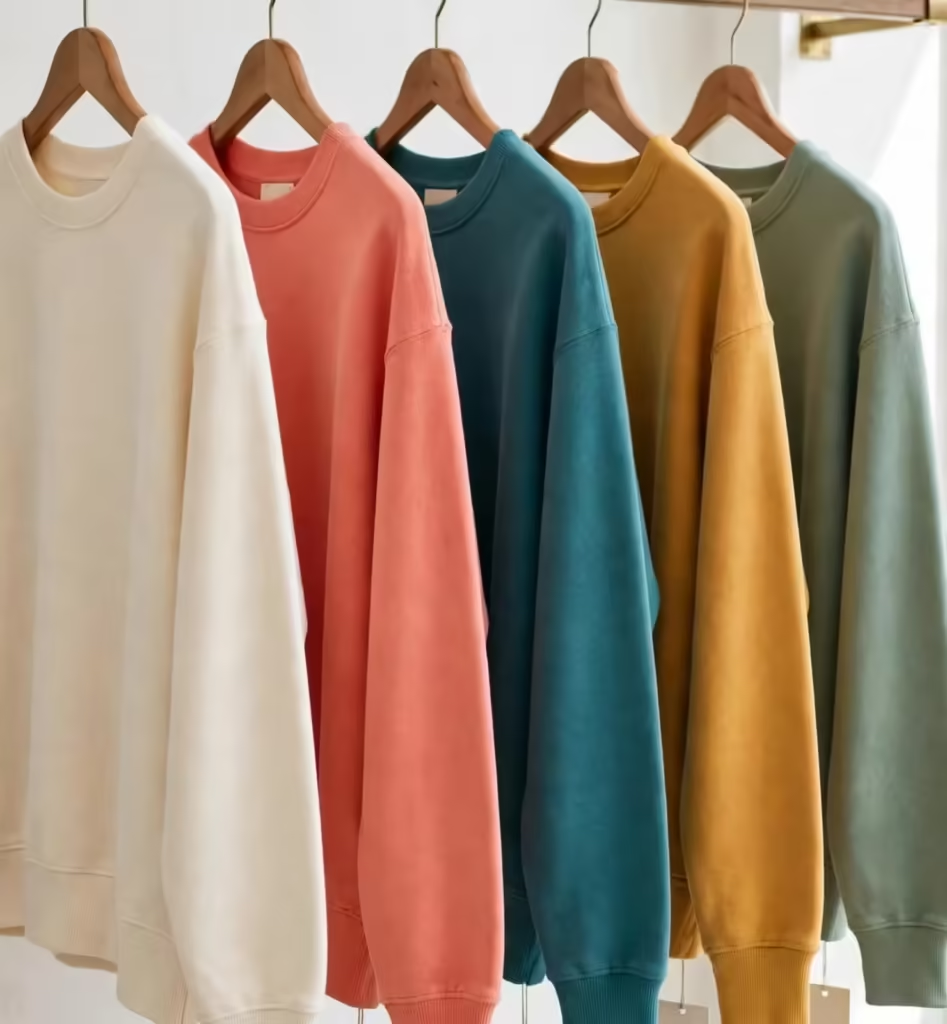
- By colour - one style in several colours, each colour from 800 pieces.
- By style - several styles sharing a fabric base, each style from 800 pieces.
- By size - sizes never count separately; every style's 800 pieces spread across your full size range.
So a realistic first order might be two t-shirt styles in two colours each, or one hoodie style in three colours - a real, sellable range rather than a warehouse full of one item. The full quantity picture, including how established programmes run larger, is set out on our MOQ and pricing page.
2. Why Minimums Exist at All - and Where Ours Sits
Minimums are not a factory being difficult; they are the arithmetic of fabric. A fabric lot dyed for an order has a practical minimum at the dye house, a cutting lay has an efficient length, and a sewing line set up for a style produces its best quality once it is running steadily. Below certain quantities, those fixed elements stop shrinking and the cost per piece climbs steeply - for any factory, not just ours. An honest minimum is the point where the order still works properly for both sides.
Our structure sits where it does because of how the house is organised:
- Knit fabric bases shared across programmes.
- A sample room that develops styles efficiently.
- Lines that run mixed programmes daily.
That organisation is what lets 800 pieces per colour and style be a workable unit here. What we will not do is promise a tiny minimum to win an order and then recover the difference in quality, fabric or surprises later - the structure on this page is the real one, and every order runs on it equally.
3. What a Smaller Programme Suits Best
The combined structure suits some programmes naturally. It works best where styles share fabric:
- Basics ranges in several colours.
- A fleece programme across two or three silhouettes.
- A private label launch range built on core styles.
Shared fabric is what makes the combining honest - the dye lot, the cutting and the quality standard stay whole-programme even though each style's quantity is modest.
It suits less well where every style needs its own unusual fabric, its own print technique and its own trim set - there, each style carries its own minimums in materials even inside a combined order, and we will tell you so at development stage rather than let the plan fail quietly. The styles on our core programmes - t-shirts, polos, hoodies, sweatshirts and fleece built on running fabric bases - are where smaller programmes get the most range for their pieces.
Decoration follows the same logic as fabric. A chest print or an embroidered logo is set up per design, so a programme that spreads its pieces across many small designs carries more set-ups than one that holds a strong design across several colours of garment. Neither is wrong - but the combination conversation at enquiry stage covers decoration as well as cloth, so the range you plan is the range the structure genuinely supports, and the design decisions that keep a smaller order efficient are made before sampling, not discovered during it.
4. The Same Production Standard as Any Large Order
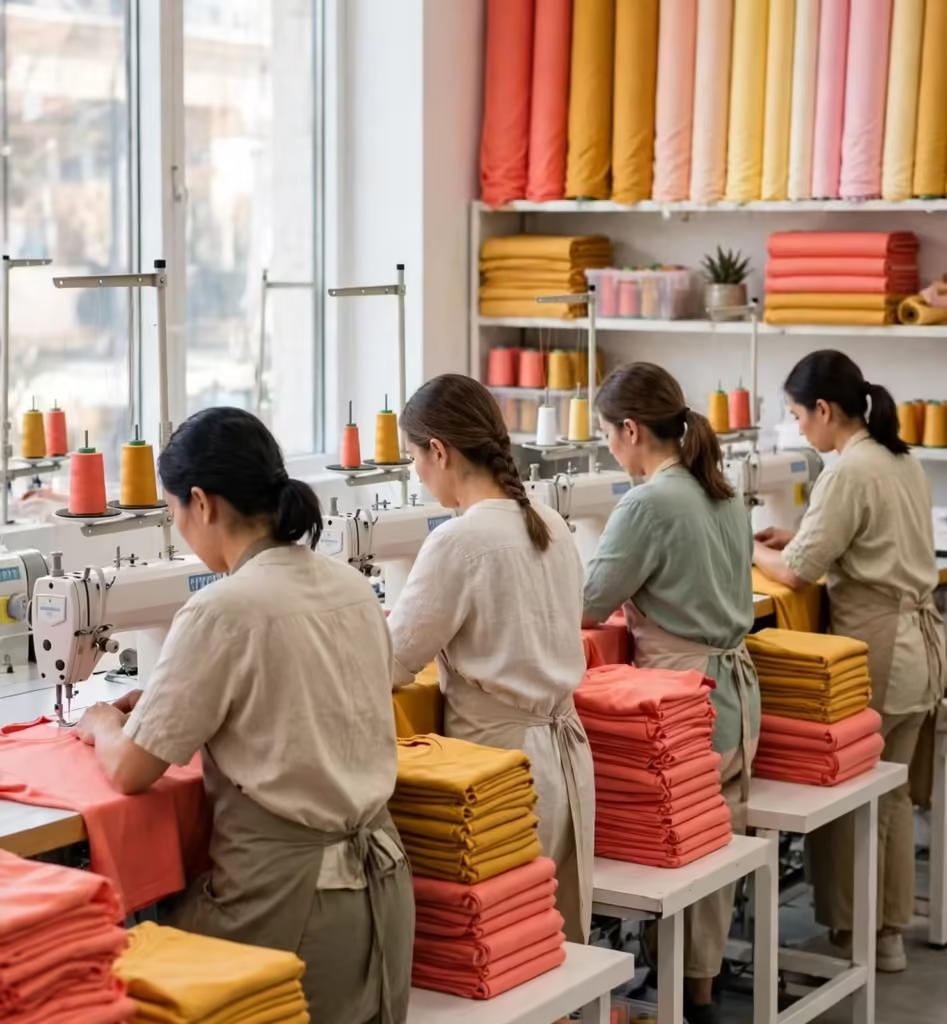
A smaller order is sewn on the same lines, from the same fabric system, under the same checks as a container-load programme:
- Patterns are drafted and graded properly.
- Samples are approved before bulk.
- Inline and final inspection run as described on our quality control page.
- Your labels and packaging are fitted to your specification.
Nothing about the combined structure dilutes the standard - the order is smaller, the garment is not.
This matters because a first order is usually a test you intend to sell, not a sample exercise. The range that arrives has to perform at retail exactly as a large programme would, because your decision to scale is made on how it sells. We treat the first combined order as the first chapter of a programme, with the pattern archive, fabric specifications and label artwork filed for the repeats everyone is planning on.
5. Planning a First Order Inside the Structure
Planning a first order is mostly about choosing the combination well. A sensible pattern most growing brands follow:
- Start on core styles - the garments your brand will reorder, in your best-selling colours.
- Share one fabric base across the styles, so the combining works in your favour.
- Sell through, note the winners, and let the second order concentrate on them.
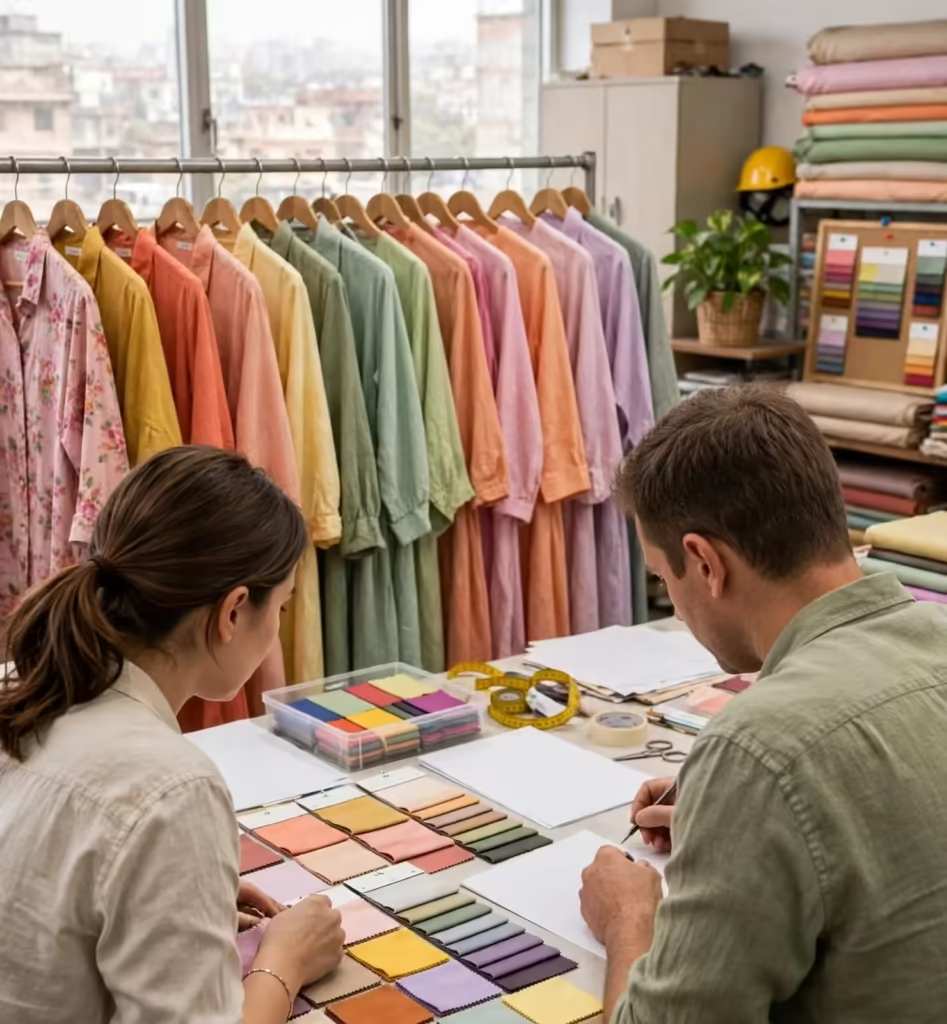
Our merchandisers will help you shape that combination at enquiry stage, including telling you if a planned mix fights the fabric minimums and how to adjust it. The enquiry itself needs no commitment - send the styles and colours you have in mind through get a quote and the reply will address your actual combination, not a brochure version of it.
Sequencing a first order is straightforward because the stages are the standard ones: sampling and approval first, fabric prepared against the confirmed order, then production and shipment planned backwards from the date you need the goods. A smaller order does not queue behind larger ones as a favour to be fitted in - it takes its place in the same production planning, with its own merchandiser and its own dates. What we ask from you is equally plain: decide the combination early, approve samples promptly, and the calendar will do the rest.
6. How a Smaller First Order Grows
Programmes grow by concentration. The first order tests a range; the second order usually drops the slow colours, deepens the winners and adds a style - still inside the same structure. By the third or fourth cycle, most brands find their volumes have outgrown the minimum conversation entirely, and the relationship runs on seasonal planning instead: fabric bases held, patterns archived, sampling focused on the season's new styles.
That path - test honestly, learn, concentrate - is how most of our long-running private label clothing programmes actually started, whatever size they are now. The minimum order structure exists to make the first step a real one: real garments, real labels, real retail feedback, at a quantity a growing brand can commit to without betting the company on a single style.
Smaller Programmes for Buyers in the USA, the UK and Australia
Growing brands in every market use the combined structure, but the way they use it follows their selling model. These are the patterns we see most.
Launch Ranges for USA Emerging Brands
USA emerging brands often launch online first, where a range has to look complete in a web store from day one. The combined order suits that exactly: several styles and colours photographed together as a collection, each in modest quantity, restocked by data rather than by guesswork. Second orders for USA launch brands are usually placed fast and narrow - the winners, in depth - and the structure flexes to that without any renegotiation of how the factory works.
Seasonal Testing for UK Independent Labels
UK independent labels tend to test seasonally: a small range for one season, judged on sell-through, then either grown or dropped. The 800-piece unit per colour and style matches that rhythm well - a label can test a colour story across two or three styles without holding a year of stock in any of them. UK buyers also use the structure to trial a new category, adding fleece to a t-shirt brand for one winter before committing properly.
Combined Orders for Australian Boutique Brands
Australian boutique brands plan around distance: freight is a bigger share of their maths, so orders are often combined across a whole season's styles to ship together. The structure supports that planning - a season in one order, styles and colours combined inside it, one shipment, one arrival. Boutique programmes also lean on the shared-fabric principle hardest, building a tight colour story across the range so the season reads as one collection when it lands.