



Six Garment Specialisations from One Dhaka Factory
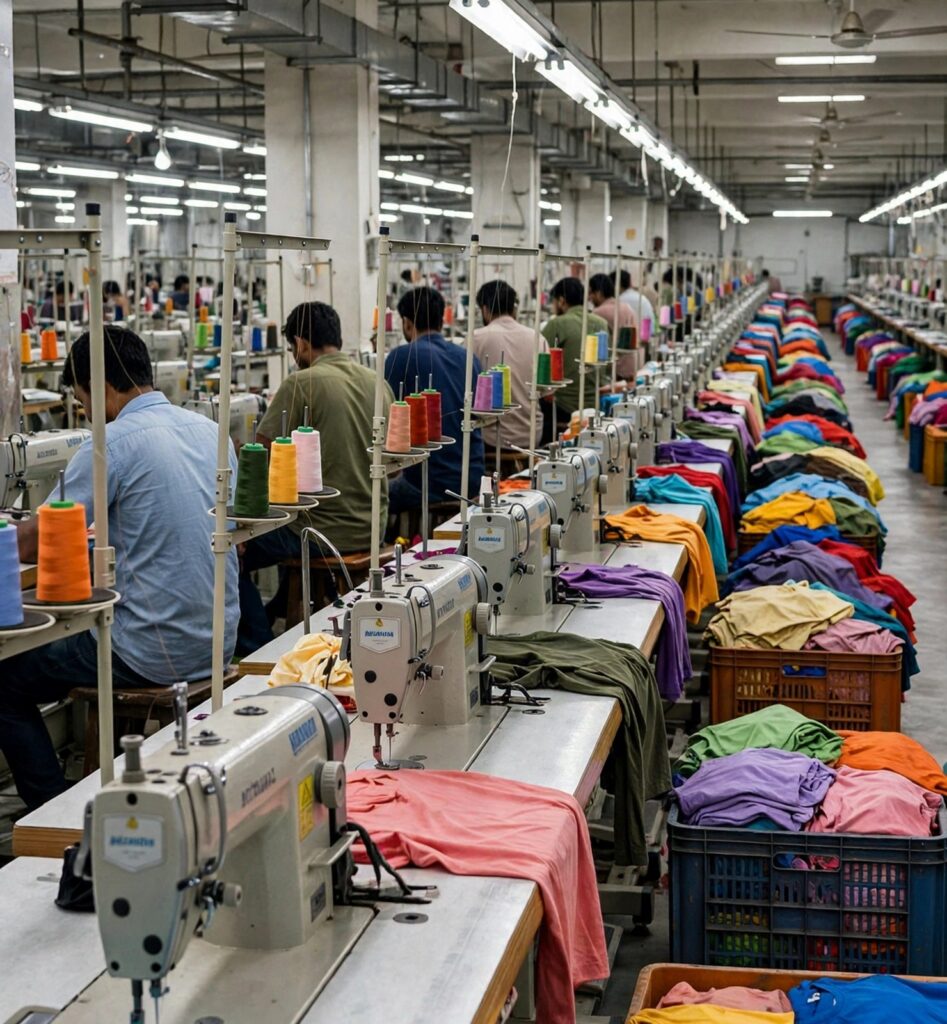
Buyers usually arrive with one product family in mind and widen the range once the first orders land well. This page is the map of the factory: what each family covers, where its depth sits, and how the families share one sampling room, one merchandising team and one standard of checking. Each family has its own page with the working detail, linked from the sections below.
1. Knitwear, Where the Factory's Depth Is Greatest
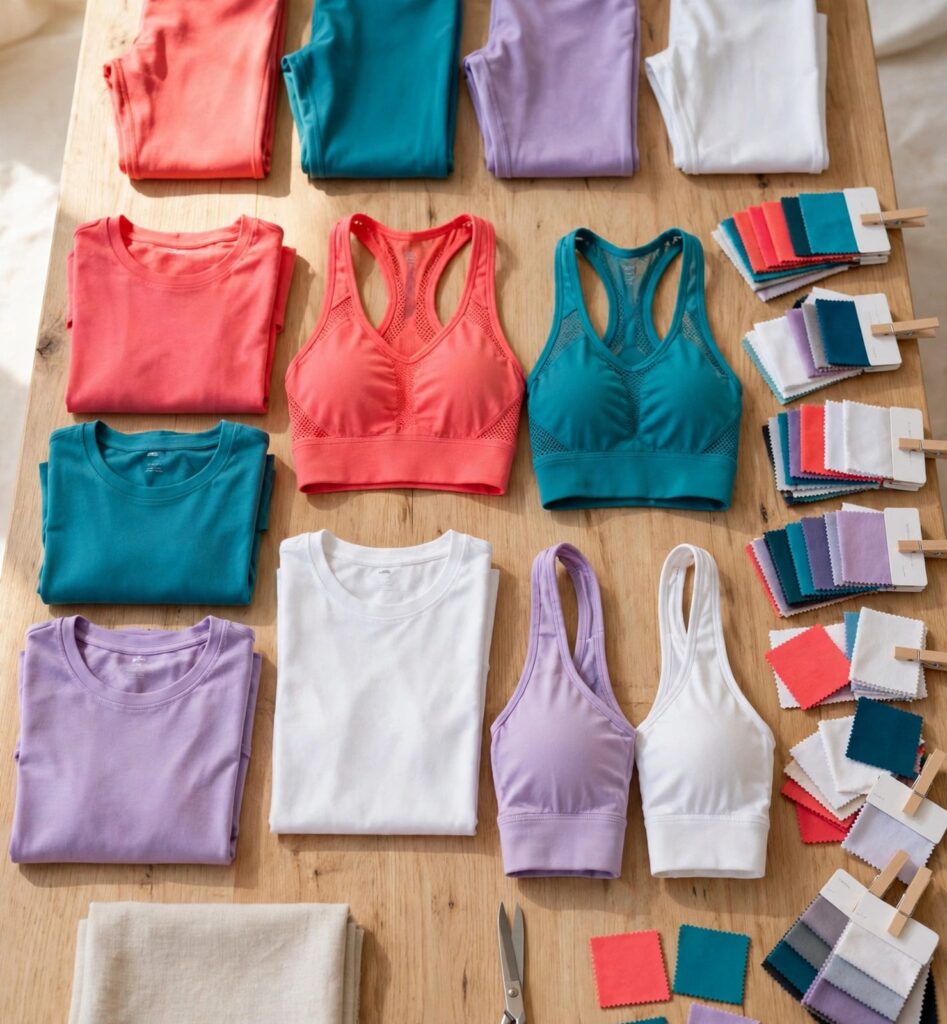
Knitwear is the largest part of what we make. T-shirts, polo shirts, hoodies, sweatshirts and fleece styles run on the knit lines season after season, in single jersey, pique, interlock and fleece fabrics, with printing and embroidery handled in the same building. Buyers place their core programmes here because the basics are where fit consistency and fabric hand-feel are won or lost, and both are checked against the approved sample on every repeat. Our knitwear expertise page sets out the fabrics, weights and decoration routes in detail, and the core styles sit in the catalogue as wholesale t-shirts and hoodies.
The depth shows most on repeats. A polo programme that runs four seasons a year cannot drift in collar shape, placket finish or shade between deliveries, so the approved sample, the fabric record and the measurement chart are kept together on one file and pulled out at every reorder. That file discipline, repeated across hundreds of knit styles, is what buyers are actually purchasing when they place a knitwear programme with one factory instead of spreading styles across several.
2. Denim and Jeans, Run as a Separate Discipline
Denim is not knitwear with heavier cloth. Jeans, denim jackets, shirts and skirts need their own cutting discipline, their own sewing operations and a washing stage that can change the fit and the shade of a whole order if it is not controlled. We run denim as its own family: wash standards approved on real panels before bulk, shrinkage tested before cutting, and shading checked across each batch. The denim and jeans expertise page covers fabrics, washes and fits, and the range itself starts with our jeans pants and denim jackets.
The family also covers the pieces around the five-pocket jean: denim trousers and shorts for summer ranges, skirts and tops for ladies programmes, and shirts in lighter denim and chambray weights. Because the wash plant work is planned alongside the sewing, a buyer can run one fabric through several styles and hold one wash standard across a whole denim story instead of approving each style in isolation.
3. Workwear and Uniforms Built for Daily Wear
A uniform is judged after fifty washes, not on the day it is delivered. Coveralls, work pants, scrubs, chef wear and corporate uniforms are made in twills and poly-cotton fabrics chosen for hard use, with reinforced seams at the points that actually fail in service and logos embroidered under the same roof. Employers reorder these garments on long programmes, so size runs and colour standards are held on file and matched order after order. The workwear and uniforms expertise page explains the construction choices, and the catalogue carries the main lines from work coveralls to uniforms.
Alongside industrial wear sits the service side of the family: healthcare scrubs and tunics, housekeeping and hospitality uniforms, chef coats and aprons. Those buyers order smaller size runs across many wearers, so the packing is organised by wearer group or department on request, and replacements for new staff can be cut from the same file without setting the programme up again.
4. Sportswear and Activewear for Printed Programmes
Team and training garments live or die on colour. Jerseys, tracksuits and gym wear are produced in polyester knits with sublimation printing, so a club's colours, crests, names and numbers are printed into the fabric itself rather than applied on top of it. A full kit - shirt, shorts and training top - is matched across pieces before it is packed as one set. Our sportswear and activewear expertise page covers the fabrics and printing routes, and the range includes sports jerseys and tracksuits.
Training wear runs beside the match kits: gym t-shirts and shorts, jogging suits and track pants in the club's colours, made in the same fabrics so the training rail matches the match-day kit. Schools and academies order the same way, with size runs spread across age groups and each set packed per team or class list.
5. Kids and Baby Wear, Checked to a Stricter Standard
Children's garments carry rules that adult clothing does not: trims, cords and small parts are regulated market by market, fabrics are expected to be soft against young skin, and every piece passes needle detection before packing. We make kids t-shirts, polos and sweaters alongside baby knitwear, with size sets sampled and measured before bulk sewing starts. The kids and baby wear expertise page sets out how safety checking runs here, and the catalogue holds the main lines under children wear.
Baby wear sits at the most careful end of the family: soft interlock and single jersey, flat and gentle seam finishes, and prints and trims agreed with the buyer against the rules of the market the garments are sold into. Nothing about a baby garment is left to habit - each trim choice is confirmed at sampling, in writing, before it goes anywhere near bulk production.
6. Underwear and Sleepwear in Fine Knits
Basics are a volume business with no room for sloppy elastic or rough seams. Briefs, panties, pyjama sets and nightwear are sewn in fine cotton and blend knits, with soft elastic applied evenly and multi-pack ratios packed exactly as the buyer specifies. These are repeat programmes by nature, so the approved fit and fabric stay on file and are matched season after season. The underwear and sleepwear expertise page covers fabrics and packing, and the catalogue ranges from underwear to pyjama sets.
Nightwear widens the family beyond basics: pyjama sets, night t-shirts and night dresses in the same soft knits, often sold as coordinated ranges with the underwear lines. Running both from one fabric file keeps shades consistent across a set that the customer buys together, which is exactly where mismatched dye lots would show up first.
7. What All Six Families Share
Whichever family an order belongs to, the working method is the same. Styles are sampled and approved before bulk, quantities are agreed style by style, because the workable minimum depends on the fabric and the operations each garment needs, and your labels and packaging are set up as part of the programme, as our private label and OEM page describes. Payment runs on the house terms: 40 percent by wire transfer with the order and 60 percent before shipment, or an irrevocable, transferable letter of credit at sight. One merchandiser holds your file across families, so a buyer running knitwear and workwear together deals with one person who knows both orders.
If you are not sure which family your product belongs in, send the picture or the tech pack anyway. Styles cross family lines all the time - a fleece-lined denim jacket, a polo built as a uniform, a kids tracksuit - and the merchandising team will place it on the right line and tell you plainly if a detail belongs to a different construction than the one you had in mind.
Markets We Ship Our Garment Programmes To
The six families ship into the same main markets, but each market leans on different families. The notes below follow the pattern we see when new programmes are set up.
Volume Programmes for USA Buyers
USA buyers anchor the factory's volume: private label knitwear basics, denim programmes and underwear multi-packs running as standing orders with seasonal top-ups. A programme usually starts with one family, proves itself on fit and delivery, and then widens into a second family under the same merchandiser.
Own-Label Ranges for UK Brands
UK brands tend to build own-label ranges across knitwear and fleece first, sharing one label and one packaging standard, then add denim or sleepwear once the range is established. Running the families from one factory keeps the labelling and packing identical across the rail.
Specification-Led Orders for German Buyers
German buyers arrive with complete specifications and expect the factory to be measured against them. Workwear and uniforms suit that way of working: construction, fabric composition and size charts are agreed in writing, sampled, and then held as the standard for every repeat.
Core-Range Programmes for Canadian Importers
Canadian importers typically combine steady core styles - jeans, tees and workwear basics - with seasonal pieces in the same order. The combined quantity structure fits that pattern: core families carry the volume while newer families are trialled inside the same programme.
Fashion-Led Ranges for French Buyers
French buyers lean towards the fashion end of the families: denim in current washes, ladies knitwear and sleepwear with more design content. Sampling carries more rounds on these programmes, and the approved sample matters even more because the detail is the product.
Retail Basics for UAE Importers
UAE importers order across basics and uniforms: knitwear staples for retail alongside workwear and hospitality uniforms for the service sector. Mixed-family orders are common, and packing is set per destination store group on the buyer's instruction.